




Today’s tool
Building survival skills
Assignment: Survival as a musician comes down to being prepared and being flexible—be as prepared as possible, while knowing things likely won’t go entirely as planned.
Practice is cumulative. Everything you do at the harp, including etudes, metronome work, sight-reading, polishing phrases, and the careful marking of fingerings and repair points prepares you for 10 days, 10 months, and 10 years down the road. Think about that. You’re not practicing for tomorrow; you’re training for years to come! Everything you do contributes to your strength as a player, and your overall “emergency preparedness.”
Learn more:
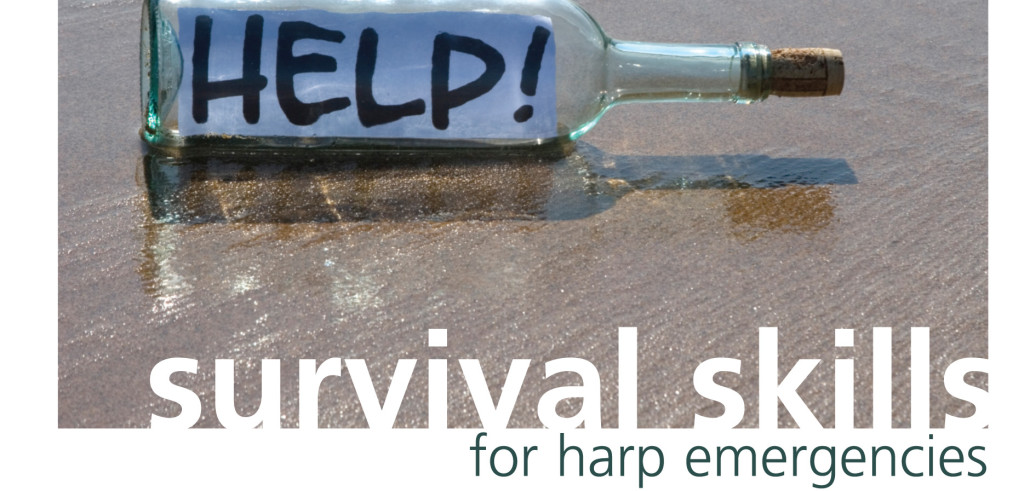
Survival Skills for Harp Emergencies, by Nadia Pessoa
How well you perform under pressure correlates directly with how prepared you are. This survival guide will help you keep your cool when the gig doesn’t go as planned.
Music ideas:

New Shoots—Old Roots, by Monika Stadler
Stadler’s collection of 12 original and traditional works for solo lever or pedal harp. It includes harmonics, rolled chords, pres de la table, grace notes, lever slides, and lever kicks (a way of bending notes). Plenty of fun to last all year!