

10/10
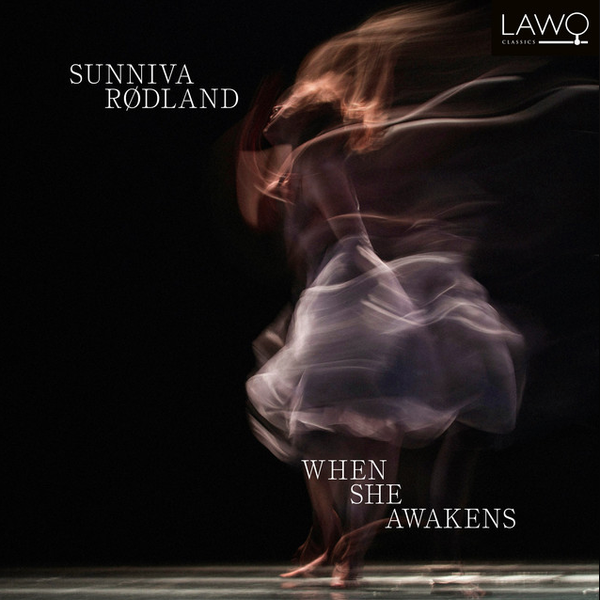
Sunniva Rødland, harp.
LAWO, 2026.
When Norwegian harpist Sunniva Rødland asks us to experience her thrilling and immersive new album When She Awakens, she recommends finding a quiet space and listening through good speakers. It is advice worth taking. These works by some of the most visionary composers of the 20th and 21st centuries transformed not only how we hear music, through their exploration of texture, harmony, and extended techniques, but also how we understand its place in our lives as a vessel for ritual, storytelling, and memory.
Toru Takemitsu once said he was unable to hear music without seeing images. He described Stanza II as “a midday scene, a stone shatters the silence, words are exchanged, a bird crosses the sky, casting no shadow.” Accompanied by electronics and fragments of recorded sound, Rødland enters this enigmatic sonic landscape with complete assurance, commanding the space through impeccable timing and an extraordinary range of color and tone.
It was the groundbreaking composer and artist-philosopher John Cage who encouraged Takemitsu to embrace the traditions of his homeland. Takemitsu later said of his friend that he “shook the foundations of Western music with almost naïve clarity.” Influenced by the spare simplicity of Erik Satie, Cage composed In a Landscape for dance. Rødland transforms it into a meditation on stillness, restraint, and quiet contemplation.
Sir Harrison Birtwistle’s Crowd takes its title from the Celtic word for lyre, encompassing the harp among its many forms. Rather than emphasizing any narrative associations, Rødland focuses on the work’s elemental sound world, as though we are encountering the harp for the very first time. The result feels like an act of discovery. She is equally fearless in Salvatore Sciarrino’s L’addio a Trachis, exploring near-inaudible pianissimos and generating remarkable tension through carefully withheld energy, allowing even the instrument’s lever changes to become part of the musical fabric.
As breathtaking as R. Murray Schafer’s The Crown of Ariadne is on recording, it must be extraordinary to experience live. Based on Greek mythology, the work depicts Ariadne guiding her lover Theseus through the labyrinth where he will confront the Minotaur, teaching him the way to freedom through a dance and offering a red thread to ensure his escape. Surrounded by an array of percussion instruments, including ankle bells, crotales, and woodblocks, Rødland plucks, strikes, shakes, and even sings through a tube. The performance is so fluid and organic that it’s easy to find yourself checking the booklet to see whether anyone else is performing alongside her.
The album closes with another dance-inspired work rooted in the composer’s homeland, Fall by Finnish composer Kaija Saariaho. Through restless repetition and accumulating momentum, Rødland builds inexorably toward a deeply satisfying climax, bringing this remarkable album to a powerful conclusion and reaffirming her commanding authority as an interpreter of contemporary music.