

10/10
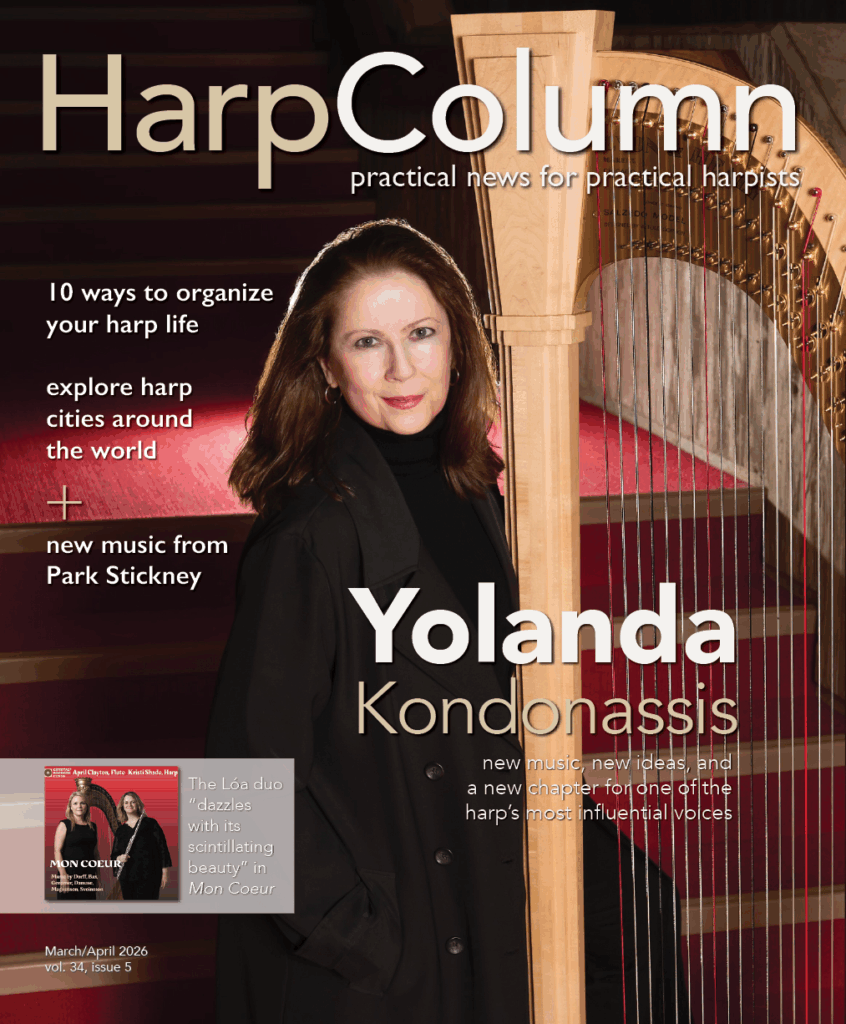
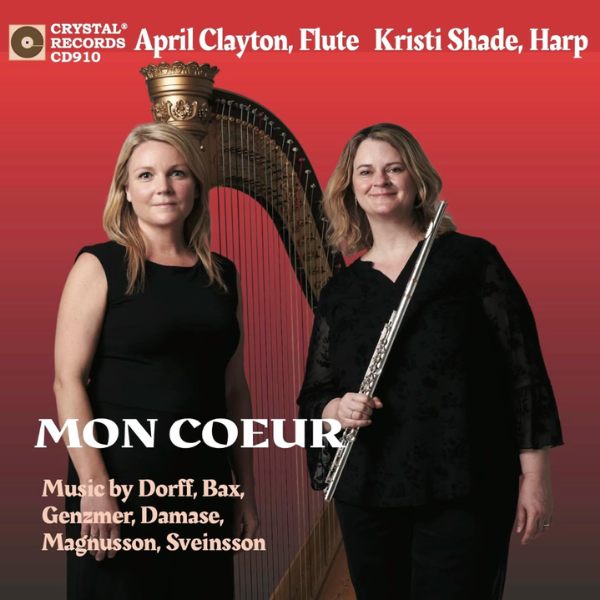
Lóa Duo: Kristi Shade, harp, and April Clayton, flute.
Crystal Records, 2025.
The sumptuous debut album Mon Coeur from Lóa—the dynamic duo of harpist Kristi Shade and flutist April Clayton—centers on a premiere recording of a five-movement Serenade by their friend and collaborator Daniel Dorff.
A clarinetist by training, Dorff has an innate understanding of wind writing, placing every line in precisely the right tessitura for maximum impact. But his writing for the harp is equally striking. Serenade draws on a 14th-century Parisian love song by Solage, one of the era’s daring progressives who explored complex counterpoint, chromatic harmony, and intricate rhythm at a time when musical notation itself was still evolving.
Dorff deftly extracts small fragments of the original material and fuses them into a compelling whole. There is a faint whiff of the ancient, but more often the music dazzles with its scintillating beauty. Even in the reworking of “Helas! Je voy mon coeur a fin venir” (Alas! my heart is breaking), Shade and Clayton bring warmth and effervescence, making the most demanding passages sound effortless and light.
The program continues flawlessly with Arnold Bax’s Sonata for Flute and Harp. Written for Maria Korchinska—the harpist who premiered Britten’s A Ceremony of Carols—and her amateur flutist husband, the work was never published during Bax’s lifetime. Though modernistic in language, the sonata boldly introduces the Irish tune “Sally Gardens” in the first movement, underscoring Bax’s lifelong fascination with Irish identity. Lóa performs as if joined at the hip, leaning into the haunting oscillation between major and minor that makes this music unsettling and utterly captivating.
Two works by Icelandic composers alone would justify owning this stunning debut. While Thórdur Magnússon may draw inspiration from Icelandic folk traditions, his Intermezzo is shaped by the sound world of Japanese koto music. Another Intermezzo, by Atli Heimir Sveinsson, takes its cue from a fairytale, unfolding in a wistful waltz time.
The three-movement Sonata for Flute and Harp by German composer Harald Genzmer bears the imprint of Hindemith, as well as the profound upheavals sweeping Europe in the early decades of the twentieth century. At once tonal and searching for tonality, it is an important work that deserves far more performances. Shade and Clayton bring it vividly to life with their characteristic panache and polish.
Jean-Michel Damase, whose mother was the harpist who premiered Ravel’s Introduction et Allegro, lived at home for much of his life and composed extensively for the harp, including his Deuxième Sonata and numerous works for harp and flute. There is a slightly run-on quality to Damase’s music. Lovely, yes, but almost stream-of-consciousness, rarely settling, except perhaps in its frequent excursions into the flute’s upper register.
Clayton never lets it sound as taxing as it surely is, and together the duo emphasize the music’s sheer delight in color and sonority: a post-impressionistic style devoted more to attractive and idiosyncratic writing than anything much deeper.