

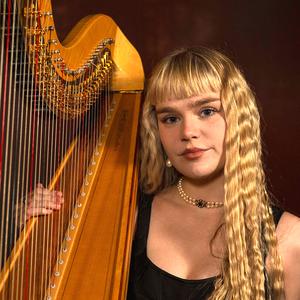
There are many ways of incorporating electronics into your performances—for instance, by choosing preexisting repertoire by composers who incorporate electronic aspects, by improvising live with your own electronics, or by collaborating with an artist who can handle the electronics for you! I mostly improvise using the harp, software on my laptop, and occasionally hardware analogue synthesis.
Firstly, I recommend that you get to as many gigs as possible. Experience concerts of electronics and acoustic instruments, buy albums, stream music. Get inspired!
Using electronic aspects in your work is like learning a completely different instrument. It has taken me many years of studying to become comfortable incorporating it into performances. I think beginning with software electronics is a good way to start. Do you want to live process the sound of the harp or do you want accompanying electronic sounds, or both? Think of what sound you want to achieve. What’s your inspiration? Is there a particular artist whose sound you love?
Like any instrument, find a teacher in person or online, or find a YouTube series of lessons and take notes. Then the best part, once you have some technical tools under your belt: improvise! Have lots of fun and enjoy the process. How exciting!
—Rosie Murphy
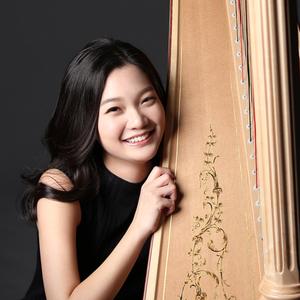
My very first time performing a piece with electronics was in France, when I was a scholarship recipient of Mécénat Musical Société Générale. A fellow laureate of that year, composer Daniel Arango-Prada, asked me to perform his piece, Potocsi, at our scholarship concert.
The piece worked by pressing an electronic pedal at specific moments. During the performance, this action allowed the microphone to capture my live harp sounds and change them into electronic effects in real-time. Practicing together with this live setup was a wonderful experience that opened up a whole new world for me. Since we worked closely together, Daniel handled all of the technical details.
Thanks to that initial collaboration, I gained the confidence to later perform this work at the 12th USA International Harp Competition.
For those who want to get started, my advice is to collaborate with a composer or a friend who can help with the setup, rather than trying to figure out all the technology alone. It is a truly exciting and rewarding world, and I highly encourage you to try it if you get the chance.
—Hyejin Kim
To get started, you’ll need microphones, an audio interface, a computer, and one or two speakers or headphones. The audio interface serves as a connection between your microphones and your computer, and can be a simple one, with two to four inputs.
To amplify your harp, you’ll need one or two contact microphones, placed on the outside of the soundboard for the clearest reflected sound of the harp. Your microphones are worth investing in, even when just starting out, as this significantly changes the quality of the sound. Pay attention to the audio frequency range—generally, a range from 10 Hz to 18,000 Hz is ideal, as this is almost the range of human hearing.
For electronics, a variety of DAWs (Digital Audio Workstation) are available. Reaper is a free software. Ableton has different versions, with more expensive ones having more possibilities.
Learning to use a DAW is like learning an instrument; it takes time, and lots of trial and error. You can find tutorials on YouTube or often from the software-makers to guide you through a software or help you with a specific problem. But also, don’t be scared to just try things out. And when you have created something you like, make copies before editing again; this will save you a lot of time and heartbreak.