
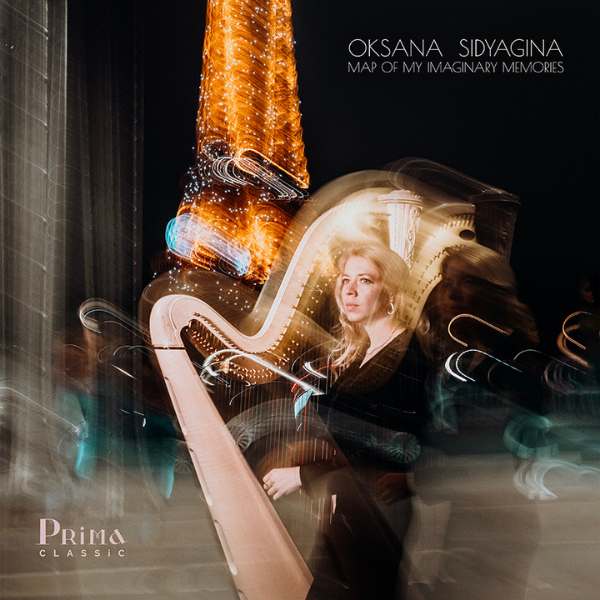
Map of My Imaginary Memories
Oksana Sidyagina, harp. Prima Classic, 2025.
Oksana Sidyagina describes her newest album Map of My Imaginary Memories as a diary, one that explores what we remember as something always in flux. Juxtaposing classics with original interludes, Sidyagina creates a mesmerizing dialogue that feels more like a larger continuous sonic arc than simply a collection of pieces. The album takes as its focal point John Cage’s In a Landscape, a work through which Sidyagina first experienced music as a space to inhabit and one open to improvisation.
From there, the thread stretches backward and forward, passing through Claude Debussy and into Sidyagina’s own reflective miniatures. In rewind, a gentle waltz, she seems to process what we’ve just heard, like leafing through an old photo album where each image carries a softened echo of the last. Her piece midnight tolls like a quiet bell, marking both an ending and a beginning. This leads naturally into the introspective world of Erik Satie’s Gnossiennes, before moving onward to Benjamin Britten’s A Ceremony of Carols. Here, the pacing feels more urgent, as if the listener is turning pages more quickly, searching for meaning within the fragments. The result is a beautifully shaped and deeply intimate recording, one that invites us not just to listen, but to wander through memory as something fluid, elusive, and quietly profound.
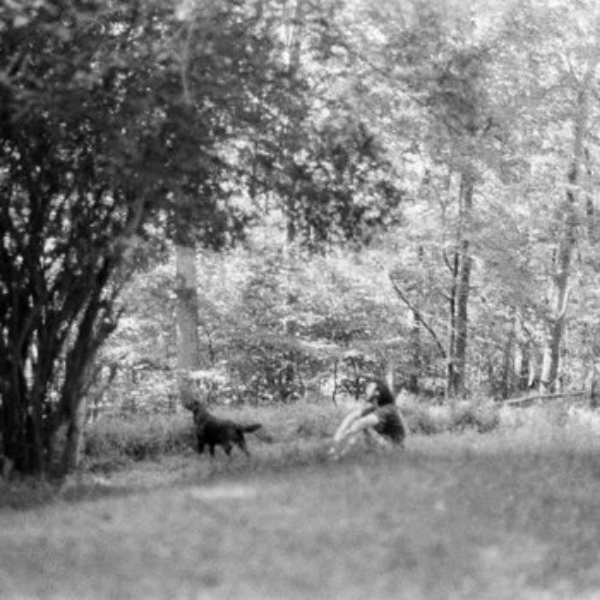
All You’ll Be is Song
Eli Shane, harp. Self-released, 2026.
For his second album, All You’ll Be Is Song, harpist and songwriter Eli Shane sets an unpretentious tone, describing it as music for everything from dog walks to long trips by car, train, or plane. What emerges, though, is something far more intentional, a sublimely crafted “psychedelic chamber folk” project blending harp, cello, vibraphone, found sounds, and Shane’s warm baritone.
Tracks like Westlands unfold as cinematic soundscapes, evoking the steady motion of travel while turning inward, revealing an expansive inner world. In Liaison, layered vocals and vintage media deepen the atmosphere as Shane delivers introspective, confessional lyrics. His writing is dense and narrative-driven, often feeling like stories spoken aloud, yet grounded in emotional immediacy, touching on relationships, self-doubt, and queerness. Throughout, the harp shifts fluidly between roles, rhythmic and percussive one moment, then open and ethereal the next. This duality is especially striking in Forget, a raw, vulnerable track that distills the album’s emotional core. The result is a deeply affecting record, richly imagined, meticulously assembled, and powerfully performed. •