


“But I could do it at home…”
Let me paint you the scenario. You practiced really hard. You know the notes. Perhaps the piece is even memorized. But when you get to performance day, it doesn’t quite go as smoothly as you expected. The technical passage gets bunched up, the pedals go awry, and you leave disappointed because you know you could do it at home. So why couldn’t you do it here, when it really mattered?
“The point … is to introduce discomfort and unpredictability rather than always practicing under ideal conditions.”
We’ve all heard that refrain before—from our fellow musicians, our students, and even ourselves—that everything went fine at home. And we know, of course, that performance brings pressure, adrenaline, factors outside our control, and one particularly important constraint: we only get one shot.
Most recently, I performed Damase’s Sicilienne Variée for a music series. Many harpists would agree that pages 8–10 are particularly challenging. It is difficult to memorize and physically straining for the hands. The passage begins with constant octaves before launching into two pages of rapid rising arpeggios and chords. To make it even more challenging, all of this comes near the end of the piece, when the hands are already tired.
At this particular performance, the first half of the program felt incredibly shaky. It was the middle of summer. It was extremely hot, and frankly, I was exhausted. I started the Damase. It was going alright. Then I reached those three pages … and nailed every bit of it. Ironically, those three pages survived when other, seemingly easier music did not. The difference was not the music. It was the preparation.
The goal is not to make performances identical to the practice room. It never will be. The practice room is a controlled environment where we can stop, repeat a passage, fix something, warm up the way we want, and take a break when we need one. Performance removes that control. We might encounter a hall that is too cold, an unfamiliar harp with different string spacing, limited warm-up time, adrenaline, nerves, or simply the knowledge that this time counts.
Your technical skill hasn’t necessarily disappeared. However, being able to do something consistently in one environment does not guarantee that we can reproduce it just as reliably in another. Onstage, our brains and bodies are being asked to access the same skill under a different set of conditions. Our preparation, then, needs to be robust enough that our playing can withstand less-than-optimal conditions. The more it can withstand, the more margin we have in performance.
Just as importantly, the better we understand how we respond onstage under pressure, the better we can prepare for the ways our playing might change in performance. A teacher once put it this way: we might prepare something to 100 percent, but under pressure, what we produce onstage may only reflect 50 percent of what we are capable of. The point is not the percentage, but the principle: raise the standard of preparation so that even when pressure takes something away, what remains is still really, really good.
Pressure exposes uncertainty
“Those successful repetitions become evidence for self-trust. When that passage comes up in performance, we are no longer simply hoping that we can nail it. We already know that we can.”
Under pressure, tiny uncertainties have a way of becoming much louder. A fingering you were 90 percent sure about suddenly becomes a question. A pedal change you occasionally hesitated over becomes much harder when half your attention is on a conductor. Even when you have successfully played something many times, your brain might suddenly decide to ask, But can I nail this?
There is a difference between being able to play something and being ready to perform it. Playing a passage successfully once tells you that you can do it. Playing a passage consistently tells you it’s secure. Being performance-ready means that there is enough security to withstand pressure, distraction, changing circumstances, and the reality that we only get one shot.
Any uncertainty widens the gap between what we can do in the practice room and what we can reliably produce onstage. Closing the gap begins with making our preparation as comprehensive and robust as possible.
Pressure test the preparation
Once we have laid the foundation by learning the notes and being able to play through the piece successfully, it’s time to pressure test your prep. I like to think of the next stage as putting your practice through the wringer to find out whether you truly own it. We have all heard some version of the usual advice—do run-throughs, play cold, play for people—and I’m sure we’ve all done it. But there is a difference between simply doing these things and using them deliberately to test our preparation.
The point is not simply to accumulate run-throughs for people with cold hands. It is to introduce discomfort and unpredictability rather than always practicing under ideal conditions. I learned this the hard way in my own preparation. When I did run-throughs, I often chose familiar friends, warmed up sufficiently beforehand, and I even picked a time where I was most alert. I had good run-throughs! But eventually, I realized that I was creating the conditions for myself to succeed. I was not actually testing how secure my playing would be when those ideal conditions disappeared.
So let’s change the conditions. One of my teachers used to say that if you can roll out of bed at 7 a.m. and play the piece with no mistakes, you’re ready to perform. Here are a few ways we can put it to the test:
Play cold. No warm-up, no touching the tricky passages beforehand. Sit down at the harp and play. Do it at 7 a.m. if you’d like.
Use consecutive repetitions. Nail a passage multiple times in succession and be brutally honest about whether you really nailed each one or whether some were simply passable.
Raise your heart rate or play fatigued. Run up and down the stairs, then sit down and play. Try the passage at the end of a long day. See what changes.
Try an unfamiliar harp. Play your piece on a different instrument when you can. Different spacing, tension, and pedals force you to adapt. As harpists, we sometimes have to perform on an unfamiliar instrument and adjust on the fly.
Play for people—especially unfamiliar people. The moment you start thinking, Oh, I hope they like this, you’ve introduced another variable.
Change what you can see. Briefly look away from the harp and notice how your hands feel. Pay attention to the spacing of the strings and the shape of your hands. You can also try playing in less-than-ideal lighting. The goal is not to play without looking, but to build trust in what your hands already know and become less dependent on constant visual confirmation.
Record yourself. Sometimes the knowledge that the camera is running is enough to create pressure.
Play it painfully slow. Ridiculously slow, even. Take away the comfort of momentum and muscle memory, and force your brain to know exactly what comes next.
These pressure-tests can be applied to a single difficult passage, a whole piece, or an entire run-through. While you do them, pay attention not only to your playing, but also to what happens in your body and mind. For example, if I notice anxiety or uncertainty around a particular passage, I try to figure out where it is coming from. Perhaps something is not physically settled, I do not completely trust my memory, or I still have to think twice about a fingering or pedal.
Those little questions matter. Reducing uncertainties in practice gives us fewer reasons to hesitate when it counts and helps us leave as little to chance as possible.
Part of pressure-testing is also learning your own tendencies. Notice what changes under pressure, where your attention goes, and how those things affect your playing. For me, I tend to hold my breath and speed through technical passages just to get them over with. Knowing my tendencies means I can prepare for them.
This is exactly what happened with those three pages of the Damase. I had put them through the wringer, and I knew what I tended to do when I reached the octaves: stop breathing and start rushing. So I gave myself specific places to breathe and reminded myself that I have plenty of time. I practiced the passage painfully slowly and tested it repeatedly—cold, early in the morning, fatigued, and sometimes with several of those conditions combined. I examined it until there was very little left for me to question. On a day when other parts of the performance felt shaky, those pages held.
Recording as diagnosis, not judgment
Recording deserves special mention. It can create some performance pressure, but more importantly, it gives us information and evidence. For a long time, I would record myself and not listen back because I thought I already “knew how it went.” I mean, who really likes listening back to themselves play? It can be so uncomfortable. However, I learned that recording is an incredibly useful tool.
Recordings reveal tendencies that are not always obvious while we are busy playing. I learned, for example, that when my heart rate rises with adrenaline, apparently my tempo likes to rise with it. Once I realized this, I even drank coffee before a few run-throughs to recreate some of that elevated-heart-rate feeling and practice keeping my tempo steady.
My first couple of recordings are often less than ideal. I might discover that something was not as good as I thought it was, or that a dynamic, timing, or musical nuance did not land the way I intended. Instead of simply labeling it a “bad run,” I reflect and try to diagnose what happened. Perhaps I stopped breathing, lost focus, or was simply tired. Sometimes, something began to unravel several measures before the place where I actually heard the problem. Then I take that information back to the harp: practice, record, listen, adjust. Practice, record, listen, adjust. Eventually, there is usually a take where I think, Ooh, I actually like that.
That process does two things. First, it makes us better diagnosticians. Over time, we become more attuned listeners to our own playing and get better at “knowing how it went.” What we think happened starts to match much more closely with what the recording tells us actually happened. Recording gives us an outside perspective—one that can confirm our instincts or show us something we missed in the moment.
Second, successful recordings give us evidence. We hear ourselves execute the passage. We hear the musical idea land. And when we can nail it again and again, we know it was not merely coincidence. Those successful repetitions become evidence for self-trust. When that passage comes up in performance, we are no longer simply hoping that we can nail it. We already know that we can.
The performance
You have done the work. You practiced, pressure-tested the tricky passages, completed run-throughs, listened to your recordings, learned your tendencies under pressure, and stress-tested the preparation. You feel ready. Then you walk onstage, start playing, and an audience member in the front row begins tapping their foot—not in tempo. (True story.)
What brings you back?
For me, I sing in my mind. It connects me to the music and gives me both focus and direction in the moment. Sometimes I simply tell myself: Focus! Other times, I use small anchors connected to what I actually want to do or feel. A passage with a particular character? Let’s dance. A technical spot? Breathe. Lock in. A funky passage that I absolutely adore? Let’s have some fun! Whatever floats your boat, find the cues that bring you back into the moment.
Preparation does not stop us from having a reaction in the moment. What matters is what we do with it. As you approach a difficult passage, is your brain saying AHHHH, or I’ve got this? The physical preparation has already been done, but our mental response in that moment can either support that preparation or get in its way. This is another reason pressure-testing beforehand matters: we can learn how our minds respond under pressure and practice how to bring ourselves back.
I also deliberately avoid negative self-talk while performing. I used to be terrible at this. If something went wrong, I would get frustrated and ruminate about it while I was still playing. But that takes up mental bandwidth and pulls my attention away from the music. One mistake could affect the next passage, and then the next, until something that should have occupied two seconds followed me through the rest of the performance. That was neither kind to myself nor useful to performing at my best.
And when something does go wrong? Keep going. Things will still happen despite our best preparation. We are human, after all. The challenge is recovering and bringing our attention back to the music instead of evaluating the mistake while we are still in the middle of giving the performance. The performance is not over because one moment went wrong. Don’t turn one mistake into five by carrying it with you.
Raise the baseline, close the gap
After the performance, celebrate! No matter what happened onstage, you did a hard thing. Then, when you are ready, reflect on what happened. Consider your focus, reactions, stamina, and technique. Figure out what you can prepare for differently next time, and recognize what was simply outside your control.
Every performance gives us information. We take that information back into the practice room, address what we can, and become better prepared for the next one. None of this guarantees that we will nail every performance. It simply increases the odds. And over time, it raises the baseline and closes the gap.
Maybe your 70-percent day used to feel like a disaster. As the baseline rises, even a 70-percent day under less-than-ideal conditions can still be solid, musical, professional playing.
Preparation goes beyond simply being able to play the piece. It means knowing what happens when conditions stop being ideal, learning our tendencies under pressure, preparing for them, and building the margin.
Temperatures change. Strings break. People cough. Fingers slip. The brain does weird things. Life happens onstage, too. We can prepare extraordinarily well and still be human. The goal was never to control every possible outcome. It was to prepare well enough that when we walk onstage, we can stop trying to supervise every second of what we are doing. You have done the work. Let the work happen.
Other approaches
These are some of the ways I prepare for the gap between practice and performance, but every musician develops their own process. I asked a few harpists who are exceptionally well versed in performing under pressure to share their own approaches and insights.
Subin Lee | Boston, Mass.

Taking a passage from “I can play it” to “I can nail it” in performance:
For the most part, it comes with physical time. Not necessarily practicing it for longer hours, but being able to practice it over more amount of days. There are different strategies I would use in practice that varies depending on the section and what specifically makes it difficult, but in general I make sure that I check for challenging spots first and plan to start them earlier when learning a piece. This has helped me especially when having to learn things quickly and specifically for a scheduled performance. In the longer term, when having more time to learn a piece, I do believe that building strong fundamentals helps a lot in terms of technical security.
Preparing for physical and mental changes that occur under pressure:
For me what usually happens is getting shaky/cold hands and mentally being more aurally sensitive. Shaky hands I feel generally aren’t a big problem since I am usually holding on to strings, so I just have to be mentally prepared to see my hands shake and be slightly more careful about muffling. Cold hands I have usually dealt with by always bringing a heat pack (handwarmer) to a performance. I also hear more things in detail [in performance], which actually helps in adjusting to the acoustics of the space I am in, but I have had to train myself to not over-analyze what I am hearing in the moment of a performance.
Approaching a tricky passage—describe what happens in your mind before, during, and after:
I think the key for me has been not having anything special go through my mind! Definitely for some passages, if it helps to focus on one finger or a melody/chord/jump in a certain section, I would remember to do that. But otherwise I would try not to focus on the challenging section because it could not only take away from the music, but also could end up being a big distraction and cause additional mistakes. I think it helps to focus on larger scale (less specific) technical things and what you are aiming to express rather than the tricky passage itself.
How your practice-to-performance gap has changed with experience:
I find everyone’s experience to be different when it comes to dealing with/preparing for physical and mental reactions that we face in a performance. I don’t believe that there is a uniform way to eliminate what we generally refer to as “nerves” or “performance anxiety.” Nor do I think it is only a bad thing that only interferes with playing. Some of my favorite concert memories happened when I was extremely nervous, and I believe that there is a level of focus that we reach in this state that really can make magic happen on stage. It’s just that a lot of these reactions tend to feel uncomfortable and unpleasant in the moment. What came with experience for me was getting to better know myself and how I react to higher-pressure situations. Rather than trying to not make it happen, it has helped me to know better about what happens. By having an expectation and knowing myself, I am not only mentally prepared for what I will experience on stage and not have it be a surprise, but also be able to prepare and train in preparation for this ahead of time in my practice.
Abigail Kent | Baltimore, Md.
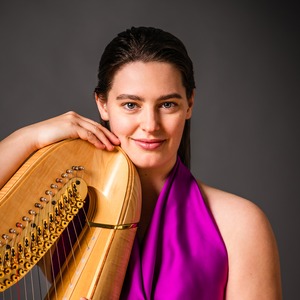
Taking a passage from “I can play it” to “I can nail it” in performance:
Once I feel I’ve figured out how to play a passage, it’s all about making it consistent, especially under pressure. I’ll usually introduce an element of adversity training to the passage, which can look like getting my heart rate up and then playing, putting on some distracting music while I try the passage, and recording myself on my phone or performing for people to simulate being evaluated. Another tactic I’ll use is visualizing myself performing the tricky piece or the passage and vividly seeing every finger movement and every pedal or lever change (this works especially well for memorized music).
Preparing for physical and mental changes that occur under pressure:
In performance, focus is more crucial but can be more challenging as thoughts may feel louder than normal. To practice this, I regularly do activities that require this strength of focus away from the harp, including running, working out at the gym, or a meditation or yoga practice where I’m faced with something challenging and am required to put my full attention on it. But ultimately, I try to come back to why I play the harp, and for me that is to share music with others. Figuring out your why can help tap into that motivation and connection to what you’re doing, making it a lot more fun and meaningful.
Approaching a tricky passage—describe what happens in your mind before, during, and after:
When I’m feeling nervous about a particular passage, I sometimes have thoughts and feelings that tell me to tense up and often get faster to move through it more quickly, which often makes the passage ten times harder. When I notice this happening, I’ll do my best to recenter and feel every note, which makes the music seem like it’s slowing down to a point where it’s not as threatening. No matter how it goes, I shift my focus to the next part of the music because any evaluation of how it went can wait for after the performance and for your training ground. For the trickier passages, I will also often have a more concrete focus, like making sure to press into a particular finger or bringing my attention to the left hand.
How your practice-to-performance gap has changed with experience:
The biggest change for me has been that my reflexes are quicker. This means I still make mistakes, but if I get off track I can get back on much more quickly than I used to. I also have a better idea of what knowledge and preparation is most helpful for me which has been instrumental in knowing what kind of recovery spots I need for uneasy passages. The biggest perspective shift for me has been that we are so lucky to be humans making art, and I think getting more comfortable performing is an amazing process that can be transformative.
Renée Murphy | New York City

Taking a passage from “I can play it” to “I can nail it” in performance:
I mark high-risk passages with Post-it notes and come back to them at random times throughout the day, giving myself just one chance to play each one. I’ll practice them when I am energized or tired, have cold hands, or even when I am hungry, because that helps me identify what actually makes a passage unreliable. I also create variations using different rhythms, switching hands, or creating small exercises around a specific technique to isolate the challenge and build flexibility. My goal is to understand the difficulty so that I can strengthen my preparation.
Preparing for physical and mental changes that occur under pressure:
Because everything can feel magnified in performance, I try to be present with my physical sensations so that an elevated heartbeat or shaky hands do not become distractions. I prepare for these possibilities by bringing whatever I might need, such as hand warmers and gloves, a handkerchief, and herbal tea. I also simulate performance conditions in the practice room by raising my heart rate through jumping jacks or running, welcoming distractions while I run through repertoire, and using visualization and kinesthetic imagery to mentally rehearse the physical experience of performing.
Approaching a tricky passage—describe what happens in your mind before, during, and after:
I was fortunate to take Noa Kageyama’s graduate class at Juilliard, where he taught us practical tools for performing under pressure through his work with The Bulletproof Musician. One was approaching difficult passages the same way every time, such as consistently focusing on my contact with the strings before a challenging run. He also taught us to develop a recovery ritual and have “short-term memory” when something doesn’t go perfectly. I try to stay focused on the music and trust my preparation, rather than dwelling on what just happened or anticipating what comes next, because it can distract me from what I am actually playing. I have also learned the importance of taking risks in the practice room and being willing to push the bounds of my own artistry.
How your practice-to-performance gap has changed with experience:
I have definitely become more observant of my tendencies in performance and treat them as valuable information to bring back into the practice room. I have also learned that different stages of my work require different approaches. Sometimes slow metronome work is exactly what I need, while at other times I need to practice one measure exactly in tempo, reinforce the differences between two similar sections, or isolate a single line within the polyphony. The biggest change has been learning to use imagination, curiosity, and creativity to find what the music needs from me at each stage of the process.