

10/10
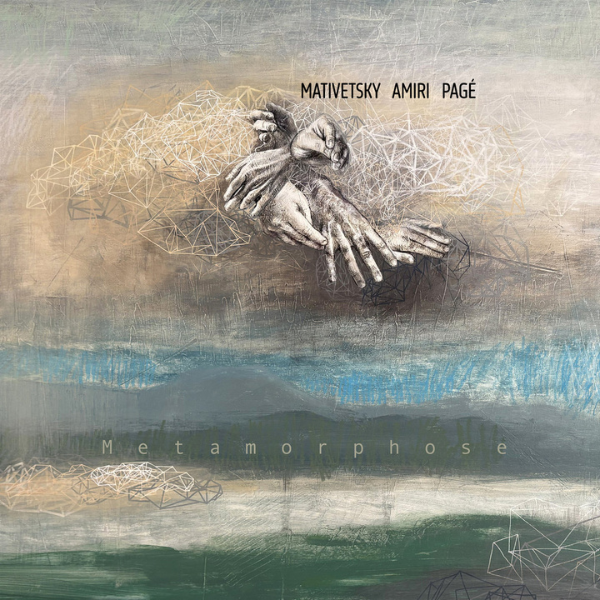
Sarah Pagé, harp; Shawn Mativetsky, tabla; Amir Amiri, santur.
Fifth House Records, 2026.
One of the most exciting collaborations to cross my desk brings together three of Montréal’s most adventurous musical explorers: harpist Sarah Pagé, tabla player Shawn Mativetsky, and santur virtuoso Amir Amiri, performing on the 72-string Persian hammered dulcimer. Their new album, Metamorphose, opens up an entirely new world of sound.
Known as a founding member of the indie-folk band The Barr Brothers, Pagé is a fearless musical experimenter, driven by a desire to bridge roots music with a wide spectrum of styles, genres, and cultural traditions. The result is something wholly original—though such descriptions can quickly turn into jargon. What matters is that the meeting of Indian, Persian, and Western classical traditions here produces some of the most beautiful, joyous, toe-tapping, and genuinely fresh music you’re likely to hear.
The opening track, Yavaran (Companions), pulses with kinetic energy, propelled by shifting meters and dancing rhythms that spiral into an ecstatic state evocative of Sufi devotional song. The ensemble even sings here, playing with a remarkable sense of unity. Mativetsky’s heartbeat-like tabla patterns, set against the metallic brilliance of Amiri’s santur, feel primal and direct, reaching straight to the heart.
The title track, Metamorphose, begins with Pagé’s sweet, hypnotic ostinato, which gradually blossoms into a full-blown improvisation. Subtle electronic processing introduces a jagged acoustic edge, pushing the music into new, unpredictable terrain.
The mysterious Quarter Tone Suite steps away from driving rhythm and ventures deep into another musical universe. As the title suggests, the music unfolds not in half steps, but in quarter-tones, drawing on Segāh, a central mode in Persian music. Our sense of tonal grounding dissolves as Amiri’s santur evokes echoes of Far Eastern traditions and even flamenco. Pagé’s retuned harp meets the santur’s brassy, strident timbre, creating a spiritual atmosphere that invites contemplation. Preconceptions about how music “should” sound fall away, leaving only the act of listening and surrender.
I’ve often wondered what the music of ancient Greece might have sounded like. Did it carry melody, form, or narrative? Maktrismos seems to pose that very question. Based on a dance of blessing, it unfolds with a feverish intensity that ultimately settles into a deeply moving meditation.
The album closes with the more traditional Pathos, a homage to the late Pandit Shivkumar Sharma, who brought the 100-stringed Kashmiri santoor, an instrument related to the santur, to international prominence. Beginning in a hushed reverie, the piece builds from leisurely introspection to wild, explosive energy, providing a powerful and fitting conclusion to this remarkable album.