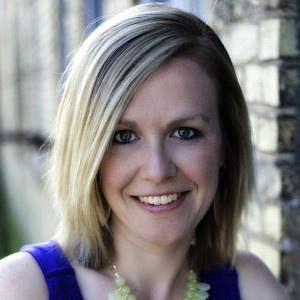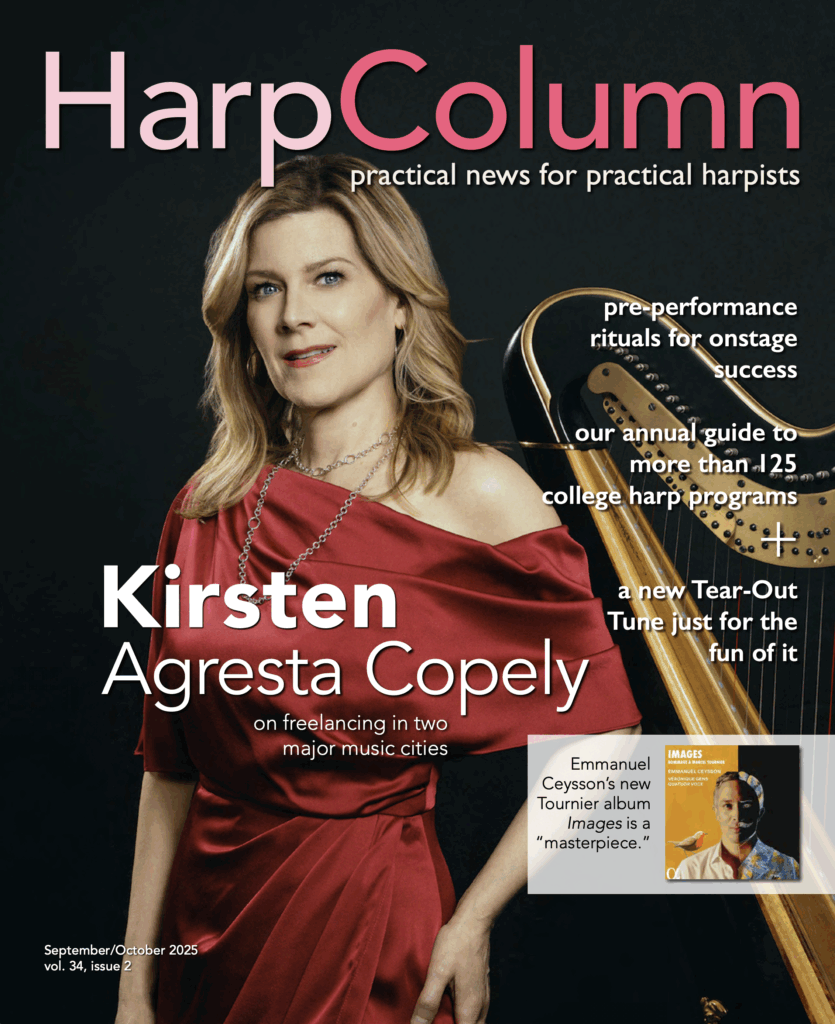


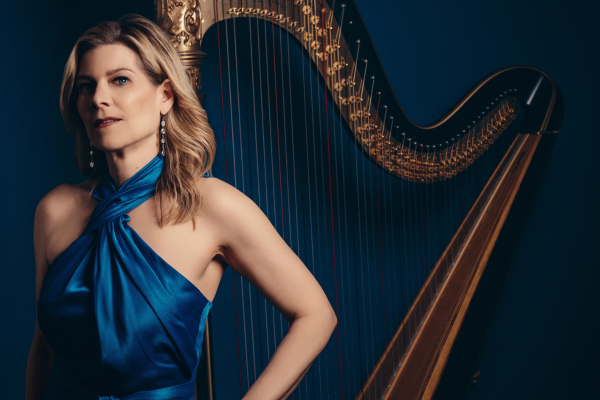
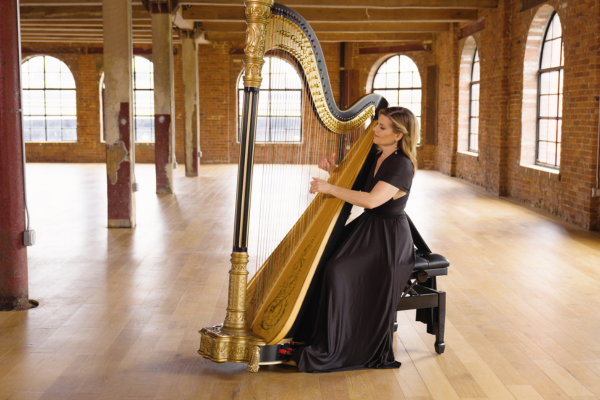
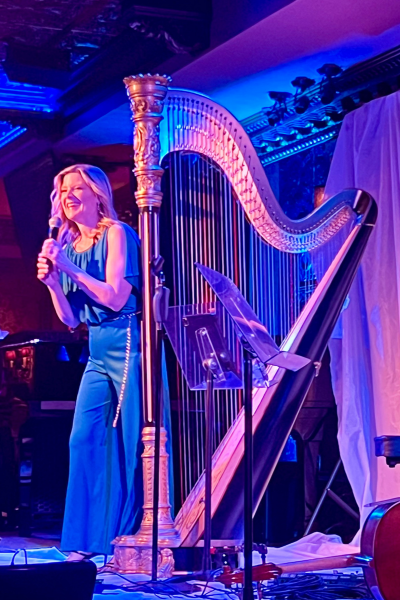
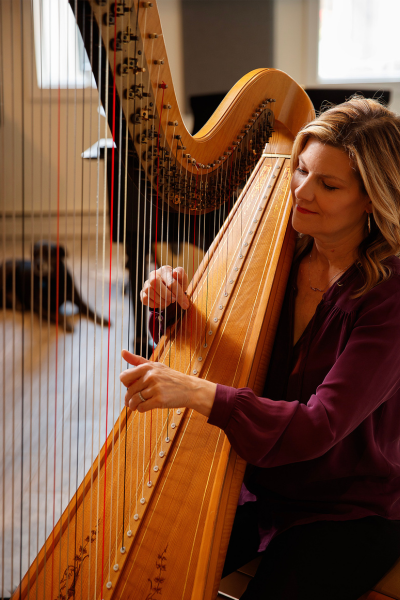
It would be easy to look at Kirsten Agresta Copely’s vibrant and varied freelance career—Broadway shows, star-studded concerts, award-winning recordings—and assume it all just fell into place. But if there’s one thing we’ve learned during a year of conversations with freelance harpists, it’s that no successful career “just happens.” Agresta Copely’s impressive resume is the result of talent, tenacity, and intentional reinvention. Her musical path hasn’t followed a straight line, but she’s carved out a niche that feels unmistakably her own.
Read A New York minute with Kirsten Agresta Copely
We caught up with her in late July, just days before the release of her latest recording. Speaking from her home studio in Brooklyn, Agresta Copely reflected on the highs, the lows, and the lessons learned from decades of making music in the city that never sleeps.
Harp Column: Let’s start with your big news right now—your new album Kuruvinda is coming out next week! It drops on August 1, and it’s already winning awards. Tell us about this album and how it came to be.
The attitude you bring into [a gig] is very important, because every gig is an opportunity to meet new people.
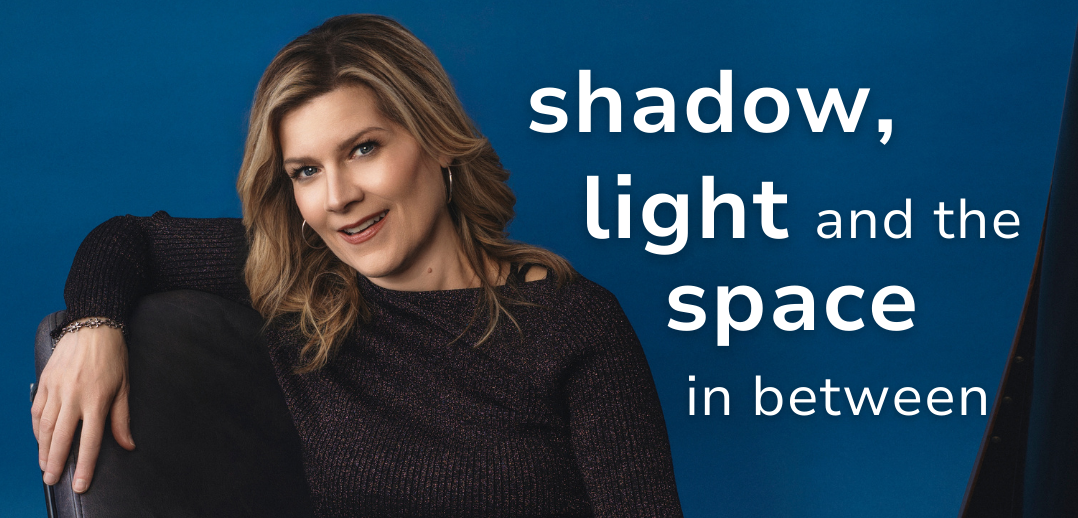
Kirsten Agresta Copely: Kuruvinda is actually the Sanskrit word for a flawed but radiant ruby. I chose the title because I was looking for something that had to do with my birthstone, which is a ruby. This album really explores our imperfections—and the fact that, as humans, we are all imperfect. We have flaws, we have insecurities, we have all sorts of hang ups. One of the things I’ve tried to do, especially since my mother passed away, was to really identify things about myself that I needed to work on. That’s how this album was born. I think it really speaks to a wide audience. It’s very different, actually, from my Aquamarine album, which was nominated for a Grammy Award last season. This one explores more of a dance between shadow and light, and the fact that we all embrace those qualities—having the darkness within ourselves, but also having the light that can supersede that.
HC: This album follows on the heels of Aquamarine, which is, like you mentioned, very different in some ways—musically still in the New Age genre. You were classically trained and still do a lot of classical work. Tell me how you found your way into the New Age genre.
KAC: I was really fortunate as a child to be introduced to a lot of different music, and my mother was very, very insistent that I listened to not only classical music, but lots of other types of music as well. She actually had several hours towards a doctorate degree in ethnomusicology, so I think that background of hers carried over to me. My whole life, I was only listening to classical music when I went to orchestra rehearsals and prepared my own solo recitals. In the journey I’ve taken within my freelancing career, I was listening to Brian Eno a lot—mainly because I needed something to calm me down in the city that never sleeps. Brian Eno’s music really spoke to me. There was a definite world that opened up to me in that ambient field, and it incited this desire and passion in me to try to figure out how to create my own voice within that world. When I started composing seriously, we were still living in Nashville during our seven-year, what I call, hiatus from New York City. During that time, I had a lot of free time to explore my voice on the instrument. My husband is a musician—he’s a recording artist as well as an engineer, producer, et cetera—and he set me up with a little rig of effects pedals and different things that I could mess around with to help me compose music with space. As classical musicians will understand, we play a lot of notes, right? We’re taught a lot of fast passages and things that move quickly. In New Age music, you can’t have that. You have to have space between the notes. I found a lot of beauty that rests within that space. That’s really where I started—composing my first original album, which was Around the Sun, which came out in 2020. It was the pandemic year. I had lots of time to explore it, and I got a lot of really great feedback. I started getting involved with people who were willing to add me to their really big Spotify playlists, helping my streaming career start. It just sort of snowballed into a whole other facet of my career that I’m so grateful for and so happy to be settling into.
HC: I’m always curious—when classically trained musicians venture into other genres like New Age or improv or jazz, does that feel a little odd or even scary? Maybe the transition felt very natural, or did that kind of freedom feel odd to you?
KAC: I don’t think it ever felt odd to me. No. I think it was an extension of my musical creativity and the fact that I love the instrument that we play. I was trying to find a niche for myself that would stand out and fit into a world that wasn’t necessarily just about musicians. What I mean by that is, I’m interested in making sure that people who need grief counseling, or are looking for something to meditate to, or if there’s somebody having a bad day and they want to listen to peaceful music—my focus is to create that for them. Trying to fill a void. Not that there was a void—but to fill something within my own needs as well as something that would help others. I think I’ve evolved a lot as a composer. Each album, I hear the differences in what I’ve chosen to do, and the influences from some of the songs—where that’s led to. Even with Kuruvinda, there’s a very definite sense of a shift in where I’ve rested in this body of work. I think it’s like anything else—you learn how to ride a bike, and you get better at it as you go. That’s how I feel about composing. I’ve never really studied it. I had composing lessons when I was very, very little—when I was, like, pre-teen. My mother had me take some composition lessons, and I actually won a couple of local competitions in Michigan. But I never did anything with it until—flash forward—2019. That was an interesting journey, to have that much of a break between childhood and coming back to it as an adult. Finding my voice and my own path with it. So yeah, it’s been a very interesting creative reinvention, if you will.
HC: You mentioned your “hiatus” in Nashville. So you’ve lived in Nashville and New York—two of the biggest music cities in the country, if not the world. But they’re very different music cities. Tell us about the differences in being a freelance musician in each.
KAC: Well, I’ve been a freelancer in New York City since the mid-1990s, so I’ve been here for almost 30 years—doing everything from high-profile parties and galas to Broadway shows, teaching, cruise ships, soundtracks. It’s been a very interesting, very ripe community of opportunities. In Nashville, it was very different. There, it was really about session work. That was great for me because I got a ton of experience being one of the top session harpists in town—doing soundtracks for films, backup for artists, and different things in the recording studio. But there wasn’t a lot going on, per se, as far as what you would consider a normal freelance gig. I’m very persistent, and I’m always looking for ways to get work, right? So I actually sent out a tweet—if you can believe this—for Valentine’s Day. I tagged all the restaurants in Nashville that I thought might be willing to have a harpist. One of them responded—Flyte Fine Wine and Dining. They said, “We saw your tweet. We’re just reaching out. We have no idea if we can afford you, but would you be willing to play for us?” What happened is, I played that one night. They loved it so much that they started a steady gig there for me. It was basically called Harp Thursdays. It wasn’t a really inventive or creative title, but it was a lot of fun. I just played cover songs, and it was during cocktails—so people would come, have a drink, and listen to fun harp music. That was something I specifically created for myself that came out of my time living there. Of course, I was also teaching at Vanderbilt University for four of those seven years, and that was an extraordinary experience.
HC: Let’s talk about New York. It’s such a unique city for musicians. What do you think are some of the specific pros and cons, if you will, to being a freelancer there? You mentioned the vibrancy and diversity of the work.
KAC: One of the things I think is really important to recognize about the harp community in New York is that we have a very warm and very inclusive environment among our colleagues. That was one thing I noticed was different in other cities I’ve been to—even in Nashville. My colleagues here are some of my really good friends. We hang out. We have friendships that transcend our, you know, maybe competitive spirit, and the fact that we’re all vying for the same gigs. Early on in New York, there was much more of a ripe world of opportunity, and that was one of the things that made me excited about moving here. When I came in 1996, I saw people doing things that I really wanted to do—and I could do that. So it was exciting. Right out of the gate, I remember Stacy Shames was playing Beauty and the Beast on Broadway, and I called her. She said, “I need another sub. Why don’t you come in?” That landed me my first job in New York, Then, not long after that, I got the job at the St. Regis, and that was a steady gig for me until the pandemic. It was 25-some years that I was at the St. Regis Hotel. They put us on hiatus during the pandemic and never reinstated it. That was a real blow. When I moved back in 2021, I had hoped maybe I could get them to start it again. I was disappointed when that didn’t happen. I remember something my agent said when we were furloughed: “Once these things end, they rarely come back.” He was right. It taught me a valuable lesson. These gigs are so few and far between, and so hard to come by. When you have them, you should be grateful—because they’re not going to be there forever. It’s true of anything in life, right? Nothing lasts forever. That’s something I took away: you can’t get too personal about these gigs, because they’re not always going to be there. That’s part of being a freelancer. You have to acknowledge and embrace that. It’s going to be different every day. That makes it really exciting—but it also means there’s going to be some upheaval and some stress.
HC: What are the skills—these could be soft skills or technical skills—you find yourself drawing on most in your freelance career?
KAC: Versatility. That would be the first thing I would say—being able to do lots of different things. That comes down to musical styles and genres, of course, but also how you approach each gig. The attitude you bring into it is very important, because every gig is an opportunity to meet new people. Especially as harpists, there’s usually only one of us. If we walk into a setting—a new orchestra, or we’re hired to do a party—and somebody comes up and wants to hire us for another one, your attitude can carry you really far. You can be tired from unloading, schlepping the harp, going to park, going back to change your clothes—there’s a lot involved in freelancing in New York, just with the basics, but once you sit down behind the harp, the smile has to go on. You’re in the limelight, right? Also, saying thank you to people who’ve given me work has been very important to me. I’ve tried, at least, to either say thank you in person, send a text message, or even write a personal note and send it the old-fashioned snail mail way. Because who doesn’t like to get mail in their mailbox? I want to say thanks to people who’ve given me multiple opportunities for work and really made it possible for me to stay working as a freelancer in this city.
HC: That’s a good point—and very important. I love to ask freelancers what a typical day looks like. Obviously, it’s different every day, but what is a typical day for you?
KAC: Oh my goodness. Okay—so a recent day included me coming down to our studio, where I am right now, and recording a voiceover. Then I played a matinee at Gypsy on Broadway. After that, I came home and taught three lessons. Then at night, I did a little Q&A on Instagram Live. So, it can be a mix of different things every single day.
HC: I want to ask you about the studio that you built in your basement, there at your place in New York. That was quite an endeavor. How did that come about?
KAC: Well, when we moved back to New York, one of the things we specified to our Realtor was that we needed a space where we could actually build a full tracking—like, real—studio, not just a corner in a bedroom. My husband is very involved in recording work as well, and this was something he needed for his business, as well as, obviously, what I’m doing with my work. We found this townhouse in Bushwick that had what I would call a finished basement—meaning it had a ceiling height that was normal, that you’re not going to hit your head on, right? It had been tiled and everything was set up in a reasonable way to visualize what it could look like as a recording studio. It took about a year to set it up with all the paneling and the soundproofing material behind the walls, and building out the windows. They’re not just city windows—they’re, like, I don’t even know how many layers… seven layers thick? They’re really, really like turbo, bomb shelter kind of windows. But it’s an amazing space. It’s about 1,200 square feet. It has a control room—where I’m sitting right now—that’s separate from the live room. The live room holds my Steinway grand piano and can be configured for full band, string quartet, harp, and any number of other instruments. So it’s been a really, really amazing thing for us to have, and we’re really grateful for it.
HC: Have you recorded all of your albums in that studio?
KAC: The last two. Aquamarine was actually the first thing we ever recorded in this studio—so that was a great first start, considering what happened with that. Aquamarine and Kuruvinda were both recorded here. Around the Sun was recorded in Nashville.
HC: Deciding to move to New York—did you make that move straight out of college?
KAC: Not exactly. I graduated with my master’s degree and moved back to Michigan to try to figure out what I wanted to do with my life. I was the Concert Artist for the American Harp Society, and I was doing recitals and taking orchestra auditions at the time, because all the major orchestras had turned over at that point in time. There was just a part of me that knew I wasn’t going to be completely satisfied living in a smaller market and doing only one thing. I realized that I was more multifaceted than that, and I wanted to be able to do the things that made me happy. One of the beauties of being a freelancer is that you’re able to chart your own professional course, right? It’s not about someone else’s goals that you have to align with—it’s yours. That was really important to me. I ended up deciding that all the people I wanted to be just like were in New York. So I packed my U-Haul and drove.
HC: I want to take a step back—you grew up in Michigan, is that right?
KAC: Yes, my whole childhood.
HC: Then you went to Indiana University (IU) for your bachelor’s and your master’s. We just lost [longtime IU harp professor] Susann McDonald, and the whole harp world is mourning her loss. Tell us about studying with her during your time in Bloomington.
KAC: I was very fortunate, because I started studying with Susann when I was 11 years old. My teacher in Michigan, Mary Bartlett, who I’d been with since age five, told me that she felt like I needed a different experience. She facilitated an introduction to Miss McDonald, and my parents subsequently drove me to Bloomington once a month to take a lesson with Susann at her home. She became a second mother to me in a lot of ways. She guided me and nurtured me. I really think her tutelage was the most prominent of the teachers I studied with. My playing is most reflective of her teaching. The tone quality, the musicianship, the beauty of the sound—all of that came from her. And the way she would explain something by demonstrating it herself on the instrument made it so accessiblefor us. What a joy to hear her play. She would just flip the harp around—like, I don’t know, did she go home every night and play the entire repertoire? How does she just sit there and play everything? It was just in her fingers. She was an extraordinary human being on top of that—so loving, so nurturing. I think everybody who studied with her knows that if you ever heard her say “Oh honey,” it had about, I don’t know, 20 different meanings, depending on how it was delivered. It could be, “Oh honey, it’s so good to see you,” or it could be, “Oh honey… you didn’t practice.” We all get a big laugh out of that. I felt really, really blessed to study with her as a child, and then to move into the collegiate world with her. I decided to stay and do my master’s at IU because I just wanted to keep studying with her.
HC: If you had to identify any other musical influences in your upbringing or early career, who would you say?
KAC: Nancy Allen was a big influence on me as well. I studied with her at the Aspen Music Festival and also flew to Juilliard when I was 15 and 16 to study with her there. She had a very different style than Susann [McDonald], and I loved that too. She made sure that I could be the human being that was inside, as much as I was the harpist on the outside.
HC: With all the celebrities you’ve played with, famous musicians, world-class venues—you’ve had some amazing experiences. Is there any gig or moment that stands out as particularly memorable?
KAC: Usually my answer to that question is two-fold. As a classical musician, the pinnacle is to play solo at Carnegie Hall, and I was able to play the Debussy Danses in Stern Auditorium. That was my Carnegie debut in the big hall, and it’s one of my favorite memories. The second one is on the other end of the spectrum—playing at the White House with Beyoncé for President Barack Obama’s second state dinner.
HC: That’s a hard gig to top!
KAC: Yeah, I remember every second of that experience like it was yesterday, and it was 2011. There are a lot of really great gigs and venues, and they all have their own unique aspects—whether they’re fascinating, exhilarating, or something else entirely. But those two stand out.
HC: As a freelancer, one of the many skills you have to have is the ability to adapt and evolve with the times. You’ve been very successful with streaming, which has stumped many musicians. Now it seems like the next big thing is AI. Have you thought about how you will take on new challenges that come with advancing technology?
KAC: Technology is always evolving, and we have to move with it or get left behind. I think AI offers a lot of benefits, but it also brings challenges. I’m not 100 percent a fan, but I do use it. As freelancers, we’re basically small business owners. We have to be our own marketing gurus, social media managers, and operations managers—on top of being musicians. There’s a lot we didn’t learn in school that we’ve had to figure out. For me, I use AI mainly as a research tool. For example, I’ll say, “Please act as a social media expert” or “Please help me find the top 10 whatevers.” But I never use it for anything creative. I don’t think it works well for that, and honestly, a lot of AI-generated writing is terrible—you can tell when something has been written by AI.
HC: What advice would you have for a young harpist reading this interview who thinks, “I want to do what she’s doing”?
KAC: I’d say you have to be ready to define yourself and build your own brand identity. Figure out what makes you unique within the sea of musicians, especially harpists. I think colleges are better now about offering business classes and preparing students for the real world, but I didn’t have that benefit. For me, persistence has been key. I don’t take “no” very easily, and there’s something to be said for the hustle you need to embrace as a freelancer. You can’t sit back and expect the phone to ring or opportunities to just appear. Yes, some will come through referrals, but those are few and far between—and they won’t pay your rent. You have to diversify yourself into different areas that will take you on an exciting and unexpected journey as a freelancer. •
A New York minute with Kirsten Agresta Copely
Heels or flats?
Heels. I’m only five-foot-two—I have to wear heels.
Yankees or Mets?
Yankees.
Best borough?
Brooklyn!
Most ridiculous place you’ve ever performed?
What pops into my head is [a gig for] Kiki de Montparnasse, which is a very high-end luxury lingerie brand. They dressed me in a…I don’t even know what it was…robe, maybe? It tied in the front and kept coming open as I was playing. It was the most nude I’ve ever felt playing the harp. I was much younger then, but I felt it was a little ridiculous. [Laughs]
What’s your hidden talent?
I can whistle bird calls.
Nashville hot chicken or New York slice?
New York slice.
Coffee or tea?
Matcha.
Favorite harp piece to play?
Un Sospiro.
What would you do for a living if you weren’t a musician?
I would either be a psychologist or a freelance writer.
Best book you’ve read or movie you’ve seen lately?
The best book I’ve read is The Overstory by Richard Powers. And if you like trees… that’s all I’m going to say about it.