

10/10
The Juanjo Corbalán Quartet: Juanjo Corbalán, Paraguayan harp and composition; Lara Barreto, saxophone; Sebastián Ramírez, percussion; and Víctor Álvarez, piano.
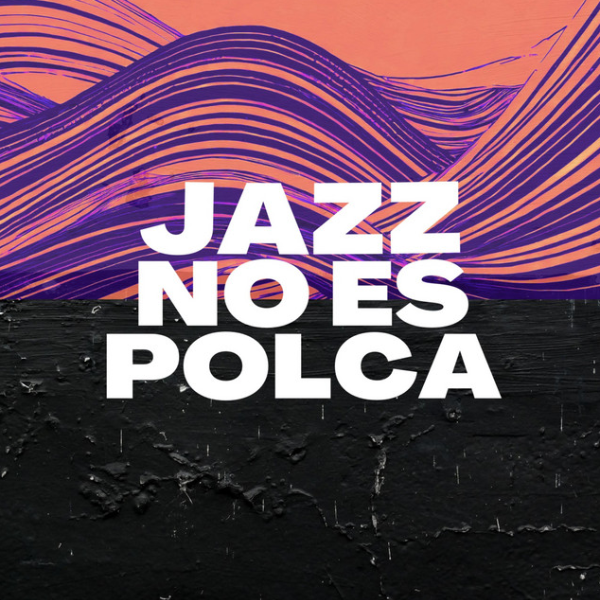
Self-released, 2025.
If you’re ready to reset everything you thought you knew about jazz, look no further than Paraguayan jazz harpist and composer Juanjo Corbalán and his electrifying quartet in Jazz no es Polca (Jazz Is Not Polka). Raw, riveting, and wildly inventive, this album defies genre boundaries with a fierce, freewheeling spirit.
Joined by an intuitively tight-knit ensemble—Lara Barreto on alto and soprano saxophones, Víctor Álvarez on piano, Sebastián Ramírez on percussion, and Corbalán on the Paraguayan harp—this quartet plays with a kind of symbiotic energy that feels both spontaneous and deeply rooted.
Speaking to Harp Column, Corbalán explained his goal: to blend traditional Paraguayan music and Latin American rhythms with jazz and 20th-century experimentalism. “I was deeply inspired,” he says, “by the music of Hermeto Pascoal and his vision of Universal Music—a philosophy in which musical boundaries don’t exist.”
And it shows. Right from the opening track, El Polquere (named for a purveyor of pulque, the traditional agave-based drink), you’re hurled into a raucous soundscape. Peteke Peteke percussion rhythms pulse underneath, the keyboard lays down an angular, off-kilter walking bass, and Corbalán treats his Guaraní harp like a lead guitar in a Peruvian festejo band.
Things take a turn toward the introspective with Fiesta Popular, a piece shaped by the rippling arpeggios of Uruguayan candombe. But just as you’re lulled by its gentle sway, Corbalán shifts the rhythm and hands the reins to the piano in a stunning, low-ground groove that is anything but predictable. The momentum is constant, and the urge to move with it is irresistible.
There’s a brief detour northward with Cha-chaqueño, a track shaped by Cuban jazz and perhaps the album’s most classic-sounding groove. But the center always returns to Corbalán’s inventive core, most notably in Aguas Arriba, where his harp dances through time signatures—alternating between 3/4 and 6/8—with breakneck intensity and effortless virtuosity.
Alcazaba serves up salsa with a twist, growing increasingly unhinged as the solos spiral into joyful chaos. The finale, Riu Hû (River of Nothingness), begins in the melancholy beauty of the Paraguayan guarania vocal tradition—lyrical and longing—but in Corbalán’s hands it morphs into something utterly avant-garde. Dissonant, experimental, and hypnotic, it’s a breathtaking closer that encapsulates the album’s fearless heart.
Jazz no es Polca isn’t just an album—it’s a manifesto. Vivid, genre-smashing, and bursting with life, this is music you feel in your bones. An absolute must-have.