
What’s new in harp music?
A lot.
…is it perception or reality that the harp repertoire is stale, unimaginative, and stagnant?
The first quarter of the 21st century has yielded a plethora of new works for an old instrument. Some by household names, many by talented composers you’ve never heard of. New pieces abound for every level of player and every type of harp. Harp Column Music—our digital marketplace for harp music PDFs—has added nearly 1,200 original compositions to our catalog since 2013. Sure, most of the new music written will not find its way into the standard repertoire and might not revolutionize the instrument, but a few works will, and are, moving the harp forward and elevating its status in the wider music landscape.
It’s no secret that the harp suffers from a bit of a perception problem. But is it perception or reality that the harp repertoire is stale, unimaginative, and stagnant? Anyone working in this corner of the harp world would say unequivocally it’s perception. The reality is that creating good new music is hard, but there are harpists and composers doing great work every day to bring new music to audiences and propel our instrument into the future.
We asked some of the best harpists on the planet what new music they have played or heard lately that they believe deserves to be elevated. What new works are moving our repertoire forward? The responses we received were overwhelming.
What’s new in harp music?
A lot. Take a look.
Elizabeth Hainen, Philadelphia Orchestra principal harp and artistic director of the USA International Harp Competition
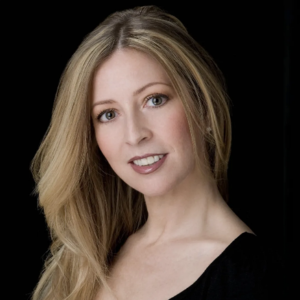
Elizabeth Hainen
“There has been a plethora of new works—solo, chamber, and orchestral—that all feature great harp writing,” Elizabeth Hainen says. She noted Dylan Mattingly’s work Sunt Lacrimae Rerum (these are the tears of things) for two harps and two re-tuned pianos. “It’s fantastic!” she raves. In addition, Hainen pointed out the winning Ruth Inglefield composition Bioluminescence by Kalen Smith, as well as the finalists: Kinetic Dissipation by Yeonsuk Jung (South Korea), Kheírōn opus 53, Nocturne for solo harp by Caroline Lizotte (Canada), Event Horizon (the point of no return) by Ramin Amin Tafreshi and Soheil Shayesteh (Iran), and Finally, someone who gives a damn if I’m foolish by Alexander Thomas (UK).
Angela Schwarzkopf, 2020 JUNO Award for Classical Album of the Year
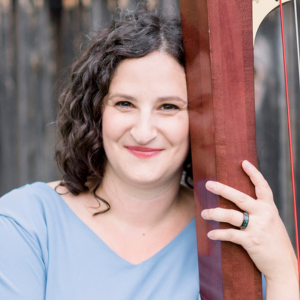
Angela Schwarzkopf
“I think there is value in expanding the harp repertoire in a variety of ways. The more we push and explore it the more people we will have the chance to connect with. I have spent a lot of time thinking about how the music I commission will become a part of the Canadian cultural landscape, and I am proud of the commissioning and collaborative work I have done with composers,” Angela Schwarzkopf says. “I think there are countless works that have moved the harp forward in the 21st century in different ways. To me that is the key—that they are different. Not all pieces need to push our instrument or ourselves to their physical limits to move the harp repertoire forward. Some of them can be ‘traditionally’ beautiful. Will they all stand the test of time? We have no way of knowing. But if they make our audience feel something, if we can connect with our audience through the music we are playing, then I think that means we are moving our repertoire forward. It will be those pieces that audiences will be excited to come back and hear again.”
Schwarzkopf highlights music by Canadian composer Kevin Lau. “His music is expressive and creates beautiful stories in music,” she says. “Kevin has written two substantial pieces for harp, a 15-minute harp solo called Castles in the Sand and a flute and harp work called Little Feng Huang. In addition, Kevin regularly includes harp in his orchestral works that have been performed around the world. His compositions are consistently recorded, and he has won numerous awards. He is a wonderful example of a living composer who writes incredible music (often for the harp) that connects deeply with audiences, is regularly performed and played on the radio, and is well regarded.”
Schwarzkopf also points out another fellow Canadian, harpist/composer Caroline Lizotte. “For many years she has composed incredible harp solos and chamber works that expand the sound capabilities of the harp and the performer, such as the Suite Galactique and the Concerto Techno. Like Kevin, her music is expressive and often tells a story and paints pictures. Caroline is well regarded in the harp world and beyond, having been extensively recorded and recognized through awards and honors.”
Mary Lattimore, international touring performer of experimental music
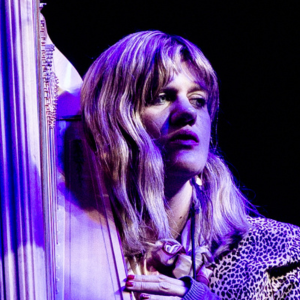
Mary Lattimore
Mary Lattimore says she sees cool and innovative harpists perform new music all the time. “I just saw the brilliant Marilu Donovan playing in her duo LEYA a couple of days ago, and it was entrancing and thrilling,” she says. “Maybe the new pieces I’m hearing aren’t being notated or presented in an orchestral or recital setting, but I feel like the harp is being explored and presented more and more in all types of venues all over the world. Katie Buckley’s project with her husband, Harp and Arp, is a wonderful new discovery.”
She went on, “I’d like to rhapsodize about more harpists I’m loving too, if any could be new to people. Nailah Hunter is wonderful, the aforementioned LEYA, Harp and Arp with Katie and Jesper, Nala Sinephro is incredible both recorded and live, and I just saw she’s scoring the new film by Benny Safdie. Maeve Gilchrist’s work with Arooj Aftab is amazing. I had the pleasure of opening for electronic artist Floating Points, and Miriam Adefris’s harp was front and center and hugely featured and beautiful. The Alice Coltrane exhibition Monument Eternal at the Hammer Museum here in L.A. featured live performances by harpists including Brandee Younger, Nailah, Radha Botofasina, and myself and was thrilling. Rhodri Davies is constantly amazing me. Seeing Zeena Parkins at Big Ears Festival last month both solo and with her duo Phantom Orchard with Ikue Mori was awesome. I loved hearing Irish harpist Roisin Berkeley on this new dream pop record by Maria Somerville. Serafina Steer has a gorgeous new-ish record out called Drinking from the Pools of Night. I feel like our instrument’s reach is expanding, and you just have to keep an eye out for harpists doing really interesting and innovative things. Lots of harp beauty and wild sounds out there, and it’s inspiring!”
Nancy Allen, New York Philharmonic principal harp and teacher at The Juilliard School
Nancy Allen
Nancy Allen says she thinks it’s important to note not only the groundbreaking works of the 21st century, but the 20th century as well—challenging works by Berio, Carter, Donatoni, Pierre Boulez, John Adams, Stockhausen, and others. “Love them or not, harpists and composers have been trying for decades to expand harp repertoire while preserving our old fashioned gems and our illustrious French Impressionist works, and championing and preserving our groundbreaking Salzedo, Varèse, Boulez, and beyond.”
Allen says she and her fellow New York harpists have been a bit overwhelmed lately, juggling performances of both 20th century works and many cutting edge, newly composed works by young composers. “The New York Phil has done so much new music that my head and my fingers are spinning,” she says. Allen and June Han recently presented Dylan Mattingly’s quartet (mentioned earlier by Elizabeth Hainen) at New York’s Museum of Modern Art. Bridget Kibbey had a NYC premiere of a work by Sebastian Currier. At Juilliard, students this season presented several challenging works by Pierre Boulez: Douze Notations with harpists Renée Murphy, Annette Lee, and Krissy Teng performing; sur Incises with the same group plus June Han, and Dérive 2, with Raquel Nisi performing. Allen also points out the 2020 Grammy award Jennifer Higdon won for her harp concerto.
Lavinia Meijer, international performer and recording artist
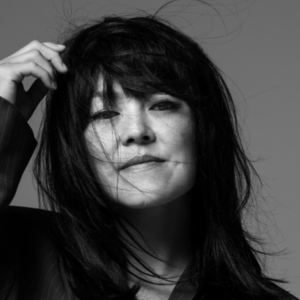
Lavinia Meijer
photo: Robin DePuy
Lavinia Meijer, who has spent her career elevating new music on the harp, is philosophical about the challenges in composition. “Is the glass half empty or half full?” she asks. “Which chances do composers have when writing for a lesser mainstream instrument, such as the harp? Despite perhaps reaching a smaller audience and earning less money, harp compositions will perhaps be spread more eagerly amongst harpists. Paul Patterson is a good example. His compositions are performed by many harpists around the globe.”
Meijer transcribes a lot of the music she performs, perhaps most famously works by Philip Glass originally written for piano. “For me, I have a rule when it comes to arranging for the harp: could the composer also have written it for the harp in the first place? If my answer is a yes, I will go ahead. Bach is an example. He wrote Das Wohltemperiertes Klavier for keys, not a specific instrument. I believe this is a good way to look at compositions in general. If I can work together with the composer on the arrangements, such as with Philip Glass, that is amazing. Being part of this creative aspect of music making is one of the greatest things that inspires me.”
Meijer says she is always excited to work with composers to create new music for the harp, despite the time, money, and effort it requires, many times without the payout of fame or fortune.
“It’s what needs to be done to move forward,” she says. “It’s also part of a bigger experiment. When I compose, I want to contribute to this, and I like to occasionally use effects that no other instrument can do. The famous glissando is my number one example—with the piano only being able to make two different kinds of glissandi, a harp can make so many! I like to think in uniqueness and enrichment—a modern museum for the lesser known.”
Noël Wan, international prize-winning harpist and assistant professor of harp and entrepreneurship at Florida State University
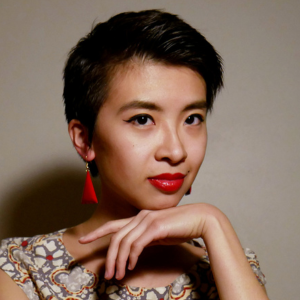
Noël Wan
Noël Wan says this is a topic she loves to talk about with composers and harpists alike. A longtime advocate for pushing the boundaries of the instrument across genres, Wan highlights two works she wants harpists to know about.
“Valentina V (2021-24) by Timothy Roy is an amazing 30-minute monodrama for harp, immersive audio, and lighting design, commissioned by harpist Hope Cowan. It is rare to find a solo harp work that is more than 15 minutes in duration, so both the scale and theatrical/narrative scope of the piece (it is inspired by the 14th century noblewoman and harpist Valentina Visconti) should make a huge impression on listeners,” she says. “Beyond those elements, Tim’s writing for the harp is unique and compelling—dramatic yet precise and really attuned to the best qualities of our instrument.”
Wan also notes the 2024 work Pull No More by Liliya Ugay. “This piece was written for me and is specifically meant to be played on the Camac Big Blue with a MIDI foot controller and Ableton,” she says. “This piece challenges people’s perception of harp virtuosity, because it focuses a lot of footwork and the harpist’s facility for playing strings with tools (metal tuning key and e-bow) instead of just fingers. The harpist has to work not only the harp’s pedals—both for chromatic changes and various extended techniques—and a footswitch board at the same time! So, this piece really demonstrates that harp technique is still very much evolving, and the way harpists themselves choose to engage with their instrument influences that evolution.”
Bridget Kibbey, international soloist and chamber musician
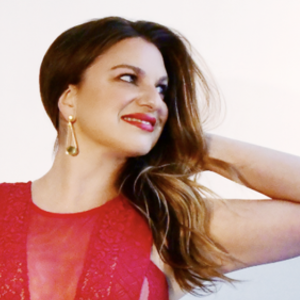
Bridget Kibbey
photo: Shervin Lainez
Acclaimed New York harpist Bridget Kibbey spends much of her time commissioning and premiering new works alongside today’s top American performing arts organizations. Recent examples include:
Sebastian Currier’s Ongoingness for harp and string quartet, co-commissioned by the Chamber Music Society of Lincoln Center, Toronto’s Koerner Hall, the Philadelphia Chamber Music Society, and the Bridgehampton Chamber Music Festival.
Harp Concerto by Vivian Fung, co-commissioned by the Badische Staatskapelle Karlsruhe, the Alabama Symphony, The San José Chamber Orchestra, the Alabama Symphony, and the Metropolis Ensemble.
Recife for harp and orchestra by João Luiz’s, co-commissioned by the Orlando Philharmonic, Jim Rosenfield, the Metropolis Ensemble, the San Jose Chamber Orchestra, the Atlantic Classical Orchestra, and A Far Cry.
A recently-released solo record of newly-commissioned solo harp works titled Crossing the Ocean released by Pentatone Records. The album includes works for solo harp by composers Kati Agócs, Kinan Azmeh, David Bruce, Paquito d’Rivera, Du Yun, and a work for harp and voice by Avner Dorman, with McArthur Genius Dawn Upshaw as a special guest.
Kibbey has given American and world-premiere performances of works by notable composers, working closely with Pierre Boulez, Elliott Carter, Kaija Saariaho, and Osvaldo Golijov, among others. Kibbey is also premiering two new concertos by composers Kati Agócs and jazz giant Miguel Zenón, with performances beginning in the 2027/28 seasons.
Ashley Jackson, Decca recording artist
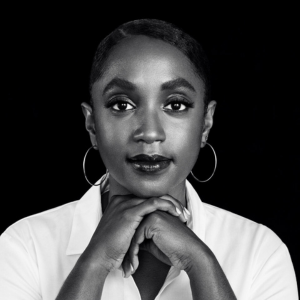
Ashley Jackson
photo: Julia Comita
“When harpists consider the global history of our instrument, including the history of harp artistry in the United States, our repertoire and the possibilities for different sounds and timbres become infinite,” says Ashley Jackson, whose Decca label debut album Take Me to the Water was released this year. “It opens our ears to different genres and allows us to see ourselves as part of a much broader community. Jazz harpist and composer Brandee Younger wrote Unrest during the nationwide protests of the summer of 2020, and I released my recording of the piece on my latest album. Unrest not only channels the waves of social justice movements that continue to be woven deeply into the fabric of American society, but blends together different genres (jazz, R&B) in a work that is accessible to a wide range of audiences.”
Gary Schocker, composer
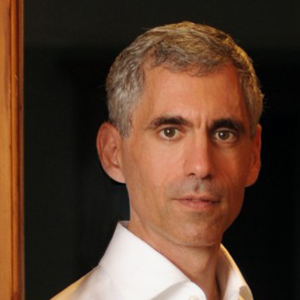
Gary Schocker
“Since I have composed around 300 pieces for the harp, including a concerto with chamber orchestra called Yi Jing, I would recommend people looking at my own music. There are maybe 25 published pieces. Several are available on Harp Column Music but are also published by Theodore Presser and Alry.
“I think part of the reason for the lack of new music being played is just a fact of playing the harp—it takes so long to figure out how to play something, and I think harpists sometimes get addicted to what they know ,and we hear the same pieces so often. Composers who treat the harp like a piano don’t help the cause. Since I started playing 14 years ago, my writing has gotten more fluid because I play more easily.
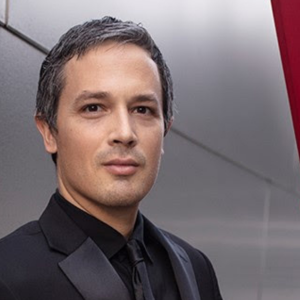
Emmanuel Ceysson, Los Angeles Philharmonic principal harp, associate artistic director of the USA International Harp Competition
Emmanuel Ceysson
Emmanuel Ceysson gives special mention to a concerto by Joe Hisaishi he premiered last fall in L.A. and is taking on an upcoming world tour. Ceysson is also set to premiere a new harp study by Nico Muhly next season in Disney Hall. He notes that the Ruth Inglefield Composition Competition, which takes place every three years, has never seen a shortage of applicants.
Ceysson also mentions harpists like Noël Wan and Chelsea Lane who he says give lots of space to new music in their programs and recordings.
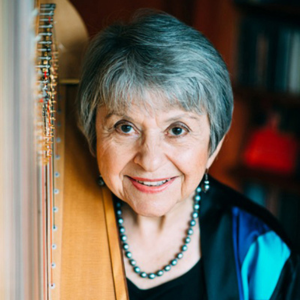
Judy Loman, retired Toronto Symphony Orchestra principal harp and instructor at the Glenn Gould School of the Royal Conservatory of Music in Toronto
Judy Loman
Much of Judy Loman’s experience commissioning compositions for the harp happened in the 20th century. “Canadian composers R. Murray Schafer, Srul Irving Glick, Glenn Buhr, John Weinzweig, Kevin Lau, and Canadian harpist Caroline Lizotte have all written tremendously interesting and engaging works for the harp,” she says. “In the 20th and 21st century, many harp competitions have commissioned new pieces, all of which have merit,” echoing what several others have said about the music coming out of high-level competitions. Loman also points out that quality new music doesn’t happen without harpists putting in the work to facilitate it. “Good music, music that warms the soul and grabs the audience, is happening for harpists that search for it,” Loman says. “Of course, we could use more. We just need good harpists to get out there and ask composers to write for us. It also means that we have to be willing to spend time teaching these composers and to go through the hoops of getting grants to pay commissions, as well as convince composers that they are doing a great thing by studying the intricacies of the harp and writing for it.”
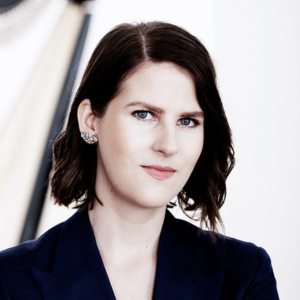
Elisabeth Plank, international performer, teacher, and entrepreneur
Elisabeth Plank
Vienna-based harpist Elisabeth Plank’s album chimaera, released last month on the Genuin Classics label, features new music by Konstantia Gourzi, Wolfram Wagner, Pier Damiano Peretti, Arturo Fuentes, Carolina Noguera, and Monika Stadler. Over the last 11 years, Plank has worked with composers on 15 solo pieces and concertos, in addition to almost as much new chamber music repertoire.
“Most of the time I didn’t have to commission the piece,” she says. “The composers reached out to me because they wanted to compose something for harp and finally approach this ‘difficult’ instrument.” Plank says she takes a lot of time to show composers everything, especially the acoustics on the harp. “I believe understanding the acoustics on the harp—and using them well—is actually more difficult [for composers] than understanding the pedals. I try to understand what they want to express and show them possible options.”
I believe understanding the acoustics on the harp—and using them well—is actually more difficult [for composers] than understanding the pedals.
—Elisabeth Plank
Plank has worked with composers taking very different approaches, from more tonal to electronic or more effect-based. But she says all new music should share one premise if it is going to be successful. “The piece should be repeatable. That means everybody should be able to play it, without having to ask the composer [questions] because things are unclear, and without having to use non-available or non-accessible accessories like specifically built instruments or accessories. Like everything in life, if it is too complicated, we won’t do it.”
Composing under the premise of repeatability avoids compositions created simply for one person’s concert or only a premiere. “This, to me, is part of the snobbery that very often surrounds contemporary music, which is hidden under the mantle of exclusivity—‘If you don’t get it, you are not intelligent enough,’ or ‘If it is not unpleasant to perform or listen to, it is not contemporary.’ Yes, there should be room for repertoire that borders performance art and other approaches like pianos with 96 keys tuned in 1/16 tones. A bit like theoretical and practical physics, [extremes] should be explored, limitations should be tested, but should it also be performed?”
Plank says she believes it is our duty as performers to move contemporary music out of its niche and into standard programs. “I program at least one contemporary piece per concert because [by doing] this, you can coax people into hearing contemporary music, and in small doses, they will get used to it and will be able to enjoy it,” she says.
We asked Plank to list a few of her favorite new solo works. She said that was a difficult choice, so she limited her recommendations to those pieces she has worked on with composers that have already been performed by other harpists as well.
Mind Control (No Major Tom) (2023) by Margareta Ferek-Petric. “The effects are not used for the effects’ sake, but to imitate certain sounds. It is a piece that sounds like you would expect contemporary music to sound, but because of its original inspiration (David Bowie’s ‘Space Oddity’). It is very approachable for any audience.”
Central Plank (2017) and Quimera (2022) by Arturo Fuentes: “Between these two pieces, the approach to music and the harp has changed in Fuentes’ composing over the years.
“While Central Plank is more rhythmical, I especially love his idea of how to create rhythmic soundscapes in Quimera. This piece is very interesting to play and hear, and I believe, a rather unusual approach to the harp.”
Plank recommends two more approachable pieces to get started playing contemporary music, both of which she says are a hit with audiences.
Ballade by Wolfram Wagner: “Wagner truly understands the harp’s acoustics and uses its full span. Rather tonal, but clearly contemporary,” she says.
Atlantis 2 by Konstantia Gourzi: “Gourzi created seven miniatures that are all based around different musical ideas and effects, always short and to the point.”
Finally, Plank adds a few pieces she hasn’t played herself, but enjoys listening to: Animales de Poder by Maria Suarez; Haikus de la nieve by Mercedes Zavala; and NO ONE: Vol. 1 and 2 by Robin Haigher.
“There is so much amazing new music out there for us to discover,” Plank says. “I encourage every harpist to try out something new and discover the world of 21st century music. It can be a lot of fun!” •