
10/10
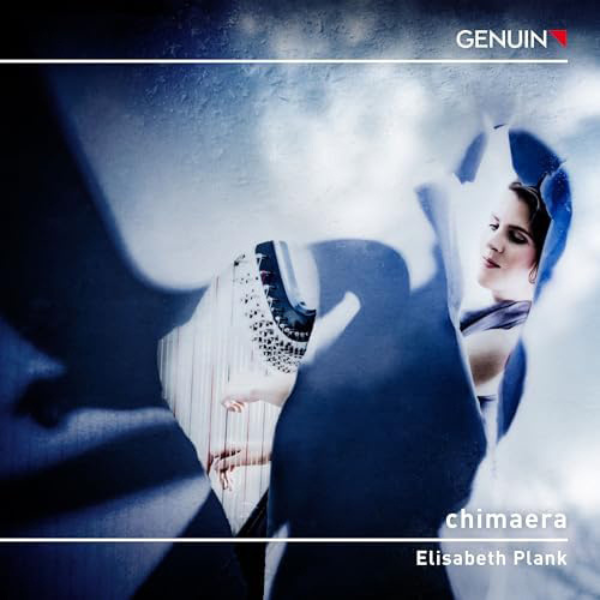
Elisabeth Plank, harp.
Genuin Classics, 2025.
Viennese harpist Elisabeth Plank told Harp Column in a recent interview, “In Europe, the separation of the [traditional] classical scene and the contemporary classical scene is very strict…so I think if you can just coax [the audience] into listening to something, they might be open to experiencing more.”
And what fine coaxing she does in her latest album chimaera, devoted to world premieres of works written for by six composers. Plank says these composers at first were “worried about composing for harp. ‘Oh no, pedals, so scary!’ But after they finished the piece they were always in love with the instrument and eager for more.”
Taking its title from the multifaceted, fire-breathing monster Chimera from Greek mythology, things begin in Greece with a moody Atlantis by Konstantia Gourzi. Inspired by the lost continent, Gourzi tickles our senses posing questions like what would a rose or jasmine sound like? Does love have a sound? Plank leans into the incisive qualities and extended techniques of these glorious miniatures, her tone warm and multi-hued, adding to a general feeling of suspense.
Austrian composer Wolfram Wagner describes his Ballade as “a story that doesn’t tell a story.” Rather than a beginning, middle, and end, there is a sense of continuum, like life with highs and lows strung together. Italian composer Pier Damiano Peretti admits writing for the harp is difficult, but he’s delighted to have such a great partner in Plank. What was most interesting to him was the variety of sound with which he had to work. In …nia, nia…he experiments with a set of theme and variations in reverse, only revealing the tune at the very end. Plank plays with a masterful confidence, digging into those sounds with gusto. When we finally arrive at the theme, it’s like an embrace.
Plank illuminates the multiple layers of sound and rhythmic interruptions of Quimera by Mexican composer Arturo Fuentes. She emphasizes the music’s hypnotic qualities while luxuriating in the fragility of Colombian composer Carolina Nogueras’ Sidereal Lullabies, making her instrument sound less like a harp and more like bells, chimes, gongs, and gamelan. Austrian Monika Stadler is an award-winning jazz harpist working in London. Plank performs her two-movement Alpine Impressions with the movement, rhythm, and even groove requested. There’s a sense of wonder as sunlight first lights up the range in “Mountain Morning,” followed by a sense of awe in “The Summit’s Tranquility.”