

Butterflies in your stomach? Sweating hands? Racing thoughts? Feeling too hot? Too cold? Performing brings a unique mix of excitement and nerves that can cause all sorts of physical and mental sensations. Professional athletes, musicians, and public speakers all develop pre-performance routines to help manage nerves and channel their energy effectively when they step on stage.
The field of sports psychology made the pre-performance routine popular, but the general idea is intuitive and universal. Planning out your routine can bring consistency to often unpredictable performance environments, and enable you to achieve your goals. These routines can calm the mind, prepare the body, and set you up for performance success. We asked several professional harpists from a variety of backgrounds about their pre-performance routines. Their tips and tricks can help you customize your own plan before your next concert.
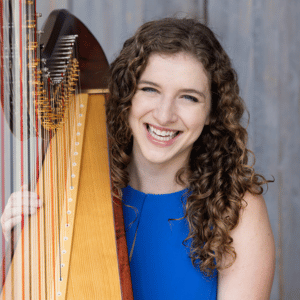
Let’s meet the experts we’ll hear from in this article (pictured l. to r.):
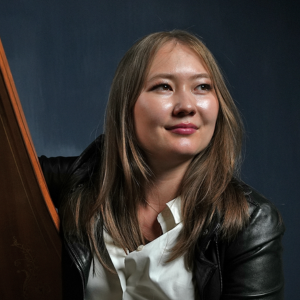




Caroline Bembia is principal harp of the New York City Ballet (NYCB). She performs as a soloist and with orchestras.
Felice Pomeranz is professor of harp at Berklee College of Music in Boston. She performs as a soloist and with small jazz ensembles.
Jaymee Haefner is professor of harp at the University of North Texas. She performs as a soloist, chamber musician, and with orchestras.
Ashley Jackson is assistant professor and director of performance for the music department at Hunter College. She is also a Decca US recording artist and performs as a soloist and chamber musician.
Amelia Romano is a classical lever harp specialist based in San Francisco. She performs as a soloist, chamber musician, and folk musician.
Further reading
Want to learn more about building resilient, reliable pre-performance rituals? Check out these books, recommended by our experts:
Grit
by Angela Duckworth
recommended by Jaymee Haefner
Effortless Mastery
by Kenny Werner
recommended by Felice Pomeranz
My Lessons with Kumi
by Michael Colgrass
recommended by Jaymee Haefner
Peak: Secrets from the New Science of Expertise
by Anders Ericsson and Robert Pool
recommended by Amelia Romano
Advance planning
Pre-performance routines usually refer to a deliberate sequence of thoughts and actions right before the performance. But preparation for successful performances begins weeks and months before the big day. Having a structured plan for learning music and a positive mindset can set you up for a great performance long before the day rolls around. Taking the time to prepare thoroughly and know your music inside and out will give you a big confidence boost going into your performance.
“Prepare!” says Pomeranz. “If you are ill-prepared that is all you will be worrying about in the performance.” She also notes how important it is to think about your intentions for a piece and ask yourself the question: what do I have to say about this music?
“My teacher, June Han, really taught me how to prepare,” Jackson says. “You can’t be still figuring things out a month in advance.” She says she tries to work on her music for as long as possible in order to really thoroughly understand the pieces. Jackson, who is an experienced recording artist, also records herself and listens back during her preparation. She says this is a big part of how she develops her artistic voice. Using the technology and tools at your disposal can help build confidence and intention as you prepare to perform.
practice techniques Romano mentions that an important component of her advance preparation is to find visually interesting shapes of notes in the music, and then turn them into warm ups. This practice helps her hands feel comfortable, even in more challenging passages. Haefner says she is meticulous about her pedal markings—she even color-codes them.
dress for success Your concert attire might seem like an inconsequential detail, but your wardrobe matters—especially for pedal harpists. Runners have a saying, “nothing new on race day,” and that should apply to harpists on performance day as well. There is nothing worse than discovering in the middle of a concert that your dress is too long, your jacket is too tight across the shoulders, or you can’t feel the pedals through your shoes. Plan your outfit—down to the last detail—and practice in it before the concert. Haefner says she always wears her hair up, after a concerto performance where her hair got tangled in the pedal discs. Pomeranz points out that jewelry choice can be important to ensure it doesn’t hit the harp and distract you from the music. And, of course, it’s important for all harpists to have trimmed nails and no rough calluses.
Game day
You’ve diligently practiced and prepared for your performance. When the big day finally arrives, there are several ways you can set yourself up to nail all the notes when you step on stage.
time management Creating a calm mind is a practice that can start by being deliberate about your schedule for the day. Even if a busy schedule requires you to do other work on performance day, it is important to give yourself as much space in your schedule as possible. “Carve out the time for yourself on a big performance day; don’t schedule teaching,” Pomeranz recommends. Bembia says that when she was younger she would go buy a luxurious bath bomb and take a long, relaxing bath the night before a solo recital. “With my current schedule, I don’t always have the time to do that, but the concept remains—I always try to stay as relaxed as possible in the hours leading up to a major performance,” she says. Romano is mindful of her social interactions on concert day in order to save her energy for the concert and keep her mind clear.
eating habits Food and caffeine can also affect how you feel on the performance day. Haefner says she is very careful about what she eats several days before a program because she has a sensitive stomach. “I always travel with the food I know will settle me and not upset my stomach. Greens and grains are usually what I look for.” Coffee seems to be a topic with more individual opinions. Bembia recommends keeping your coffee intake the same as it usually is, while Pomeranz tries to limit caffeine on performance days. Either way, listen to your body and take the steps you need to feel calm and rested as you walk onstage.
fresh air Many of the harpists we talked to brought up incorporating some sort of outdoor movement on performance days. Going for a walk, run, bike, or swim can help clear your mind and burn off some of the performance day jitters. Both Jackson and Pomeranz say they use exercise time to mentally review the music and their plans for the upcoming performance. Jackson adds that she will often practice talking through what she plans to say to the audience while she goes for a walk.
the warm up Another big piece of advice was consistent from all of the harpists interviewed: warm up slowly! Playing through your music slowly, deliberately, and calmly helps to keep the notes fresh in your mind and fingers but avoids tiring yourself out. Pomeranz says, “Practice like crazy the night before, but nothing fast and furious on performance days,” and Haefner says, “I play everything super slow, reading every note as if I have never read it before.” Jackson emphasizes a slow warm-up routine that focuses on scales, turnarounds, and rolled chords while really paying attention to the contact that every finger makes on the string. Romano also focuses on warm-ups that involve isolating each finger, and listening for even sound production. Pomeranz, Jackson, Romano, and Haefner also all mentioned starting and finishing each piece as part of their day-of practice routine. If playing a chamber concert, doing those “start and end” run-throughs with your chamber collaborators is a great idea too. Starting and finishing each piece can give your mind an overview of the concert, and allow you to remember your tempos more accurately.
It’s go time!
Most performers are familiar with the exciting but also stressful feelings that happen in the minutes and seconds before walking on stage or starting your big solo. Anticipate these feelings and have a strategy to calm your nerves and regulate your energy to give yourself the best opportunity for a successful performance. These “final moment” routines can make a big difference.
logistics Some of the basic considerations might seem like no-brainers, but these are things that are easily overlooked when your brain is pre-occupied with a looming performance. Simple strategies like going through an equipment checklist before you leave the house can eliminate unnecessary stress later. “I find comfort in doing a final check to make sure I have everything I need to perform—tuning key, tuner, strings, picks if I’m playing something like Das Lied, small hand towel if it’s a humid day and I’m worried about sweaty palms, etc.,” says Bembia. “With each run of a ballet at NYCB, I get into a routine of not only checking to make sure I have everything I need for that particular ballet, but also keeping a mental note of which strings will need re-tuning during tacets and intermission.”
Making sure you are prepared for the visual changes of the stage lights is also very important. “For me the tricky moment is going from dark to light, visually,” Haefner says. “So I make sure I am looking out so that my eyes are better adjusted.” Romano says she thinks through how exactly she is going to walk on stage and bow (walking ahead or behind the harp, order if in a chamber group, etc.) to avoid the distraction of awkward entrances.
breathing Deep and slow breathing is something that all of the harpists we interviewed use in the moments before they perform. Slowing down your breathing helps calm your nervous system, and clear your mind. Yoga or meditation practices can help train this breath work. “I’ve been taking yoga classes semi-regularly ever since I was in high school, and I find that the breathwork that is taught in yoga has really helped me stay centered in my performances,” Bembia says. “When I’m in a dressing room or green room before a major performance, I will return to yoga-like breathing to stay present in the moment.” Pomeranz also cites experiences with yoga as helpful for developing a habit of calm breathing before performing.
positive energy Another important routine right before you play is to consider the energy you are showing the audience and your fellow performers. “I have always found that smiling relaxes me,” Haefner says. “So right before I play I make sure to smile.” Jackson says she agrees about the power of a smile, adding that she is always looking for moments of human connection in a performance.
“Keep in mind that the audience is seeing you for the first time, so be thoughtful about the vibe you are projecting,” Romano advises. She says that she loves to talk to the audience before playing to help create a human connection and feel that they are “on her side.” Pomeranz echoes the positivity vibes. “Smile, look like you are enjoying yourself!” Smiling and projecting confidence not only puts your audience at ease, but can also help you get into a good performance mindset.
Having a plan for positive self-talk right in the moments before your first note can make a huge difference in your mental state and prime you for a great performance. Pomeranz shared some of the phrases she uses to give herself a pep-talk:
“You’re gonna do great!”
“All is well.”
“Go get ’em!”
“Have some fun!”
Haefner suggests having an “action word” that you can use when you notice your mind wandering. “I encourage my students to pick a word—something quick—to bring them back into the zone. This can be something simple but positive.”
Bembia says musicians often focus on eliminating nerves and tend to view feeling nervous as a negative thing. But she disagrees with this mindset. “Feeling nervous is a good sign—it means you have artistic integrity and you care about producing a good performance. I tell my students to mentally reframe [feeling nervous] as ‘feeling excited.’ Rather than thinking ‘I’m so nervous about this performance today,’ try to reframe it as ‘I’m so excited to share the result of my hard work with such a supportive audience.’ Even in potentially higher pressure circumstances such as an audition, I’ve found that thinking ‘I’m so excited to make a musical/artistic statement’ rather than focusing on how nervous I am puts me in control.”
Jackson has a profound and beautiful ritual before performing. “Right when I begin, I imagine that my grandmother is sitting next to me. A lot of my work is drawing from what my ancestors have given me. I think of a quote, often attributed to Maya Angelou, ‘Every room you are in, you bring your people with you.’ You always have all of the support of your family and friends holding you up.”
This final step of positive thought is perhaps the most powerful part of a pre-performance routine. It can be difficult to control all the variables on your performance day, but you always have the opportunity to build in positive thinking in the moments before playing.
After the applause
After the performance is over, there is still one final step that can help your next pre-performance ritual: the debrief. Romano says she tries to listen back to a recording of the performance as soon as possible, taking notes on what went well and what didn’t so that she can adjust her preparation. This type of post-performance debrief is extremely useful, and a great reminder that every performance is preparation for the next one.
Developing a pre-performance routine is an on-going process that is unique to every harpist. Each of the harpists interviewed have their own approach, but also have many similarities in their routines. Focusing on calming the body and mind and connecting to the people around you seem to be universal ways to feel more grounded and confident as a performer. Hopefully you have a few more ideas for how to create your own pre-performance routine. Happy performing! •