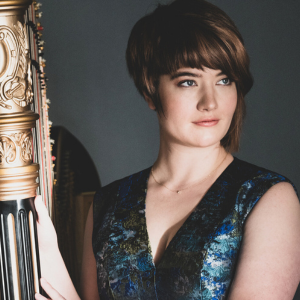


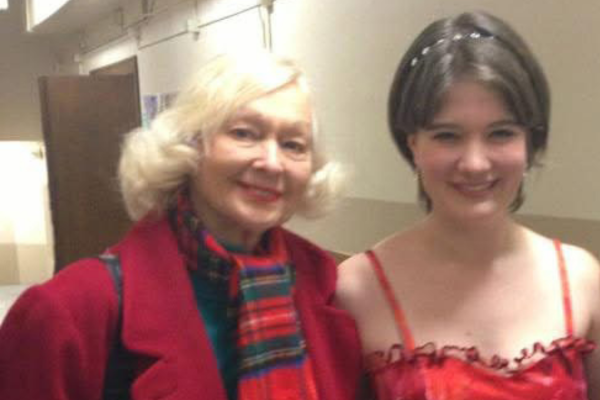
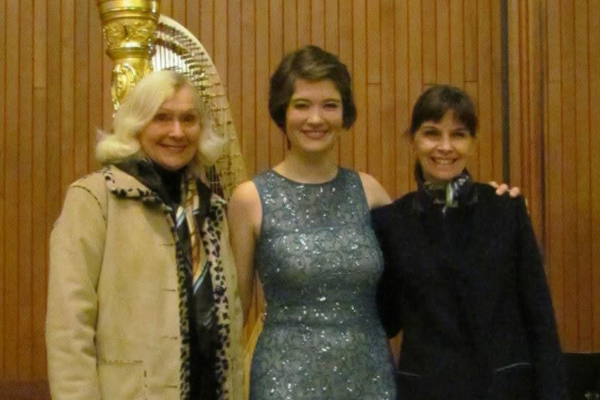
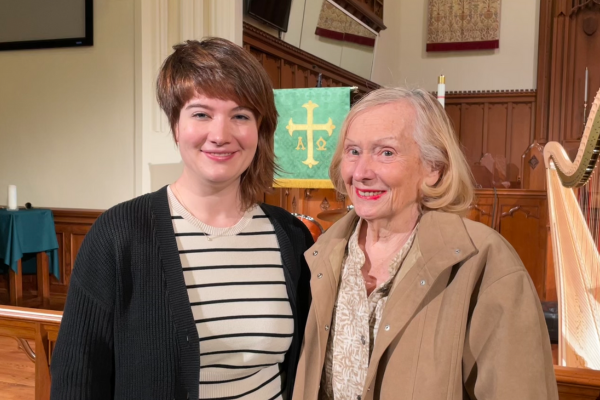
Emily Levin with her teacher and mentor Susann McDonald through the years.
I had the immense privilege of studying with Susann McDonald (Miss McDonald to all of her students, past and present) for my undergraduate degree at Indiana University from 2009–2013. I had admired her as a performer and teacher for years—I recently found my American Harp Society winner’s recital program from 2003, which I had proudly saved with her autograph on it.
My four years at Indiana University (IU) were so fulfilling, both musically and non-musically. I completed degrees in music and history, made some of my best friendships, and successfully navigated the international competition circuit, all under the tutelage of Miss McDonald. Most of my life revolved around the harp studio in room MA003 and our surrounding harp practice rooms. (021 was the social gathering spot for practice breaks, and 017 was ideal because the automatically locking door allowed for midday naps.) My years at IU shaped me into the person and harpist I am today, and a large part of that was thanks to my teacher.
Here are 10 things I took away from my harp studies with Miss McDonald.
1. Live Fully
Miss McDonald dedicated her life to the harp, but it did not define her. She was a woman of deep faith, and she valued and cultivated her connection with colleagues, friends, and students. She had diverse hobbies and interests including gardening, her adorable dogs, and golf. (She was a legend among IU faculty for her golf swing!) She was deliberate in devoting time to pastimes outside of music. From her, I learned that a harpist could, and should, take time for other people, for personal reflection, and for life’s non-musical delights.
2. Time is precious. Use it for good.
Our lesson schedule was posted on the harp studio door at the beginning of the semester, and it was dutifully followed. With over 20 harpists in the program, every minute counted, and Miss McDonald ran a very regimented ship. Tardiness and absences were not accepted—if you were late to your lesson, you were greeted with the usual politeness, but your lesson ended at the normal time. And with this respect for her own time, Miss McDonald was able to give us so much of it, coming to dress rehearsals, orchestra concerts, and many other outside performances. We were expected to attend every harpist’s recital, because that is what good studio mates did. From her I learned the importance of showing up for friends and colleagues, and making sure your own life allows you to support both your own endeavors and those of others.
3. Dress for success
Harp students were expected to dress professionally for lessons, and it was a joke in the music school that you could always tell when someone had a harp lesson because they looked so nice. It was a sign of respect for Miss McDonald, who was always the most put-together person in the room, and it also instilled in us the habit of dressing well for music events. To this day, I won’t wear jeans to an orchestra rehearsal, and my habit of dressing well for music events has helped me navigate the professional world. My own college students are expected to dress professionally for lessons, and they also all know that this comes from my time at IU.
4. Practice radical generosity
As we all know, the harp is expensive, and if you do not have resources at your disposal, acquiring an instrument can be extremely difficult. When Miss McDonald found out that I did not own a harp, she took it upon herself to help me find one and make the purchase possible. She is the reason I have my Style 23, and without exaggerating, this generosity changed my life. I know I am only one of many harpists who are indebted to her.
5. Bring people together
The end-of-year studio parties, hosted at Miss McDonald’s house, were the stuff of legend. Games such as “name this piece in only one note” and “name this piece just by the hand preparation” were played every year, with prizes ranging from costume jewelry to Miss McDonald’s license plates, which alternated between “Gliss” and “IU Harp.” (I won “IU Harp” my senior year, and it is currently displayed in my harp studio). These gatherings were a celebration of our harp studio and helped shape our camaraderie, and I saw how important community was in fostering a supportive, strong harp world.
6. Dig in
If I close my eyes, I can see each of my teacher’s hands—it is a physical record of their musical essence. From Miss McDonald’s hands, which were large, strong, and seemingly designed especially for the harp, I learned the power of a rich, deep sound. “Press more, dear,” she would say, encouraging me to dive into the strings and pull out the core sound. She taught me the full range of color possible inside our fingers, and helped me understand how magical that truly is.
7. do Mental Practice
I was in the last few months of preparation for the Israel competition when I entered IU as a freshman, and I was struggling with debilitating mental blocks during performances. I would psych myself out with nonstop mental commentary and was having severe memory blanks while playing. Miss McDonald told me to take each piece and play through it in my head—visualizing my fingers on the strings, noting every pedal change, and really seeing the piece vividly and slowly. I remember wandering the Bloomington campus for hours, painstakingly playing through the Salzedo Variations, Ginastera harp concerto, Renié Piece Symphonique, and more in my head. This advice saved me. Every aspect of each piece, from fingers on the strings to the dynamic shapes, was so deeply ingrained into my brain that there was no more room for panic or fear. I ended up being a finalist and winner of the Renié prize at that competition, and it was entirely thanks to Miss McDonald. I still do mental practice before any stressful performance!
8. Good enough is your best
With such a large studio, we had the entire range of harp students, from doctoral candidates to undergraduate freshmen. Regardless of where we were in our harp journey, all Miss McDonald required was that we brought our personal best. It did not matter how difficult your piece was, what mattered was that you came to masterclass prepared to play at your current best. From her I learned that it didn’t matter if you could pull off a brilliant performance—if you weren’t actively working to be your best, you were not succeeding.
9. Performance is all-encompassing
I remember getting frustrated in my dress rehearsal for my senior recital because Miss McDonald kept telling me to look higher up on the strings so the audience could see my eyes. “We can’t engage with you if we never see your eyes,” she told me. I was preparing for the USA International Harp Competition at the time, and she was insistent that this was an important part of performance. As I started considering the audience component of performance life, I realized the importance of creating engaging musical experiences—something that Miss McDonald spent her entire career perfecting. This focus on both the personal and public components of the concert experience contributed to my success in the USA competition, and it remains a core component of my performance life.
10. Love the harp
“Do you love the harp?” was famously the question Henriette Renié would ask potential students. It is no surprise that her star student, Susann McDonald, so completely encapsulated everything wonderful about our instrument. She understood the harp completely. As a teacher, performer, and ambassador, Miss McDonald brought the harp to the world, and she also created so many opportunities for harpists to gather. She spent her life making the harp community a stronger, more connected place, and we are the richer for it. •