


The harp is one of the more worldly instruments you’ll find. Around the globe, people have translated the harp into their own culture, creating different looks, sounds, and techniques on the instrument.
Because the harp has become such a diversified instrument, when harpists come together to compete, most contests are designed to award the best performer within their genre. The World Harp Competition has taken a different approach. Originally called the Dutch Harp Competition, the event is fully living into its international moniker of the World Harp Competition (adopted in 2018) when it removed all constraints on the type of instrument or music performed by its participants. The result has been a fascinating array of harpists getting the spotlight on the international stage, including this year’s winner, Paraguayan harpist Juanjo Corbalán. We thought there would be no one better to interview Corbalán than a past winner of the competition, Mexican harpist Emmanuel Padilla Holguín. The two Latin American harpists spoke in their native language of Spanish (one of two official languages of Paraguay, along with Guaraní), and Holguín translated their conversation into English for our readers.

Harp Column: First of all, congratulations on winning the World Harp Competition! What was your reaction when your name was announced as the first prize winner?
Juanjo Corbalán: Honestly, I felt great joy, happiness, but more because of the entire experience rather than just for the win. It was incredible to meet other harpists within the context of [the Dutch Harp Festival], a modern event with such a broad artistic perspective. I’m very happy to have shared my music with the other winners and participants, and joyful for art itself. Just being at the competition was an achievement for me, as getting [the financial] support to be able to travel was very difficult. It means so much to me to have been there.
HC: Amazing! You are the third Latin American harpist to win first place in this competition. What does that tell you about the harp scene in Latin America and how it has developed?
JC: I think that fact is very significant, considering that this competition is very demanding, with high quality proposals, with European harpists showing amazingly clean technique and presenting music which has developed over several centuries. However, the artistic perspective of the Latin American artists is quite broad, and our traditional harp techniques are completely unique. The “cosmovision” the Latin American peoples have developed is a different path than the Europeans took in developing music, instruments, and technique. In the last decades, harp events were more limited to certain types of music and harps, but this competition opens a path for Latin American harpists to take part and to bring our music and our cosmovision to a wider audience, broadening everybody’s musical horizons. It is such a joy to be the third Latin American harpist to have won this competition.
HC: This brings me to the next question: how was it to be part of a competition where the type of harp you play is not a factor in the judging; having different harps making very different types of music.
JC: It was a very noble and beautiful experience, because you find yourself among other harps, other techniques, and other ways of envisioning music. On this occasion there was a Chinese harpist with a very contrasting vision of music, which among others nurtured me as a musician. These experiences inspire us to keep creating, composing, and listening to music from all over. Each sonority brings something different and interesting. I was very satisfied to listen to so many different proposals.
HC: Can you tell us a bit about your competition program, which you titled “South American Journey?”
JC: I really like to listen to Latin American music; therefore, I am passionate about our folklore. I chose this program because I wanted to share—through my music and some traditional Paraguayan music—what unites us in Latin America: the 6/8 time signature. It is representative of our traditional music, along with a mix of rumba and salsa, a taste of Central American countries and the Caribbean islands. I wanted to paint the contrasts within the 6/8 [meter] and show how, although it varies, its core elements remain. And again, the cosmovision of the native people of Latin America, especially the “Mbyá-Guaraní” in Paraguay—[these cultures] are a great inspiration for me, and my music is a tribute to them.
HC: Which harpists have inspired your path in music? Maybe there are names like Edmar Castañeda, Celso Duarte, even your brother Sixto Corbalán?
JC: Of course! In fact, my brother Sixto was my first harp teacher; he introduced me to music. Then I expanded my music world through musicians such as Nicolás Caballero, who was my professor as well. I admire everything he did for the Paraguayan harp, the techniques he developed, etc. Another Paraguayan maestro I admire is Mariano González, who introduced the levers in Paraguayan harp music. There is also Ismael Ledesma; Edmar of course, he is an icon; Eduardo Betancourt, who is a great friend; Celso Duarte, whom I admire so much; and I have listened to you as well, I really like what you do; Juan Pablo Rodríguez from Colombia; Pia Salvia from Belgium; obviously Park Stickney—I could go on forever! And if I include non-harpists, there is Hermeto Pascoal, an amazing Brazilian multi-instrumentalist. In my view he changed so much in the world of music. He inspired me to utilize everything I like: folklore, jazz, improvisation, etc.
HC: Moving on to the Paraguayan harp and its music, what is the role of the Paraguayan harp in this tradition?
JC: The Paraguayan harp is central in the structure of Paraguayan traditional music. It can perform as a soloist or as the core of an ensemble. The 1920s is when the harp really broke into its role as soloist, and the 1940s saw the peak of Paraguayan harp music. Harpists like Féliz Pérez Cardozo—who composed the famous song “Pájaro Campana”—and Nicolás Caballero—who developed our “rings technique” and expanded the harp’s possibilities—are examples of the great harp soloists, composers, and group leaders who made an impact on the development of our music.
By the 1970s, the harp had become somewhat limited by its harmonic possibilities. As the rest of the instruments started exploring and using more complicated harmonies, the harp became more of an accompanying instrument, but still had an important solo presence. In the 1980s, the levers marked a turning point for our instrument, and the harp recovered its key role in groups. Today, with so many young harpists exploring contrasting styles with the Paraguayan harp, it is more alive than ever!
HC: You mentioned the “rings technique.” Could you explain what it is? Does it involve the special rings you wear while you play?
JC: The Paraguayan harp has constantly evolved through the years. One day Nicolasito (Nicolás Caballero) was tuning his harp when he accidentally dropped his tuning key. Attempting to catch it, the key slid against the strings creating a peculiar sound (string bending). “Epa!” he exclaimed, “What was that?” He picked up the key and recreated this sound, over and over, “There’s something here.” He found the different pitches he could do on a single string and perfected this technique using the tuning key to alter the pitch on a particular string. He used to hold the tuning key with his fingers while playing, which is crazy, and even crazier is the fact that he could play amazingly nonetheless.
Papi Galán, another Paraguayan harpist, proposed to Caballero an alternative: He was a skilled welder so he proposed creating rings with a metal piece sticking out to be able to “cut” the string while playing. They are used on the thumb and the middle finger. This brought many harmonic possibilities to the instrument, which is essentially diatonic. It is a very difficult technique to learn but still worth it, as harps with levers are difficult to acquire in Paraguay.
HC: Is it possible to play this music on other types of harps?
JC: It could be. Many aspects of the technique are not viable on the pedal harp, but if you maintain a similar sonority, timbre, and gestures, it can be successful. The key is to listen to the original and try to create a similar result, by playing with nails, staccato, using thirds and sixths in the melodies…all of the traditional aspects of the music.
HC: You played an instrument at the competition that you said combined aspects of several harps from different traditions. Can you tell us about the harp you play?
JC: It is a special harp. A luthier who was a great friend of mine made this instrument for my brother and me. We love it so much. It is a fusion of a Paraguayan harp of the 1950s and ’60s with elements of European lever harps, like the eyelets and other design features. It’s very simple and elegant looking. My brother and I designed it from top to bottom.
HC: You are a composer as well as a performer. From where do you draw your inspiration to create music?
JC: This desire to compose originated in 2005 when I composed a song for my mother: Caricias de mamá (Mom’s caresses) an homage to all her love, support in my education and upbringing, as well as my brother’s. After that, I started looking into Paraguayan folklore. I wanted to master the traditional music but play it through a different lens, give it a contemporary sound, and make it my own. My dream was to make it sound like the music I was listening to: bossa nova, blues, guarania. My brother helped me through this process. Some teachers also helped me to develop my own musical language, but by myself I’m always looking for new music to listen to in order to enrich my cultural awareness. Currently, I listen to a lot of Latin American music.
HC: And what is next? What are you working on?
JC: In 2017 I started a quartet with dear and talented colleagues Lara Barreto on saxophone and voice, Víctor Álvarez on piano and voice, Seba Ramírez on percussion, and myself on the Paraguayan harp, which is the main project I am pursuing at the moment. I am exploring a lot of traditional music, polyrhythms, free improvisation, etc. And I am still thinking about the Care, Coaching, & Career Development Program, part of the prize of the competition. I’m taking the time to define what I will pursue through it.
HC: What advice do you have for young harpists who are thinking about entering a competition like this?
JC: To have an open mind, a broad musical vision, and the wish to learn. To come to this competition to learn from others, from the colleagues that will be performing next to you. To appreciate the contrasting types of music and different harps you will get to know more of.
HC: Thank you so much for this conversation, Juanjo. It was fascinating. And congratulations one more time!
JC: Thank you, Emmanuel! •
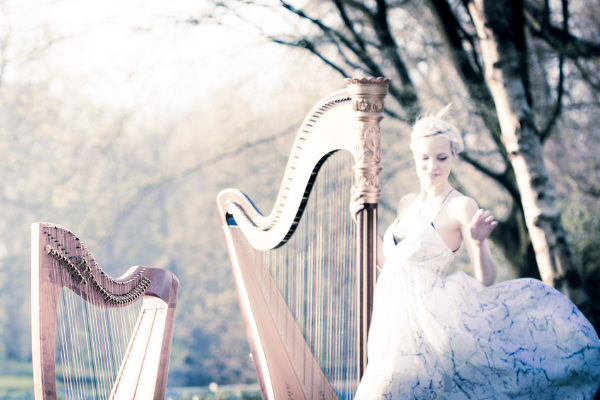
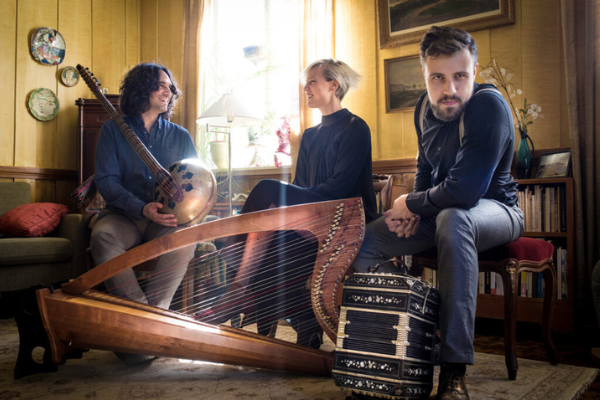
Julie Rokseth burst onto our radar at Harp Column back in 2019 when she earned a rare perfect 10 rating from recordings review editor Alison Young for the album With the Sky in Our Hands she recorded with her brother, bandoneonist Andreas Rokseth. The Norwegian harpist clearly had a lot to say, taking her musical story to the final stage of the World Harp Competition where she earned second prize and the audience prize for her performance.
Harp Column: Congratulations on winning second prize at the World Harp Competition! After the pandemic canceled so many live events in the last couple years, how did it feel to be out there performing live on such a big stage?
Julie Rokseth: When you aren’t used to performing as much as before, there are a bit more nerves and a little less security in terms of how to connect with your audience. I’ve been lucky in Norway because we’ve been able to have a few concerts throughout the COVID period. But the most people I’ve had in concert audiences in the last year have been maybe 10 people, so I was afraid I would get quite nervous from the pressure of having a full audience and knowing it was livestreamed. But what happened was that I just really got a kick out of it. I felt amazing support from the audience. When you have a very attentive audience, it brings a wonderful energy to the performance and makes it not about you playing for them anymore. It becomes about the communication between you and the audience.
HC: It sounds like you must have made quite a connection with the audience, since you won the audience prize in addition to the second prize. The audience chose you as the harpist they would want to hear again. What did that feel like?
JR: It felt like I managed to do what I wanted to do in this competition. For me, it wasn’t important to get a prize. I just wanted to tell the story of my concert, and with it, to touch something in people, to maybe open some doors inside someone to talk about someone they have lost. I wanted my music to mean something to the audience. So for me, winning the audience award meant that my music meant something to the audience, which is a fantastic feeling. I’m grateful for the opportunity to do that.
Julie Rokseth burst onto our radar at Harp Column back in 2019 when she earned a rare perfect 10 rating from recordings review editor Alison Young for the album With the Sky in Our Hands she recorded with her brother, bandoneonist Andreas Rokseth. The Norwegian harpist clearly had a lot to say, taking her musical story to the final stage of the World Harp Competition where she earned second prize and the audience prize for her performance.
Harp Column: Congratulations on winning second prize at the World Harp Competition! After the pandemic canceled so many live events in the last couple years, how did it feel to be out there performing live on such a big stage?
Julie Rokseth: When you aren’t used to performing as much as before, there are a bit more nerves and a little less security in terms of how to connect with your audience. I’ve been lucky in Norway because we’ve been able to have a few concerts throughout the COVID period. But the most people I’ve had in concert audiences in the last year have been maybe 10 people, so I was afraid I would get quite nervous from the pressure of having a full audience and knowing it was livestreamed. But what happened was that I just really got a kick out of it. I felt amazing support from the audience. When you have a very attentive audience, it brings a wonderful energy to the performance and makes it not about you playing for them anymore. It becomes about the communication between you and the audience.
HC: It sounds like you must have made quite a connection with the audience, since you won the audience prize in addition to the second prize. The audience chose you as the harpist they would want to hear again. What did that feel like?
JR: It felt like I managed to do what I wanted to do in this competition. For me, it wasn’t important to get a prize. I just wanted to tell the story of my concert, and with it, to touch something in people, to maybe open some doors inside someone to talk about someone they have lost. I wanted my music to mean something to the audience. So for me, winning the audience award meant that my music meant something to the audience, which is a fantastic feeling. I’m grateful for the opportunity to do that.
HC: Tell us a little bit about the program you performed in the competition.
JR: I did a duo concert with my brother on the bandoneon. One of our recent projects has been to create a three-vinyl series which tells the story of our grandparents because it’s such a big part of our family history. They grew up on a little island off the coast of Norway, and this island has been a very important part of my life. I have visited and lived there for small periods throughout my life. It was a special fairytale place for me as a young girl, where you go swimming in the summer and go fishing for crabs—it’s just this paradise. But as I grew up, I realized it wasn’t that. My grandmother didn’t even know how to swim because they were so afraid of the sea. As I learned more about my history, I realized that they depended on the sea—they needed what it had to offer, and every day they risked their lives to get it. This way of living has fascinated me. This isn’t just in Norway. This way of life happens all around the world in coastal communities. My grandfather was lost at sea when he was about 30 years old, and my grandmother was left with her three daughters, and pregnant with a fourth. I can’t imagine what that would have felt like. But that happened to many on the island. So we wanted to write music about this. We have written a lot of music, but for this competition I had to squeeze it into the time constraints. I also wanted to show what I’ve been doing the last few years, which is working on a master’s degree in tango harp. I have explored how the authentic tango harp would sound today if it had continued to be a part of the Argentine tango as it developed. So I made a program where I told the story of my grandmother with some of the music we have written, but also included some tangos that I have arranged.
HC: You were classically trained—tell us how your path diverged from the typical classical career.
JR: I started learning classical harp when I was 9, and got my bachelor’s degree in classical harp. I freelanced for a few years as a classical musician here in Norway, but I didn’t feel quite right. It didn’t feel like the right style for me to be my best. I could see my friends growing from tiny seeds into big forests in the classical world, but for me, it felt narrow. I wasn’t sure if I should stop playing or look for more in the music world. I started to explore folk music, and I loved it. Luckily I had met my husband by then. He’s a musical psychologist, and he asked me, “Why can’t you make a duo with your brother and make a living from it?” I said, “There’s no such thing as a harp and bandoneon duo!” He said, “Why don’t you make it?” So I decided to create a duo with my brother who was also a bit lonely on his path.
HC: We reviewed your first album together, “With the Sky in Our Hands” in the May/June 2019 issue of Harp Column, and it received a rare perfect 10!
JR: We wanted to dig deep down into the tango and figure out how the harp would sound if it had developed with the tango. For example, the classical double bass sounds completely different from one that has grown up in the tango style. I wanted to find that—how would the harp sound today if it hadn’t been squeezed out by the guitar and the piano early in the 1900s.
HC: So after exploring these different musical styles—where do you feel most at home?
JR: I feel most at home when I play my own music, or music we’ve written in my duo or trio. You know when you reach that place where you feel like you could die happy? That’s where I am when I’m playing my own music. When I manage to write something I like in a way that clicks—which takes a lot of time and effort, it doesn’t come easily—then I feel like I’m touching some sort of energy. And when you touch that energy and feel like yourself is when you feel like you can really reach your audience.
HC: Has the competition changed the way you look at how the harp can be received by an audience?
JR: Yes, absolutely. I’ve always been a very lonely harpist. I was lucky to have a great harp teacher, Willy Postma, a Dutch harpist who was living in Trondheim at the time. But all her other students were on their way out, so I didn’t have a lot of friends playing the harp. You know, you can convince yourself that what you’re doing isn’t interesting to other harpists, and I realized I had to slay that dragon. I was chosen to play at the World Harp Congress in 2020, but it was delayed because of COVID, and now I’m not able to play it. So when [the World Harp Competition] came up, I thought, “This is my chance.” For me personally, it was huge to be able to present what I’ve done and experience an acceptance there and even inspiring some harpists with what I’ve done. Also, I think what the festival does is fantastic. I think there are many harpists that need a festival like that to see what is possible and how free you can be and how many ways you can go with the harp. There is not just one way, there are many ways. The classical road is not the only road. It’s not a bad road, it’s just not the only road. It’s so important for us harpists who have grown up in the classical world to understand. If I had gone to this festival as a 15-year-old, it would have blown my mind. I think I would have been braver earlier.
HC: What advice do you have for young harpists who saw you and others play and were inspired by all of the styles of playing they saw?
JR: I would advise them to play what makes them happy and lights up inspiration in their heart. Don’t think you have to be inspired by the path your friend took. Don’t be afraid to check in with yourself to really see what makes you happy and brightens you up. I heard a yoga teacher once say you should do what makes you vibrate inside, and I would say you should play the music that makes you vibrate inside, because then you can really touch that energy. And practice technique, because that will allow you to be able to do what you want and make it more fun. •
HC: Tell us a little bit about the program you performed in the competition.
JR: I did a duo concert with my brother on the bandoneon. One of our recent projects has been to create a three-vinyl series which tells the story of our grandparents because it’s such a big part of our family history. They grew up on a little island off the coast of Norway, and this island has been a very important part of my life. I have visited and lived there for small periods throughout my life. It was a special fairytale place for me as a young girl, where you go swimming in the summer and go fishing for crabs—it’s just this paradise. But as I grew up, I realized it wasn’t that. My grandmother didn’t even know how to swim because they were so afraid of the sea. As I learned more about my history, I realized that they depended on the sea—they needed what it had to offer, and every day they risked their lives to get it. This way of living has fascinated me. This isn’t just in Norway. This way of life happens all around the world in coastal communities. My grandfather was lost at sea when he was about 30 years old, and my grandmother was left with her three daughters, and pregnant with a fourth. I can’t imagine what that would have felt like. But that happened to many on the island. So we wanted to write music about this. We have written a lot of music, but for this competition I had to squeeze it into the time constraints. I also wanted to show what I’ve been doing the last few years, which is working on a master’s degree in tango harp. I have explored how the authentic tango harp would sound today if it had continued to be a part of the Argentine tango as it developed. So I made a program where I told the story of my grandmother with some of the music we have written, but also included some tangos that I have arranged.
HC: You were classically trained—tell us how your path diverged from the typical classical career.
JR: I started learning classical harp when I was 9, and got my bachelor’s degree in classical harp. I freelanced for a few years as a classical musician here in Norway, but I didn’t feel quite right. It didn’t feel like the right style for me to be my best. I could see my friends growing from tiny seeds into big forests in the classical world, but for me, it felt narrow. I wasn’t sure if I should stop playing or look for more in the music world. I started to explore folk music, and I loved it. Luckily I had met my husband by then. He’s a musical psychologist, and he asked me, “Why can’t you make a duo with your brother and make a living from it?” I said, “There’s no such thing as a harp and bandoneon duo!” He said, “Why don’t you make it?” So I decided to create a duo with my brother who was also a bit lonely on his path.
HC: We reviewed your first album together, “With the Sky in Our Hands” in the May/June 2019 issue of Harp Column, and it received a rare perfect 10!
JR: We wanted to dig deep down into the tango and figure out how the harp would sound if it had developed with the tango. For example, the classical double bass sounds completely different from one that has grown up in the tango style. I wanted to find that—how would the harp sound today if it hadn’t been squeezed out by the guitar and the piano early in the 1900s.
HC: So after exploring these different musical styles—where do you feel most at home?
JR: I feel most at home when I play my own music, or music we’ve written in my duo or trio. You know when you reach that place where you feel like you could die happy? That’s where I am when I’m playing my own music. When I manage to write something I like in a way that clicks—which takes a lot of time and effort, it doesn’t come easily—then I feel like I’m touching some sort of energy. And when you touch that energy and feel like yourself is when you feel like you can really reach your audience.
HC: Has the competition changed the way you look at how the harp can be received by an audience?
JR: Yes, absolutely. I’ve always been a very lonely harpist. I was lucky to have a great harp teacher, Willy Postma, a Dutch harpist who was living in Trondheim at the time. But all her other students were on their way out, so I didn’t have a lot of friends playing the harp. You know, you can convince yourself that what you’re doing isn’t interesting to other harpists, and I realized I had to slay that dragon. I was chosen to play at the World Harp Congress in 2020, but it was delayed because of COVID, and now I’m not able to play it. So when [the World Harp Competition] came up, I thought, “This is my chance.” For me personally, it was huge to be able to present what I’ve done and experience an acceptance there and even inspiring some harpists with what I’ve done. Also, I think what the festival does is fantastic. I think there are many harpists that need a festival like that to see what is possible and how free you can be and how many ways you can go with the harp. There is not just one way, there are many ways. The classical road is not the only road. It’s not a bad road, it’s just not the only road. It’s so important for us harpists who have grown up in the classical world to understand. If I had gone to this festival as a 15-year-old, it would have blown my mind. I think I would have been braver earlier.
HC: What advice do you have for young harpists who saw you and others play and were inspired by all of the styles of playing they saw?
JR: I would advise them to play what makes them happy and lights up inspiration in their heart. Don’t think you have to be inspired by the path your friend took. Don’t be afraid to check in with yourself to really see what makes you happy and brightens you up. I heard a yoga teacher once say you should do what makes you vibrate inside, and I would say you should play the music that makes you vibrate inside, because then you can really touch that energy. And practice technique, because that will allow you to be able to do what you want and make it more fun. •


Maria Sá Silva is inspired by the world around her. The Portuguese harpist plays the classical pedal harp, but sees it as merely a vessel for communicating with her audience. Sá Silva took listeners on a journey through her native Iberian peninsula for her third-prize-winning performance in the World Harp Competition.
Harp Column: Congratulations on your performance! Who was the first person you called after the finals?
Maria Sá Silva: My teacher Irina Zingg—she gives me a lot of support and inspiration to continue. Of course my parents were watching the finals, so they already knew the results.
HC: You’ve competed in several traditional competitions, but obviously the World Harp Competition is a bit different. Tell us about why you decided to compete here.
MSS: Before competing, I already had this project, which I presented at the competition called Saudade. I wanted to take this project to an international level, and I saw this as the best way to do that, since it isn’t a traditional classical competition. I love to show the harp as a solo instrument, and I wondered how I could do this in a different way. The Fado pieces I played [as part of the Saudade project] were a challenge to me as an artist to use the classical harp, but with a new repertoire.
Saudade is a Portuguese and Galician word for a feeling of nostalgic longing for something or someone that one was fond of and includes a sense that what is longed for may never return.
Deeply associated with this sentiment is Fado, from Latin “fatum,” a traditional Portuguese music genre usually played by a singer and Portuguese guitar.
HC: Tell us more about the Saudade project and the music you played on your program.
MSS: I started thinking about it three years ago. I didn’t know the Portuguese guitar player Carlos Paredes until I saw a documentary about him with my parents. I asked them who he was, and they said he was this great artist. My father showed me his records and music. I thought his repertoire was interesting. Paredes’ music is very expressive, nostalgic, and also patriotic. Portuguese guitar is a traditional instrument used in Fado, which is a Portuguese music style that is usually sung and accompanied by a Portuguese guitar. [Paredes] was such a virtuoso that he wrote his own pieces and performed them by himself. So then someone asked me, “Why don’t you try this music on the harp?” It started almost as a joke, but then I got more and more involved. I started to discover what I could do with this music on the harp. When I showed it to my colleagues and to my teacher, they told me it was beautiful and could really have an impact on people.
Then I called my family to my home, because they are great fans of [Paredes], and I played for them and asked them what they thought. They gave me input and helped me put everything together. During the pandemic, I would make short videos and post them on my social media once a week to get feedback from the public. People from all over the world liked it, and I thought, “This could be a challenging project.”
I also included some Spanish music, because it is special to me because of my Latin heritage. The kind of spunk and vivid sounds that you find in Spanish music is very special to me. For the competition, I created an Iberian concert with Portuguese and Spanish musical ideas.
HC: It sounds like your family was very involved in the Saudade project.
MSS: Yes, they were very much involved.
HC: Do you come from a family of musicians?
MSS: No, they are not musicians. I’m the only one who is a professional musician. But they have very good musical ears. My uncles play music by ear and they listen to classical music. My parents also listen to a lot of classical music. I met the harp at an orchestra concert when I was 6 years old. I was amazed by the sound of the harp, and I told my mother I wanted to study the harp.
HC: You are still at the beginning of your career, but I’m sure you have ideas about what you want to do with the harp. Has your experience in this competition changed those ideas in any way?
MSS: It’s only been a week since the competition, so I am still processing everything, but I think it opened my mind a lot. It’s not only the competition itself, but the [Dutch Harp] Festival is such an amazing experience with so many sounds and so many different styles. The opening concert where all of the semifinalists played was amazing. Remy van Kesteren, the artistic director, put together so many different styles from pop music to electric harp to tap dancing with harp. I was amazed with everything and every possibility. It gave me a lot of ideas about what I can do with the harp that I am still processing. I love the classical harp because it’s what I started with. But I also want to do so many different things, like these arrangements of the Fado music.
HC: Where do you draw your musical inspiration from?
MSS: I draw my inspiration from other arts outside of music. I don’t listen to music that much. I love poetry, sculpture, painting—another project I presented here in Portugal is about Impressionism and involves paintings and Debussy’s music. I think I draw more from other arts than from music itself. But I also think [harpist] Henriette Renié is a big inspiration because of her big sound and range of colors and textures. As a solo classical harpist, you need to tell stories, and the characters of those stories are different sounds within the harp. I love that part of practicing—finding the right sound for each character and each story.
HC: What advice do you have for young harpists who think this competition may be something they want to do?
MSS: My advice would be to search outside of the harp—in other arts, in other styles of music. Classical harpists need to develop good technique tools, but inspiration doesn’t come from within the harp, it comes from the world around us. Go out, go to museums, go hear other concerts, go see other musicians, go read books, go out in the world and find your inspiration, because it’s not going to be in the room where you practice. •