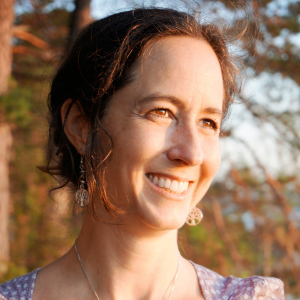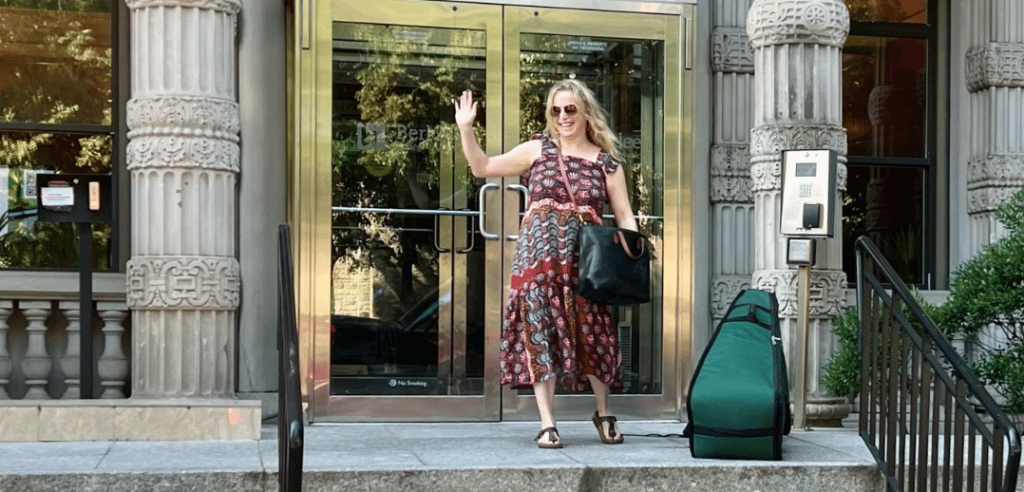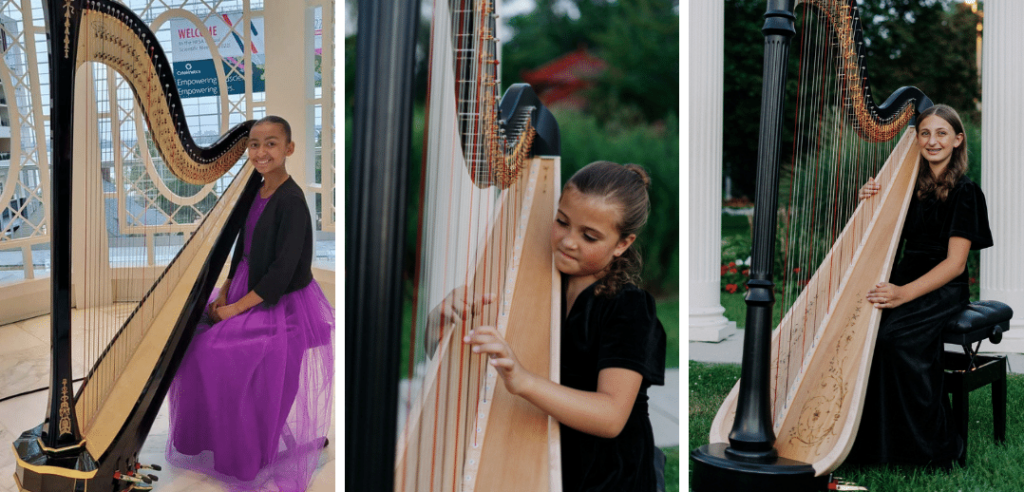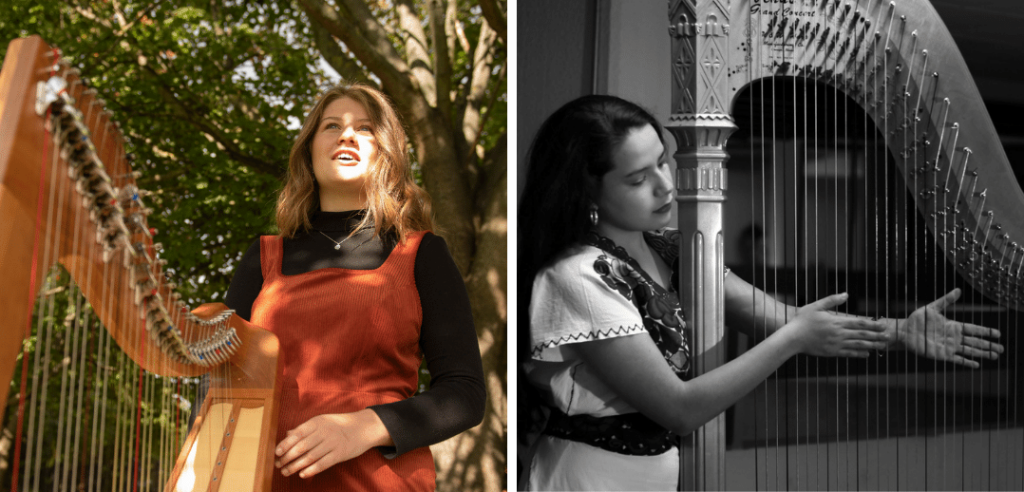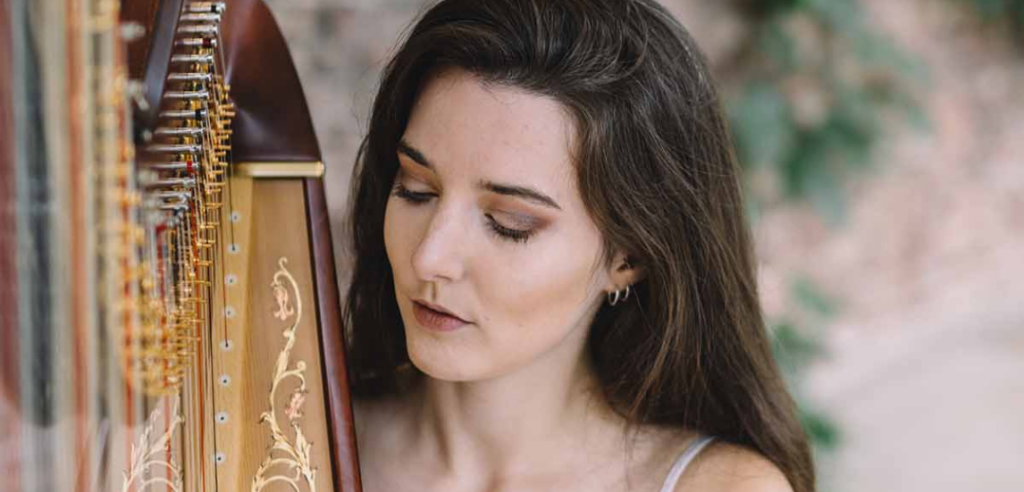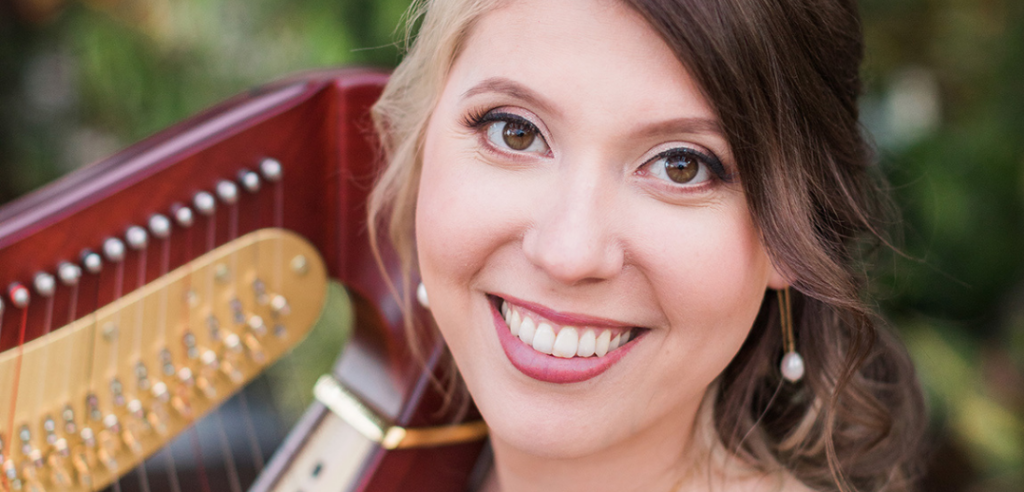

In our Practice Makes Harpist series, we’re following harpists as their practice affects their musical experience. This installment features two students—Isabella Rahme, a harpist studying Music Composition at Sydney Conservatorium of Music in Australia, and Lauren Ulrich, a harpist majoring in performance at Wayne State University in Detroit, Michigan.
Isabella Rahme
Age: 21
Education: Bachelor of Music degree in composition expected in 2022 from the Sydney Conservatorium of Music
Short-term goal: Practice consistently (an hour a day) despite a main focus in composition
Long-term goal: Be a well-rounded and flexible performer, develop as a composer and performer.
When Isabella Rahme finished high school, she knew she wanted to focus her undergraduate studies on music. However, while she loved to play, performance anxiety made the idea of a performance degree unrealistic. She considered how she could be involved with music without performing. Because she’d enjoyed the composition she’d done in high school, she chose it as her area of study. Composition turned out to be an excellent choice, as she still loves it in her fourth and final year at Sydney Conservatorium of Music in Australia.
Rahme had played lever harp for two years before starting at the music conservatory. In her second year of study, she transitioned to an electro-acoustic pedal harp, a Camac Big Blue (but in black). She uses the harp liberally when composing and recording electro-acoustic music.
At the conservatory, composition students are expected to devote the same amount of time to composing as the performance students put into their instrument. Rahme holds to the theory that some practice is better than no practice when her school schedule gets busy. “Ideally I want to be doing an hour on most days. Usually the hour goes quickly, and I’ll want to do more but I don’t really have time. Some days I’ll simply play through something, just do technical exercise, or improvise. It needs to be something I want, because time is so limited.”
Not long ago Rahme and her teacher discussed composition practice techniques. He suggested she change her mindset and think about working on composing a piece of music as part of a craft, like practicing an instrument, rather than working on composition like an assignment with a deadline.
Rahme has composed for many different instrumentations, from string quartets to orchestral works. Currently she’s building up more experience with wind instruments; however, her favorite is voice. “I like to write for voices. Singing in a choir is how I got into writing music. I first started writing for voice because it was easier to organize other students to sing together than getting them to play on the instruments.”
While harp is not the focus of her composing, she naturally understands how to write for the harp, a skill many composers lack. Rahme said, “I get questions all the time from all the other composing students, and I’ve done workshops for them. They’re always sending me their assignments when there’s a harp. It’s one of those instruments where you do have to think about a lot more things. It can be really confusing writing.”
Naturally, Rahme is thinking about the next step in her career after university. Rahme explained, “Maybe I’ll freelance. I’m already constantly applying to things: commissions, workshops, and different development programs. People in my network of contacts also ask, can you arrange this for me or write something for me? I feel like the contacts I make here at the Conservatorium are great. They will be your colleagues and people you work with.”
While tutoring or teaching seems an interesting option, she’s seen enough of her teaching colleagues looking overworked to be slightly worried about the stress of teaching full-time.
Recently Rahme and some fellow composition students chatted about their future careers. Rahme says, “We thought about how to build a career for yourself and what we should be doing. There’s a contrast between being well rounded and getting all these different types of jobs like writing for a string quartet or putting on an installation with electronics, or making a niche with a specific focus area.”
Right now, she’s trying both. “I’m trying to give myself a niche with an electro-acoustic harp. I’ve been working on doing live with harp and processing instead of pre-recorded things. My composition tutor, who is a composer-performer, told me: ‘Don’t stress. You’re not going to play a concerto, because you’re not a performer like that. You could perform your works.’ I guess I could do that with my own stuff, right?”
As with every student finishing school, time will tell what path she will choose. We will find out more when we check in with her next year.
Lauren Ulrich
Age: 28
Education: Bachelor of Music degree in harp performance expected 2025
Short-term goal: Practice consistently through the summer (three hours/day, six days/week)
Long-term goal: Graduate from school and freelance full time.
Sometimes people drop their musical instrument when they decide to study a different subject in college. However, Lauren Ulrich kept playing while attending business school. She’d dreamed of teaching martial arts, and learning to run a small business seemed a logical step. She found a job in the finance industry after graduation, and when her husband wanted to build his dream business, she supported them. She and her husband have been self-employed for five years, running a successful business. Things are going well, and now it’s Lauren’s turn to pursue her dreams.
Before, harp was just a hobby, and I treated it as such. Now, I’m learning to develop the mental strength needed to practice for a long time…
At first, Ulrich considered several different professional paths for working with harp and found that going back to university suited her best. Now, she has finished her first year in Wayne State University’s School of Music as a harp performance major on a generous four-year scholarship.
So far, Ulrich has loved her experience in music school, even if it’s much more time-consuming than her previous degree in business school. “My first degree involved the cycle of reading, attending lectures, studying knowledge, and taking the test,” she explains. “Music school builds a skill set in addition to knowledge. In addition to theory and history ‘book work’, there is practice. I need a lot of practice time, not only for harp but also for ear training and piano. It’s a big-time commitment, more than I even realized, but it’s been great!”
Ulrich says she has enjoyed the program. “The professors are all passionate about music and enjoy their jobs. I feel like it’s probably the only time of my life where I’ll be around people who enjoy music and want to talk about it—the theory behind it and how it affects us. It has been cool to be around like-minded people in a very specific concentration.”
This year has changed how Ulrich approaches practice. “My teacher, Patricia Terry-
Ross, has changed how I attack my practice time. Now I have a goal in mind. I’m asking myself questions, ‘Where is my mind when I’m playing? When did I lose concentration and why?’ Before, harp was just a hobby, and I approached it as such. Now I’m learning to develop the mental strength needed to practice for a long time, while making sure I’m getting a lot out of it. I have a new perspective on my practice. I see a new piece, and instead of thinking, ‘How am I ever going to be able to do this?’ I just take it a couple of measures at a time. What went wrong? Why did it go wrong? It’s all about learning from mistakes and learning how to do little things, like adjusting the angle of my hand. It’s been really enjoyable, because my professor is the nicest person, and you can just tell she loves to teach.”
Similar to most university students, Ulrich suffers from not having enough time. She finds it hard to balance all of the practicing goals and the bookwork, tests, and homework for her other classes. In addition, she has a mortgage to pay and a household to run. “I already have one degree, so I know how important breaks in learning are,” Ulrich notes. “In my first program, I would have studied until midnight. Now I know that after 10 o’clock, my brain isn’t going to absorb much, so I will call it a night.”
Sometimes Ulrich is expected to play pieces not written well for the instrument. She’s learning how to adjust the pieces to make them more suitable for the harp and knows the difference between something needing adjustment because it’s above her skill level versus a piece that is too hard because the composer didn’t understand the harp. It’s also an adjustment to learn how to play in larger groups. “I played harp with an ensemble for the first time this year. I’ve learned to play as many written notes as possible—to find the balance between what I can do and what is asked of the harpist.”
Ulrich tries to exercise daily. Even though it’s hard to find the time, she does something, whether it’s walking the family dog or going to an exercise class. As a social person, she likes to go out, but finds there’s not much time for that now, especially during the Michigan winters when it’s easier to stay home.
As for the future, Ulrich thinks she’ll probably concentrate on performing but doesn’t know what shape that will take. “At this point, I’m just happy to be playing harp,” she says. •