

“Learn the rules like a pro, so you can break them like an artist.”
This quote is widely attributed to Pablo Picasso, though it’s hard to know if he actually said it or if it simply captures his artistic philosophy.
… mastering technique and understanding musical context give you the fluency to take the music where you want it to go.
Whatever the case, I’ve been thinking about this advice a lot lately. It comes to mind when I’m helping a student shape the phrases in Debussy’s Girl with the Flaxen Hair. I think about it as I’m deciding how to edit an unplayable new orchestra part. It also echoes through several articles in this issue of Harp Column.
There is a reason rules come before artistry—mastering technique and understanding musical context give you the fluency to take the music where you want it to go. Harpist Alexander Boldachev shows us what this musical vision can look like in practice. In “Center Stage” on pg. 8, Boldachev describes his experience playing a run of sold-out performances of Nureyev, a new ballet premiering at Berlin’s biggest opera house this spring. The harp is not hidden in the orchestra pit as it usually is, but instead plays a pivotal role in the production, on stage. Boldachev notes that some attribute this groundbreaking musical opportunity to luck—he was in the right place at the right time. He responds, “Yes, but you can’t imagine how many opportunities I missed before learning how to react properly, be ready for anything, fit and hungry for action.”
Musicians spend years learning the rules—training, studying, practicing—to play repertoire. While Celtic harpist Maeve Gilchrist agrees that written music and conventions are important, many of us get bogged down in them and never approach the second half of Picasso’s quote. “My issue is not with the written note,” Gilchrist explains in her Tear-Out Tune article, “it’s with the dogged culture of reading ‘arrangements’ as a means to an end.” Not surprisingly, Gilchrist doesn’t want us to simply “learn the rules” to play her Tear-Out Tune, Three Buds. Instead, she shows us how to break down improvisation, phrasing, and ornamentation into manageable chunks—and make the music our own. “We are all creative beings with unique imaginative pools that, when utilized correctly, can expand our experience of music making,” she says.
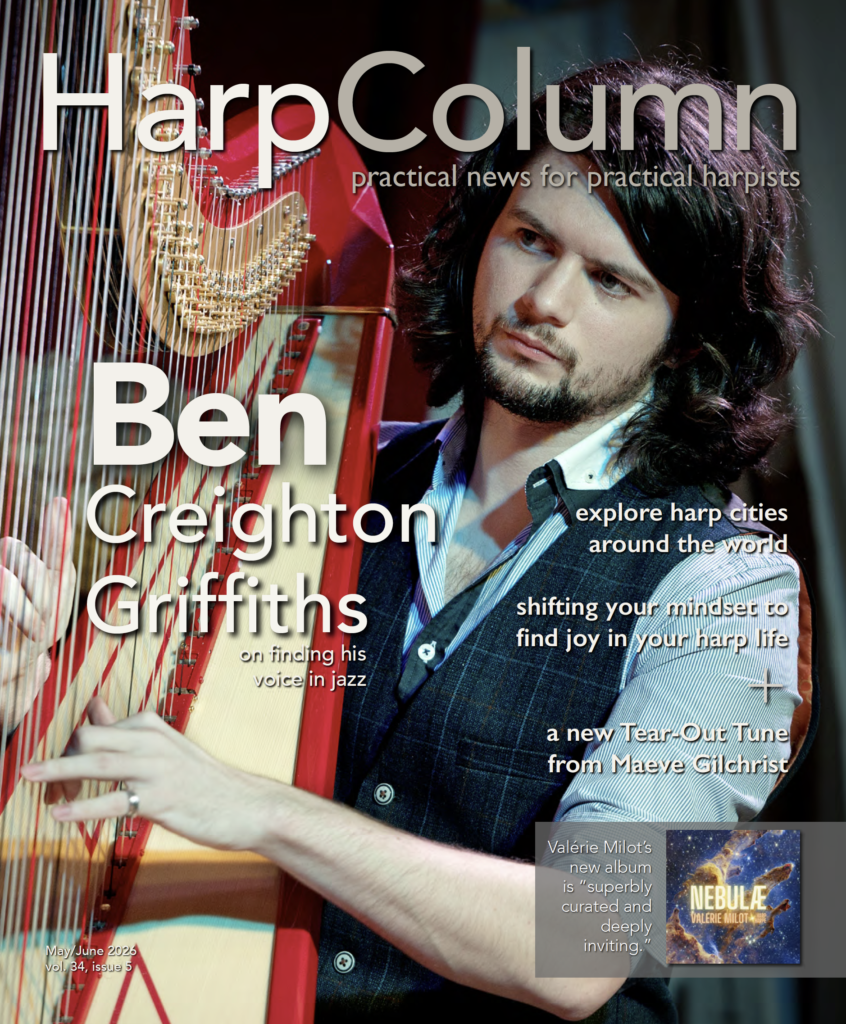
Why do so many musicians learn the rules but rarely break them? Following the rules is safe. Breaking them is risky. Not all of us have an appetite for risk. When we first interviewed Ben Creighton Griffiths for our March/April 2013 cover, he was a teenage phenom winning classical competitions and performing on big traditional stages. He was following the classical music script perfectly—studying repertoire, winning competitions, performing in a tuxedo in front of orchestras. He was primed for the next steps—college and the world’s top competitions. By the time we caught up with him 13 years later for this issue’s cover, Creighton Griffiths had tossed out the script and written his own. He was drawn in a new direction after meeting gypsy jazz violinist Adrien Chevalier at a music festival.
“[S]omething really clicked for me,” he says. He shifted his focus to collaborating with Chevalier and developing a distinctive voice in jazz. “It’s taken a long time to get from that point to actually doing loads of gigs in jazz clubs, bars, restaurants, speakeasies—the regular jazz circuit. But now here we are, and it works really well.”
Wherever you are in your harp life, I hope you find something in this issue to help you learn the rules you need in order to make the music you want. •