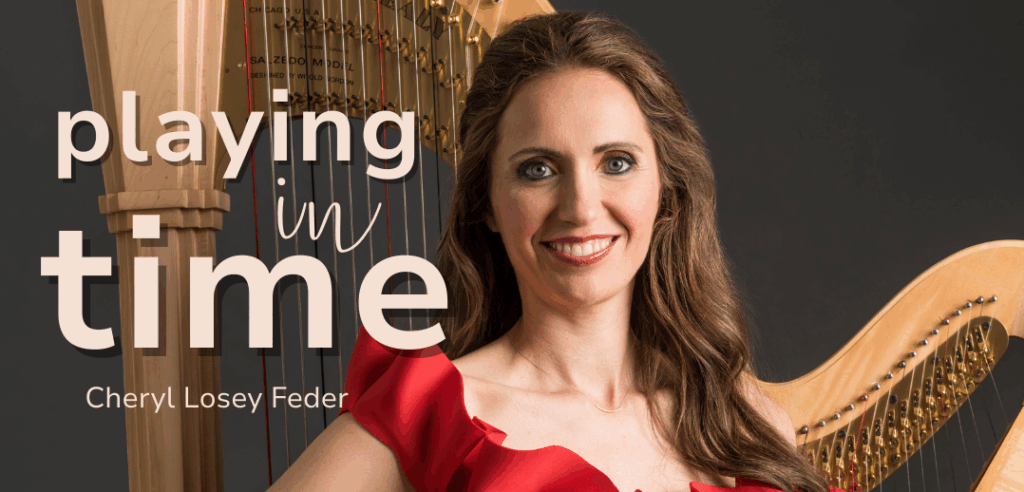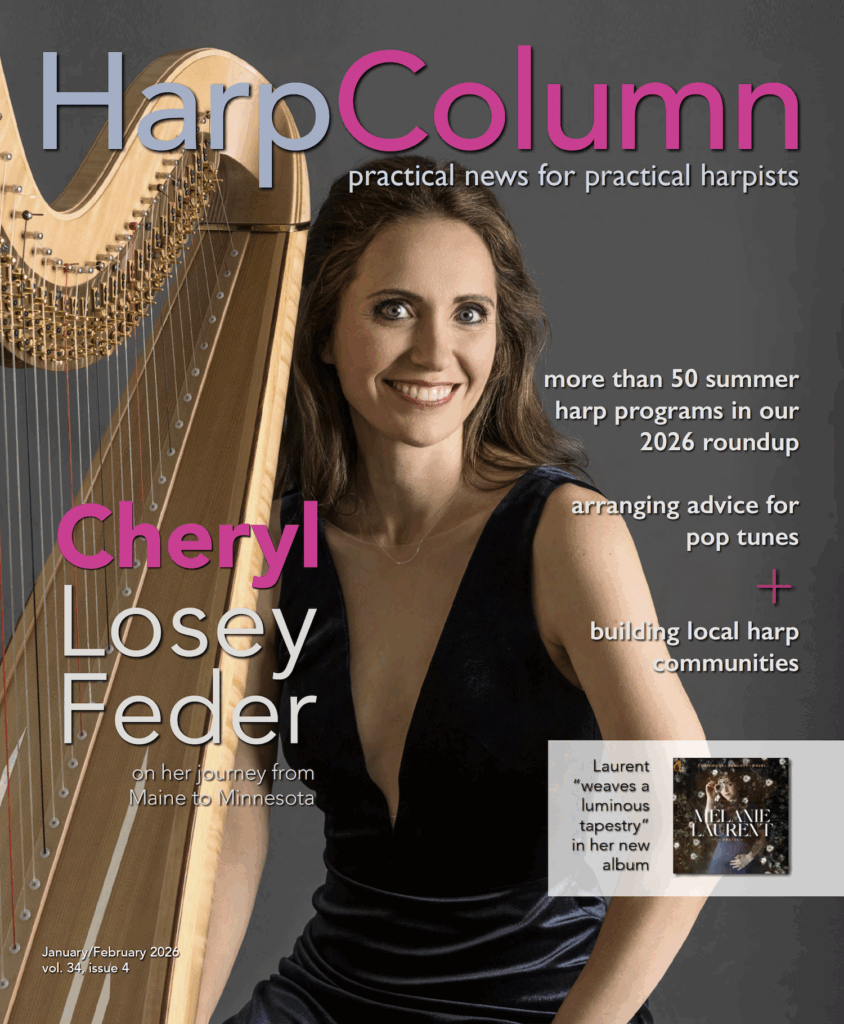

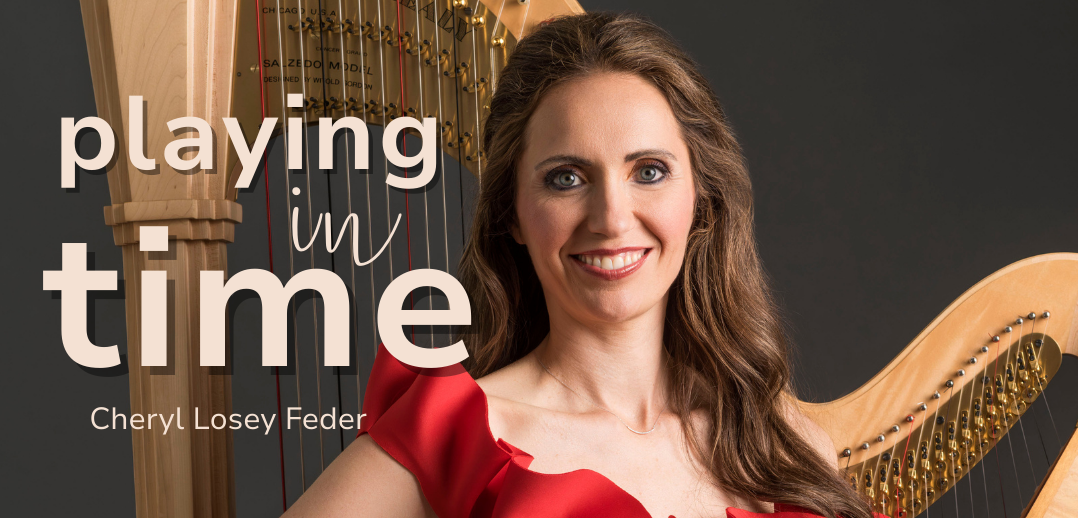
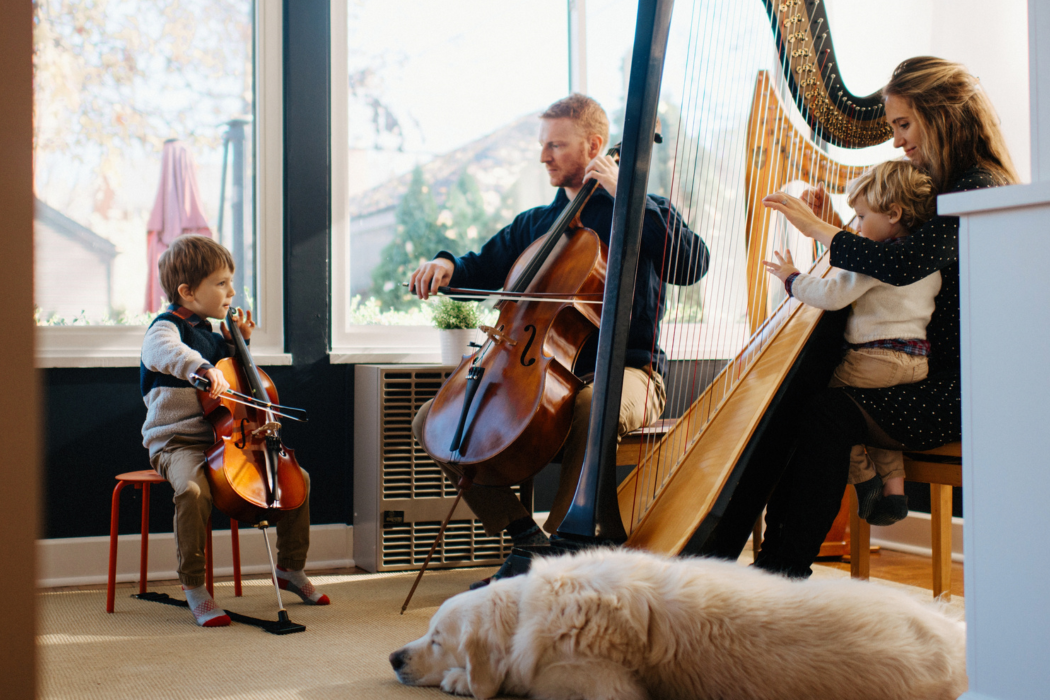
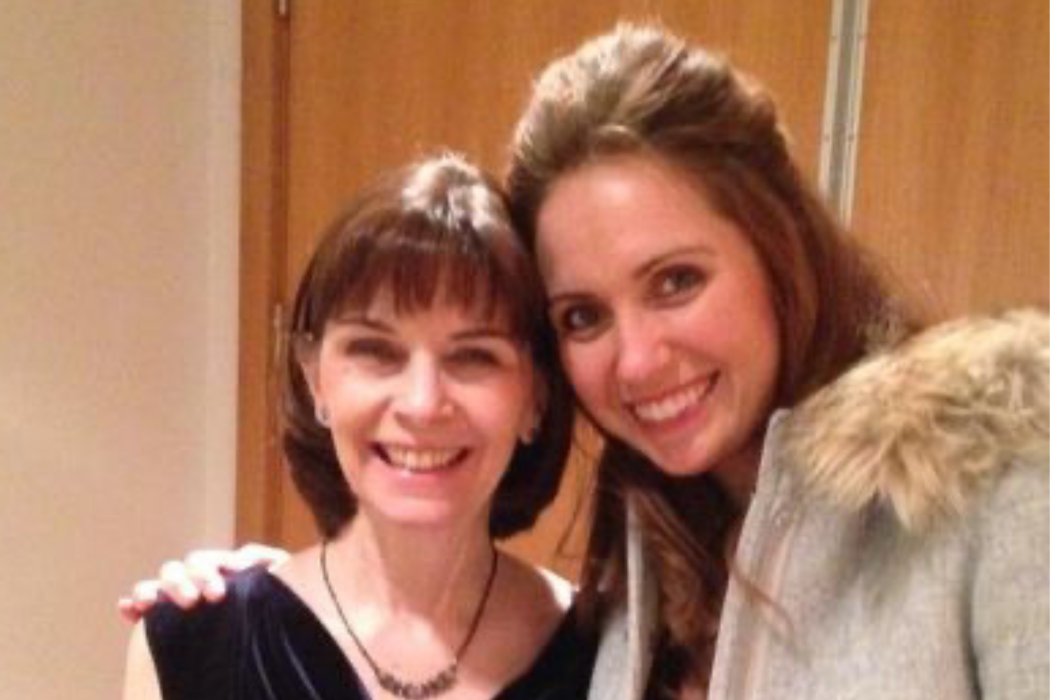
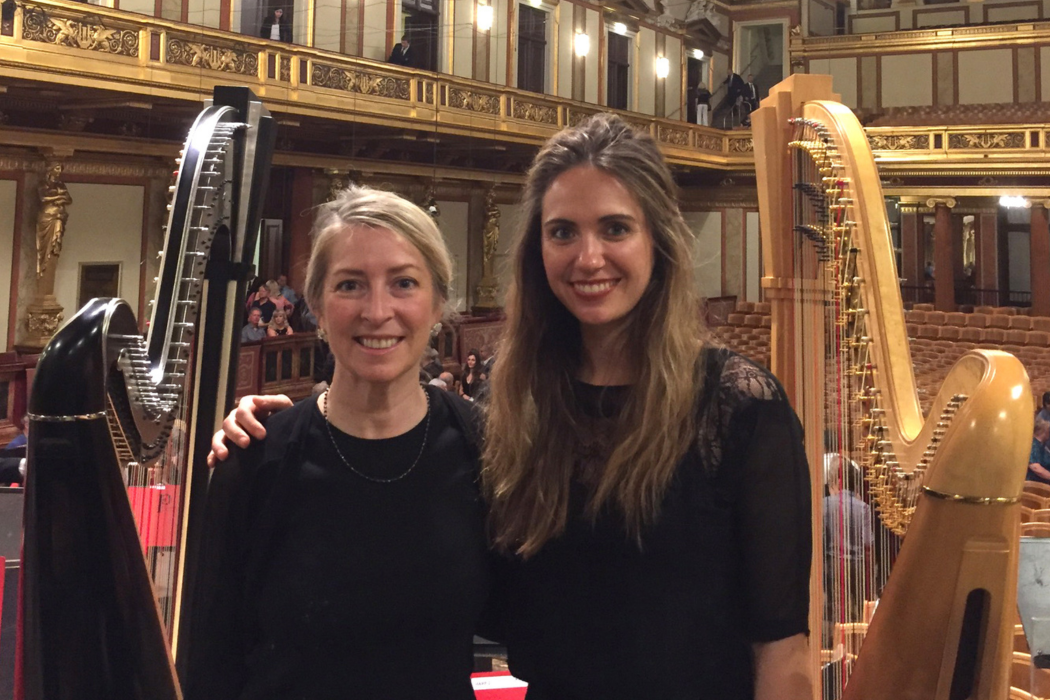
How do you win an orchestra audition—or several? Ask Cheryl. How do you balance your orchestral career with your spouse’s? Ask Cheryl. How do you raise young children while building successful careers? Ask Cheryl.
Cheryl Losey Feder would be the first to say she doesn’t have it all figured out, but she has a clear sense of her priorities. Now in her second season as principal harp of the Minnesota Orchestra, Losey Feder is settling into yet another cold, snowy home. After launching her career under the Florida sun with the Sarasota Orchestra, she spent several years in Dallas before heading north. Since she’s a native of Harpswell, Maine (you can’t make this stuff up), cold weather was nothing new. She held a brief position as principal harp with the Buffalo Symphony, then lived in Detroit for several years while raising her two boys, now ages 3 and 6, before ultimately landing in Minneapolis.
For all the success Losey Feder has enjoyed at the harp, there have been real sacrifices as she and her husband hopscotched the country, winning ever more prestigious orchestral posts. We caught up with Losey Feder to talk about both the triumphs and the difficult choices that have shaped her career.
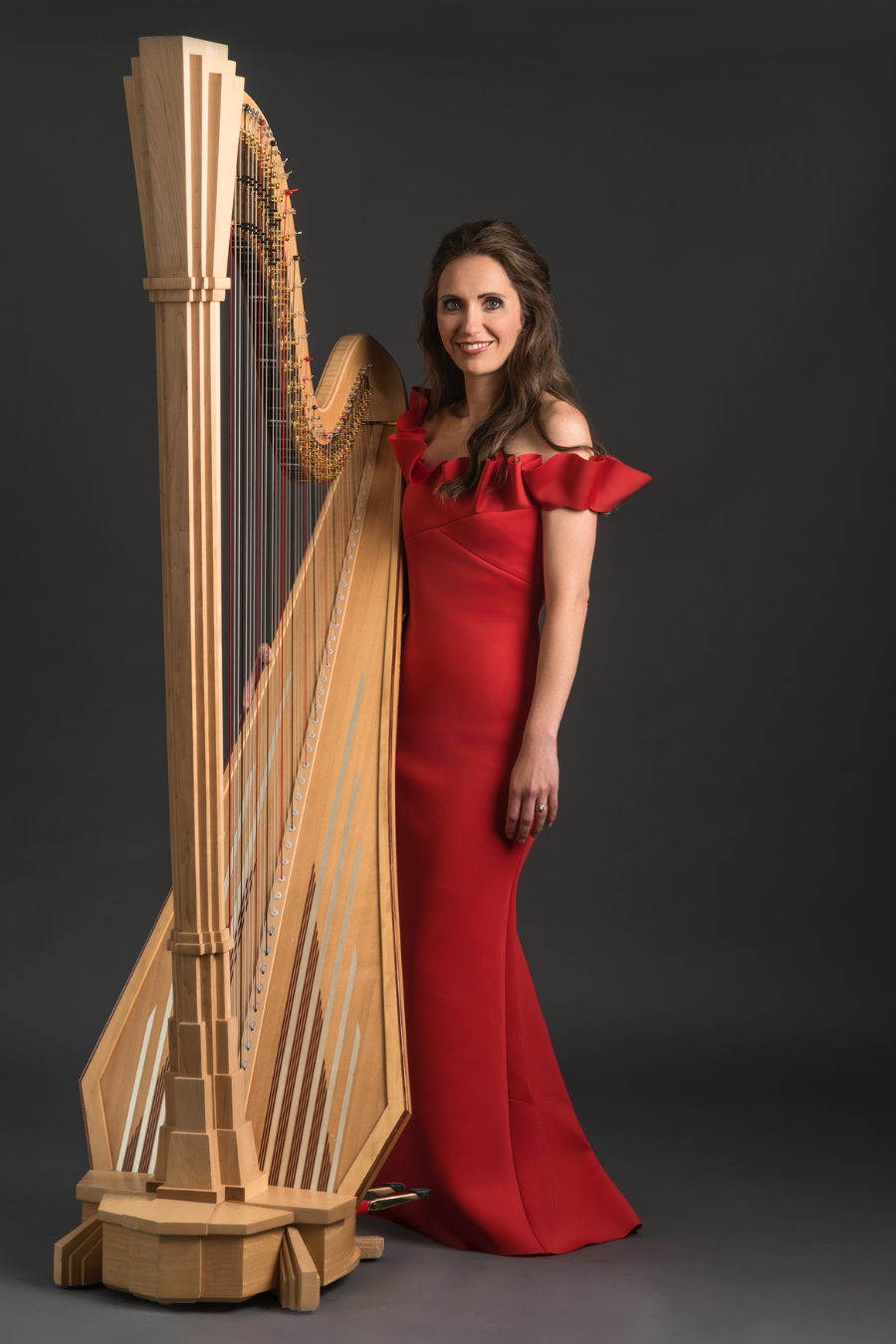
Harp Column: I’m always amazed when I see fabulous harpists who also have young kids, and so I’d love to hear a little bit about how you’ve learned to balance your family and your orchestral life.
Cheryl Losey Feder: Honestly, I think all moms are amazing. It’s a juggling act for all of us. Every day is a challenge balancing the boys and harp and everything else, but my number one priority is always our kids. I maneuver my schedule and commitments around them. Since becoming a mother, I’ve really examined what’s important to me in my career and what I want to prioritize. When I joined the Minnesota Orchestra last season, I realized I had two main priorities for the year. First was my family and making sure they were comfortable with the transition to a new home state. Second was putting myself in a position to do my best at work and receive tenure. I received tenure last March, so much earlier than I expected! Our music director, Thomas Søndergård, called me on my cellphone while I was at home with my family. It was all so incredibly joyful! Sammy, who was 5 at the time, immediately made me a mask out of construction paper to celebrate. But because of these goals, I declined virtually every other commitment. I didn’t have any students, I didn’t take any gigs, I didn’t do any festivals. And it was still an incredibly full and rewarding year. It was a huge weight off my mind to simply focus on my family and the orchestra. Now in my second season with the orchestra and having received tenure, I am still prioritizing what I really care about with the harp and learning it’s okay to say no. I don’t want to look back and regret missing time with my kids. They’re still really young, and it’s okay that these aren’t the years I commission a harp concerto or record a solo album or learn a new recital program. These are the years I will treasure the time with my littles, enjoy the harp, grow and challenge myself, and give myself grace. In searching for the work/family balance, I’m so lucky to have incredible family support. My husband Abe is an amazing partner, and his parents have moved to be with us in Minnesota. I can’t overstate how much that means to me and to our family. They’re watching the boys during concerts. Abe’s mom has traveled with me many times when I’m performing to watch the kids. Having that stability from someone who loves your kids as much as you do is priceless and has helped me continue my career.
HC: You’re married to an orchestral musician, which adds complexity to the juggling act. How do you manage your careers with your family?
CLF: Managing our career trajectories and making choices related to that has by far been the most difficult part of our relationship. We met in Sarasota where we both began our careers as principal players with the Sarasota Orchestra. When we started dating, we talked about life priorities and discovered we both wanted to have children and live in the same place as our partner—which sounds obvious, but as musicians, it’s not. As our relationship evolved, we talked about how we were willing to make sacrifices for each other. We were each willing to give up an orchestral position to follow the other if they won a more desirable job. The first time that came up was when Abe won a position in the Dallas Symphony. I resigned from Sarasota to follow him. Honestly, it was the most challenging year of my career, going from having a full-time position in a city so supportive of me to not having a single concert—not one engagement when we moved. Being in a city with incredible harpists, just being one of many—it was humbling. I’m still grateful to my harpist colleagues who lifted me up, supported me, and invited me to perform with their orchestras during that time: Elizabeth Hainen and Emily Levin, and Grace Browning. After two years in Dallas, Abe won assistant principal cello with the Detroit Symphony. At that time, I had been hired to join the Dallas Opera Orchestra, but I let that go as we prepared to move to Michigan. Just before moving, I won the Buffalo Philharmonic [audition], which we thought might work, being a four hour drive from Detroit. I found out I was pregnant with our first child during my first season in Buffalo, took maternity leave from Buffalo, and realized I ultimately wanted to be in one location with Abe. So I resigned from Buffalo and focused on freelancing. I had some great years playing with amazing orchestras all over the country, bringing my babies along with me wherever I played. I also started teaching at Michigan State University and won a position with the Detroit Opera. When the Minnesota Orchestra offered me this job, it seemed like a dream scenario for both of us. I still had the desire to have a principal position with a great orchestra, and Abe was really excited about the city and location. The clincher was that within 90 minutes of offering me the job, the orchestra offered Abe a full-time, one-year position. Knowing the orchestra supported us as a family was huge. Abe is still playing full-time on a one-year contract with the orchestra. But it was a lot for Abe to make the decision to leave a title chair position in Detroit too.
HC: These are some of the hardest decisions you can make, and it’s incredible the sacrifices you’ve both made for each other.
CLF: Thank you. It is huge for him, even now—to go from being a leader, and he’s an amazing leader—to give that up to support my dream. I’m in awe of him for being willing to do that. It’s a struggle, but our attitude has always been that we’ll be fine wherever we are. Honestly, we often talk about how if we had stayed in Sarasota, we would have been happy. If we had stayed in Dallas, we would have been happy. Because we realize we have the most important thing, and that’s each other and our family. If we work at music with integrity, striving and pushing ourselves, we can find fulfillment wherever we are. That’s really been our guiding force: none of these moves or positions are going to change who we are or what our lives are about. Of course it’s amazing to have an amazing job, but it’s not all there is.
HC: You figured that out early on in your careers and your relationship. So, you’ve won several positions with different orchestras in different cities—it’s hard for most people to win one, and you keep winning them. Looking at these auditions where you’ve been successful, can you point to anything in your preparation or approach that you think has made you successful?
CLF: Constantly challenging myself artistically and never giving up. Sometimes auditions work out and sometimes they don’t, but you have to keep pushing yourself to find the best in your playing and not give up. There were several major auditions I took in my 20s where I was in the finals or runner-up, and I was just devastated when I didn’t get the job—crying for days, soul searching, questioning myself. Ultimately I had to decide I believed in myself and my work ethic, and I was going to keep working and trusting that someday it would pan out. Meanwhile, I examined every phrase, every breath, every musical choice, and kept pushing myself to make it better. Big picture—I love the symphonic repertoire. I love the music orchestral excerpts are taken from. Salome’s “Dance of the Seven Veils”—yes, it’s really hard, but if you step back from our little 30 measures, it’s an incredible, passionate work. Don Juan, Symphony in Three Movements—these are my favorite pieces of art in the world. Keeping that as my guiding force, finding the beauty, excitement, and joy in the music still motivates me. The challenge at an audition is showing you understand the structure of an excerpt—tempo, rhythm, dynamics, everything on the page, and the composer’s style and intention. But beyond that, you also have to show who you are as a musician and an artist, what makes you special and unique. All, of course, while being very accurate. You just can’t miss notes and pedals. So that’s what I’ve worked on. I spend a lot of time practicing at a slow-medium tempo while playing with a big sound to ingrain the music in my muscle memory and in my ear. I record myself nearly every day, examining every little phrase, seeing what works and what doesn’t. I get nervous recording myself for some reason, so it also gives me practice with performance pressure. I do little things like drawing excerpts from a hat and making my own little audition rounds—a randomizer.
HC: You’ve had multiple positions with multiple orchestras. What specific skills do you think it takes to be a successful orchestral musician after you get the job? Getting the job is only the first step. What skills do you come back to again and again?
CLF: Attention to detail, collaboration, and time management. As harpists, our role in the orchestra is unique. We don’t have a section, and we don’t have anyone else to rely on. I spend a lot of time studying the score, knowing the entire piece and how I fit in: who I’m supporting, what to listen for, and whether I’m in a supporting role or a leader. Along with that comes being a good collaborator on stage and off stage—being open to feedback and dialogue with colleagues. Time management is huge, especially with little kids, but really for anyone in a major orchestra. The volume of music is incredible. Of course I’ve played a lot of the standard repertoire, but beyond that, we frequently perform 120-plus-page movie scores, family concerts, contemporary music, and relatively unknown symphonies. Balancing all that music is incredibly challenging. I’ve gotten really good at marking music away from the harp, and using every moment at Orchestra Hall to be ready for the job. When I have a tacet, I’m marking music for two months from now. I get there early to practice. I have a harp offstage so I can practice when I’m not onstage or in a concert where I have a piece off. And I’m always looking ahead to see what’s going to be a long-term project and what’s a short-term project.
HC: If you were giving advice to your 18-year-old self, is there anything that has surprised you about what life is like as an orchestral musician that you wouldn’t have known when you were 18?
CLF: One thing that surprised me, in part because of how technology has changed, is score study. I rarely opened a full orchestral score as an 18-year-old. Scores just weren’t available in the same way. Now our music library uploads scores for every piece, and that’s part of my preparation—looking at the score and learning the entire work, not just the harp part, which was definitely my mentality as an 18-year-old. It’s so much more fun to listen to the recording while looking at the score and to see how the different parts are woven together, who trades off the melody, and who I’m doubling. It also makes it basically impossible to get lost when you fully understand the entire piece, not just the harp part.
HC: You got the Sarasota job in 2008, is that right? And that was your first job out of school?
CLF: Yes, I won it a couple days before graduation.
HC: That’s amazing. So you’ve been doing this almost two decades. Do you think you’ve discovered any “superpowers” when it comes to being a musician? Something you do really well that helps you with everything else?
CLF: Such a good question. One thing I’m really grateful for is receiving excellent training that focused on my development as both a soloist and an orchestral player simultaneously. It’s not either/or; the two are inextricably connected. I love when the opportunity presents itself in orchestra to play something personally and soloistically—to take the moment and bring it to the harp and make it special. Likewise, when I’m playing solo works, I often think of them as large-scale symphonic works. There are different lines that can sound like different instruments, and every composer takes inspiration from others. Finding the monumental inspiration from big symphonic works and bringing it to the solo stage is such a fun challenge.
HC: You read my mind, because the next question I wanted to ask was how you think orchestral skills differ from the skills needed to win a solo competition. You’ve won multiple solo competitions and studied with Yolanda [Kondonassis] at the Cleveland Institute of Music, who is an incredible soloist. You’ve spoken to this a little, but how do you see those skills as similar or different?
CLF: Ultimately, it’s all music and art and creating something beautiful and meaningful. At their best, solo and orchestral playing are the same. I competed in the Munich [ARD] competition after my first year of working full-time with the Sarasota Orchestra, and I drew inspiration from virtuosic soloists on stage and the great symphonic repertoire I was playing—it was all baked into my preparation. On the other hand, I spent so much time in solo repertoire developing technique, phrasing, timing, and sound—and I think that’s really where we develop as musicians. It doesn’t make much sense to figure that out only from little snippets of orchestral audition repertoire, which I think is tempting, but that’s not where we find our voice. We find our voice in complete pieces of music. I’m grateful I spent years in school finding my voice as a soloist. And solo competitions push you to discover the highest level of yourself.
HC: I’ve followed your career a long time and know you a little, and you’ve never struck me as someone searching for the spotlight. Yet you find yourself there—being the only American harpist to ever win a prize at Munich ARD is a huge accomplishment, and you’ve won other competitions.
CLF: It’s funny that you pick up on that, because I think that’s 100-percent accurate. I grew up playing harp mostly in church and religious settings where the audience wasn’t supposed to applaud. It was really about the music—it was an offering. It wasn’t about me. So when I got to CIM, it was a huge challenge even to accept applause with confidence and stand there presenting myself in addition to the music. Yolanda worked with me a lot on that. I still think of myself as a vehicle for the music—it’s not about me. I’m presenting something beautiful that I hope will touch an audience.
HC: Tell us a little about your harp origin story—how you came to the instrument.
CLF: My mom decided I would play the harp, which I’ll always be grateful for. She had wanted to play, but her parents were missionaries in several remote areas where harps or harp teachers weren’t a possibility. So she decided I would play when I was 5. My parents aren’t musicians, but they love music. They called the only harpist they knew in Maine, Jara Goodrich of the Portland Symphony, and I’m incredibly lucky that she was the one they called. She was the best possible teacher for me. I grew up in Harpswell, lived there until college, and studied with Jara until I got to CIM.
HC: Who have been the most important musical influences in your life?
CLF: Definitely my harp mentors. Jara changed my life in every way. She gave me an incredible technical, rhythmic, and musical foundation, which was an amazing position to be in going into college—not needing to undo bad habits. Beyond that, she showed me there was a world beyond Harpswell, Maine, and that I could have big dreams. She introduced me to Alice Chalifoux who I studied with for several summers at the Salzedo Harp Colony, sent me to Bowdoin Summer Music Festival to work with June Han when I was 13, and exposed me to the larger musical world. Yolanda Kondonassis is a teacher for life. She pushed me and believed in me every step of the way in school and beyond. I’ve gone to play for her so many times preparing for auditions or big concerts, and she not only can always get me in the right headspace, her musical instincts and sense of timing are impeccable. I’m also grateful for Elizabeth Hainen as a friend and colleague. I auditioned for the Philadelphia Orchestra sub list right before I resigned from Sarasota and started playing there after we moved to Dallas. Eventually, I was playing with her orchestra several times a month—I even kept an apartment in Philadelphia. She trusted me and gave me this opportunity when I wasn’t employed and wasn’t sure what would come next. Sitting next to her and hearing her incredible sound and musicianship, and being onstage with one of the world’s great orchestras inspired me to keep pursuing my dream of joining a major orchestra. I won Buffalo while I was playing in Philadelphia. Nancy Allen has also been an amazing friend and mentor. I met her at the Aspen Music Festival, where I had a two-year fellowship. My first year at Aspen I was preparing for Munich ARD, and Nancy helped me connect with my natural musicianship in a powerful way. What struck me about Nancy the first time I met her, and something I think about so often even still, is her support of other harpists. She finds the best in people and lifts them up. To hear an absolute legend like Nancy speak of other harpists with respect and admiration is something I will always admire and try to emulate.
A chat with Cheryl
HC: And now you’ve just accepted a teaching position, right?
CLF: Yes, I am thrilled to be joining the University of Minnesota in fall of 2026, following in Kathy Kienzle’s incredible footsteps. I’m looking forward to guiding harpists through this formative period in their musical journey, building on each individual’s strengths, solidifying the skills that are essential in all fields of music, and giving each student the confidence to share their artistic voice.
HC: What advice would you have for young harpists reading this interview?
CLF: Find what you love about music and don’t stop working for it. Things don’t happen overnight. There are months and years when it doesn’t seem like anything is happening or big opportunities aren’t presenting themselves. Put in the time; if you believe in what you’re doing and work with integrity, it will pay off. •
What is one bad harp habit you have?
I often practice in my socks at home. I pretty much always practice in my socks. And I don’t tune my harp at home as much as I should.
Do you listen to podcasts? Do you have a favorite?
The Daily from The New York Times.
If you were not a harpist, what would you want to do for a living?
Marine biology. I love the ocean. My childhood dream was to be a dolphin trainer. Now that I’m older, I realize that’s not the most humane practice, but I was obsessed with dolphins for many years, and still am.
You’ve lived in a lot of cold places. What’s the snowiest?
Minnesota—actually no, Buffalo. I only lived there a year, but it was definitely snowier.
What does your ideal day off look like?
Probably a little relaxation alone in the morning—maybe a massage or pedicure—and then a fun outdoor activity with the boys, like sledding or skiing.
What’s the best piece of advice you’ve ever received?
“The cream always rises to the top.” That’s a Yolanda saying. If you just put in the time, it will pay off.
Are you a coffee or tea person? Coffee—with oat milk.
Favorite quote? “There are years that ask questions, and there are years that answer them.” —Zora Neale Hurston.
Do you have any pre-concert routines or superstitions?
I almost always do the Salzedo conditioning exercises. They calm me down and help me focus on how my fingers are feeling. And obviously, a lot of tuning. I don’t really have any superstitions.
What is your favorite piece to play on the harp?
There are so many. I absolutely love the Bernstein Chichester Psalms—so beautiful. Mahler 3, too. And for solo harp, Salzedo’s Ballade or Renié Légende. Sorry, I can’t pick just one!