

I’m a new harp student. How do I strengthen my fingers so my knuckles don’t collapse?

This is a big question, one that I am still exploring myself and that continues to challenge many professional harpists!
Personally, I strengthen my muscles by practicing very slowly, focusing my attention on my physical sensations. The more mindful I am, concentrating on the movement of each part of my finger, the more effective the work becomes, and the stronger my fingers get. It is important to develop body awareness and seek pleasant sensations of stability and strength, but without tension.
Most importantly, you must be very patient and not skip any steps. Respect your learning pace and avoid trying to play pieces that are beyond your current level. Consistency in practice is key, allowing you to progress slowly but surely. You can practice simple and progressive daily exercises, such as those in Maria Grossi’s method, working each hand separately while focusing on both the quality of your position and the quality of your sound.
It’s okay if your knuckles collapse at first, but try to correct this gradually, without forcing. Your muscles will strengthen naturally—trust the process. Sometimes, improving your overall posture can also help. Don’t focus only on your fingers: work on grounding your hips, relaxing your shoulders, opening your elbows, and freeing your wrists.
Finally, don’t lose sight of your main goal: whether your knuckles collapse or not, the most important thing is making music! Enjoy yourself, and the rest will follow.
—Mélanie Laurent
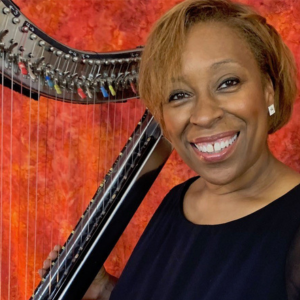
Congratulations on beginning your harp journey! Establishing a solid foundation early on is key to long-term success, making guidance from an experienced teacher invaluable. Building finger strength takes patience and commitment. While it’s tempting to start playing songs right away, just like athletes warm up before a game, harpists must engage in exercises to develop strength and control.
To develop finger strength, maintaining proper hand positioning is essential. Keep your fingers relaxed, pointing downward, with thumbs up. Maintain a natural arch in your fingers to prevent your knuckles from collapsing. Work on exercises where you play with individual fingers, concentrating on bringing your fingers into your palms, without any tension or forced movements. Start softly and pay attention to how it feels when you can play the notes without your knuckles collapsing.
Deborah Friou’s Exercises for Agility and Speed, Thumbs Up! by Kathy Bundock Moore, and Carlos Salzedo’s Conditioning Exercises are great for working on building your technique. Etude books from Nicholas Charles Bochsa and Maria Grossi continue with specific techniques that will transfer to your pieces. Take your time to correct any issues, working slowly and with intention.
Outside of practice, you can strengthen your fingers with exercises targeting moving your fingers individually, closing your fingers into your palm, and keeping your fingers curved when you are typing, texting, or drumming on a tabletop!
By focusing on these foundational elements, you’ll set yourself up for success and progress with confidence in your harp journey!
—Robbin Gordon-Cartier
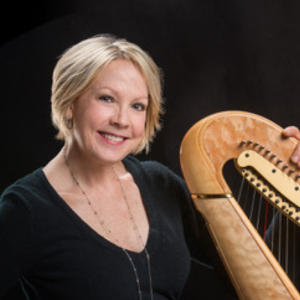
That’s a great question since strong fingers with curved knuckles help harpists create a robust tone. We all have power tendons under the small bones in our fingers. Keeping both the middle knuckle and fingertip knuckle curved helps us to use those tendons to prevent injury and also sound beautiful. Depending on your stage in life, you may need to try more than one approach to strengthen your fingers.
My go-to strategy at the harp is to build finger strength by giving the string a small tug with curved knuckles before releasing it. Playing slowly and only as loudly as you can with the knuckles staying curved creates a simple finger tone exercise. The curved fingers should be doing all the work without the help of any other body parts, such as the wrist or arm. You will be amazed at how quickly your knuckles will gain strength with mindful practice.
There are also some finger exercises you can do (in moderation) away from the harp. Anywhere, any time of day, try strengthening your knuckles with finger push-ups. Pump your fingertips up and down on your leg or on the steering wheel. You can also curve your knuckles and push the fingers of your left hand against your right or even find another friend to “practice” finger power.
Another tried and true strengthener is hand therapy putty (or repurposed Silly Putty/PlayDoh). Use the putty to work the muscles on the top and bottom of the hand. Press your fingertips into the putty and open and close your fingers with curved knuckles. If you’re one of those people with double jointed thumbs, give special attention to that area.
One of my favorite “repurposing” exercises uses old fashioned staple removers (the hinged ones with jaws). Turn it backwards and place your thumb and one fingertip on the wide part away from the hinge. Open and close the jaws keeping all your knuckles curved. The closer you are to the hinge, the more support you’ll have. As you get stronger, move farther away from the hinge.
Keep at it! Sometimes it’s hard to see our own progress. The result of your efforts will be a lush, even, and beautiful tone! •