
9/10
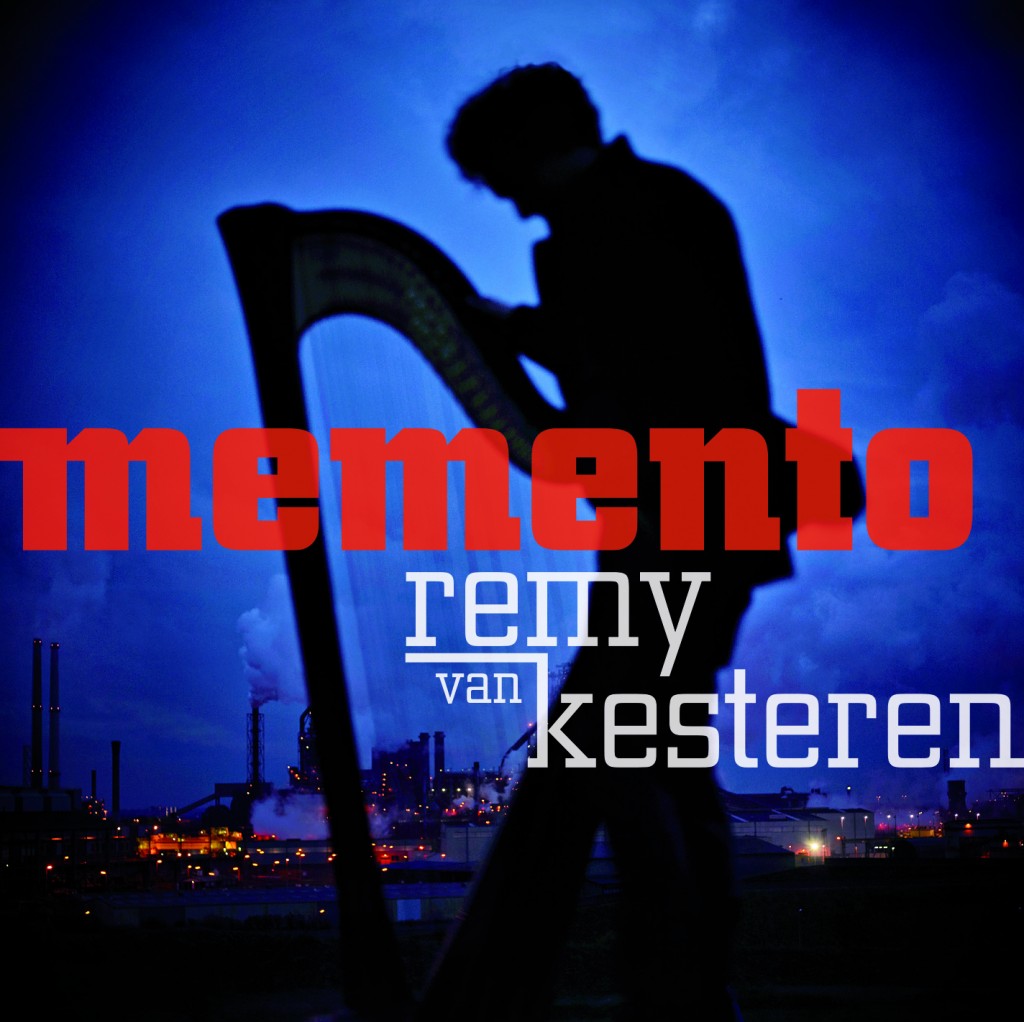
Remy van Kesteren, harp, Nora Fischer, soprano, Eric Vloeimans, trumpet, Mirovia Quartet; self-released, 2014.
What makes one musician very, very good and another great? How do we describe that special je ne sais quoi that causes a kind of stirring in our souls where we no longer hear someone as an instrumentalist, but as an artist? Of course that’s what I get paid to do, so I’ll give it my best shot.
This is the second CD of Dutch harpist Remy van Kesteren that I have reviewed for this publication, and yet again, one superlative after another comes onto my screen as I try to describe in words the indescribable beauty of Memento.
It shouldn’t surprise me that Remy got to this transcendent space the hard way, by first trying to impress a teacher he looked up to. Isabelle Moretti generously and wisely stopped his young fingers from showing all they could do by asking him the question we all need to be asked, “Why do you want to make music?”
That may be why van Kesteren’s playing today, years after that encounter, is so full of soul, so authentic and generous. The making of music has become a quest, a kind of journey into that question of meaning, as opposed to a destination. Consequently, risking the outcome and living in the moment is where spectacular things happen.
Technically speaking, the CD is about combining the sounds of Spain and Brazil, two countries actually quite removed in mindset. Here the question is not simply, “Why make music?” but “What defines music?” Classical and pop intermingle on this disc, weaving in and out until they’re no longer categories of music, but just music.
Hauntingly beautiful is Rodrigo’s “Adagio” from the Aranjuez Concerto. The harp becomes a larger, more resonant guitar. The luxuriant vocalise of Nora Fischer wraps us in an embrace.
The album is sprinkled with classics. Villa Lobos’ Preludes and Manuel de Falla’s Spanish Dance are filled with electricity when interspersed with new works by Dutch composer Martin Fondse. A friend and creative artist living in what he calls the “uncultivated area between classic and jazz,” Martin provides a chordal framework that effectively pushes Remy out of the world of the comfortable. I would venture to guess part of what makes the entire album freer and more natural sounding is the very act of this experimentation. Remy is most successful—and loose—in Encora, a meditation on samba where you can almost feel the warm breeze of Copocabana in your hair and the crunchy brown-sugar-textured sand between your toes.
Trumpeter Eric Vloeimans brings a smoky somnolence while the Mirovia Quartet adds depth and grounding to what is a splendid journey in sound.