
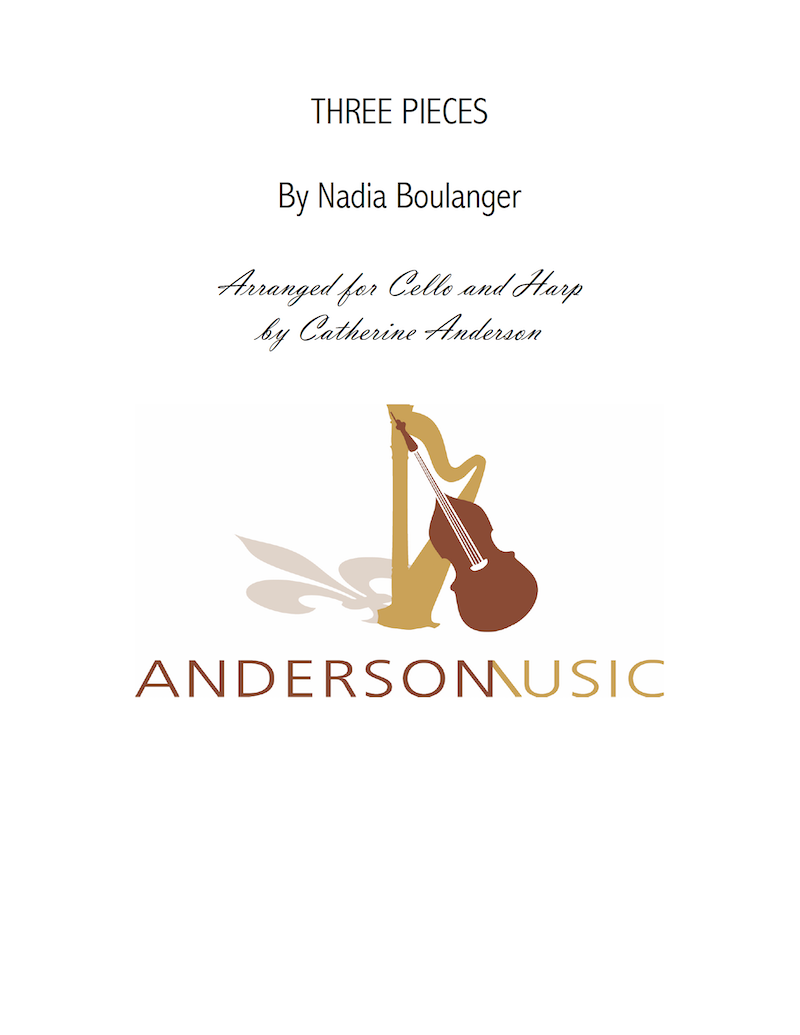
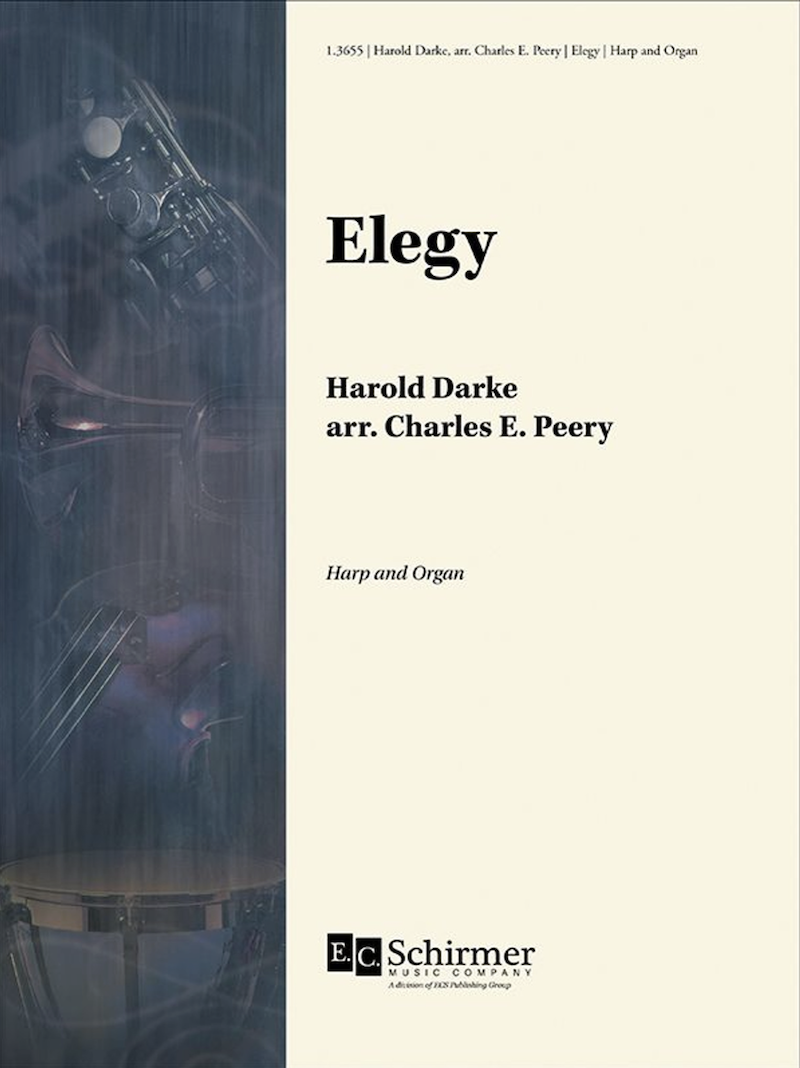
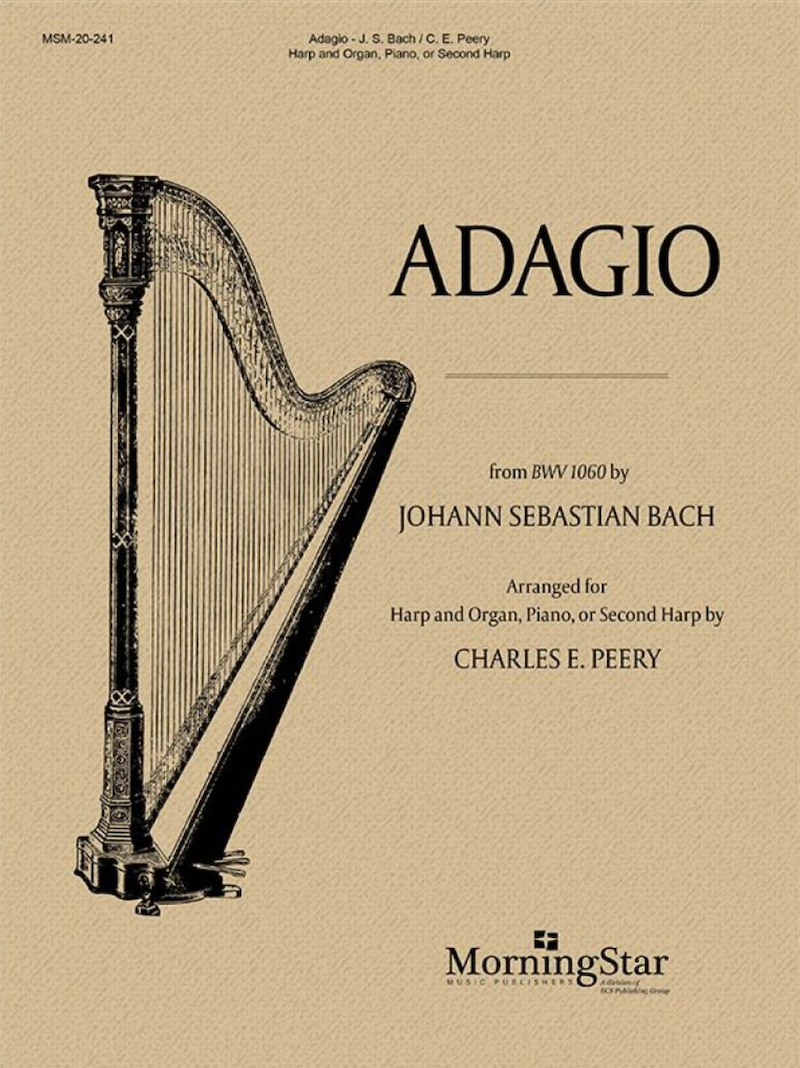
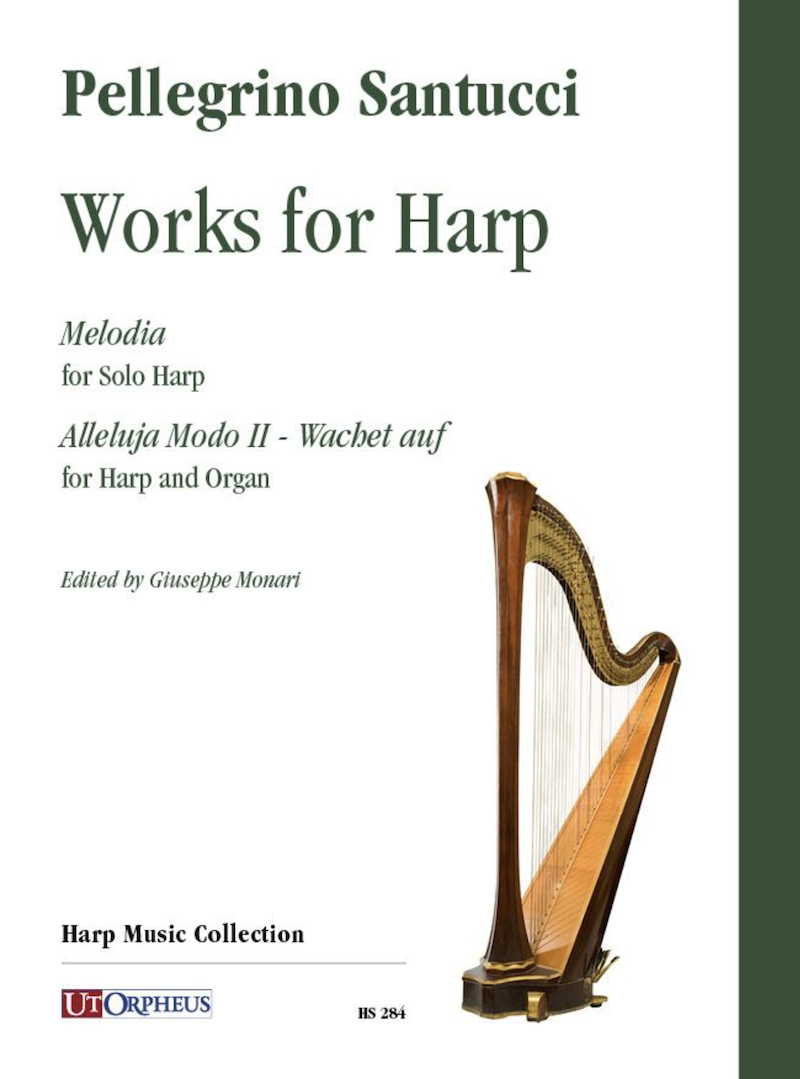
New arrangements for harp include (from l. to r.): Three Pieces, by Nadia Boulanger, arranged for cello and harp by Catherine Anderson; Harold Darke’s Elegy, arranged by Charles E. Peery; Bach’s “Adagio” from BWV 1060, also arranged by Peery; and Works for Harp by Pellegrino Santucci, arranged by Giuseppe Monari.
Let’s start off the New Year with some duets for harp with cello or organ.
Nadia Boulanger was already studying composition and organ before the end of the nineteenth century. She vowed never to compose again after the death of her younger sister in 1918, but still went on to become one of the most influential teachers, conductors, and composers of the twentieth century. Although her vow not to compose kept her compositions to a minimum, her Three Pieces for Cello and Piano are among the most popular and frequently recorded pieces in the chamber repertoire.
Catherine Anderson’s fondness for Boulanger’s work and the fact that her son is a professional cellist led her to arrange Three Pieces (Anderson Music LLC). The arrangement for cello and harp is available as a PDF from Harp Column Music where you can also watch her YouTube video. All three pieces take a total of about eight minutes to play, but they can be played individually as well.
A few strings need to be tuned in advance: the 00G should be tuned up a half step and the 00F should be tuned up a whole step; the seventh octave C should be tuned to C-sharp.
The first piece is in E-flat minor and features long sustained notes in the upper, dulcet ranges of the cello. The harp plays a steady, insistent pattern that sparkles like twinkling lights. Anderson helps you count the repetitive measures by numbering them.
The second piece is in A minor. Some fingering is suggested and there are some étouffés. The two instruments constantly intertwine as if doing an intimate dance.
The harp boldly introduces the third piece in C-sharp minor with an octave in both hands. The cello plays pizzicato in a fast, playful, nervous rhythm while being propelled forward by the harp. The harp has a ton of pedals to move and dramatic, lush chords. The cello uses its deepest, richest, most soulful tones. Anderson provides all the pedal changes—sometimes below the score if there isn’t room in the middle of the score. There is some cross-pedaling and some muffles toward the end. The cello has some trills.
Any advanced harpist looking for some challenging, engaging chamber repertoire will find much to like in these three pieces. Adapting these pieces for the harp with cello is truly an homage to Boulanger.
Another frequent combination is harp and organ, and Charles E. Peery has some recent arrangements that are worth consideration. Peery has arranged Elegy by Harold Darke, an English composer and organist known for his choral compositions. It is published by Galaxy Music and just a little over three minutes long. The harp score fits all on two pages.
The piece begins in E-flat with the organ leading the way. The harp enters just before the fourth measure with some majestic chords. The key changes to D major for a while before returning to E-flat toward the end. There are quite a few pedal changes, but they are all notated in the middle of the staff and none are difficult. Fingering is not included but really isn’t necessary. The harp finishes with a flourish—an E-flat major, ad libbed glissando before the final chord.
The music is not as plaintive as you might expect an elegy to sound. The two parts have a stately quality and blend very well. You can hear a recording of it on YouTube. It is suitable for an intermediate or above harpist.
For something with a more contrapuntal flavor, Peery has also arranged “Adagio” from BWV 1060 by J.S. Bach for harp and organ, piano, or second harp. It is published by MorningStar Music and is a little over five and a half minutes in length. It comes with the score, harp part, and part two. Conveniently, Peery included pedal changes on the second part, making it easier to choose harp as the second instrument. Still, it’s nice to have the option to choose the second instrument.
What makes this suitable for more advanced players is the technique and fingering necessary to play Bach (think the Bach-Grandjany Etudes). Fingering is not suggested, but any harpist with a solid, competent technique and good directional placing will manage the fingering. Both Peery’s arrangements are good choices, especially if you want harp and organ.
Lastly, Giuseppe Monari has gathered and edited the only three compositions written for harp by Pellegrino Maria Santucci (1921-2010). Santucci was an ordained priest who was also a composer of sacred and liturgical compositions for various types of musical groups. He wrote a harp solo, “Melodia,” a short, simple piece just two pages in length, and two pieces for harp and organ. UtOrpheus has published these three pieces in one collection, Pellegrino Santucci Works for Harp. Consider the solo a bonus in the collection, as the duos with organ are far more interesting.
The first harp and organ duo is “Alleluia Modo II.” It is just two pages and intermediate level. The organ begins alone and until m. 37, the harp and organ have largely a call and response relationship. At m. 37, the two instruments play together until the end. This piece was inspired by Gregorian chant.
The second duo is “Wachet auf” (meant to be a tribute to Bach’s Sleepers Awake). This is a very appealing harp and organ duet that could be used in a variety of liturgical settings. It is suitable for an intermediate to advanced player and about four and a half minutes long. The editing could have been more thorough to eliminate duplicate notes in both hands and provide pedal markings for the numerous pedal changes. There are no fingering suggestions.
If you could use some harp and organ music to play at mass, take a look at this piece. You can find an audio recording on YouTube. •