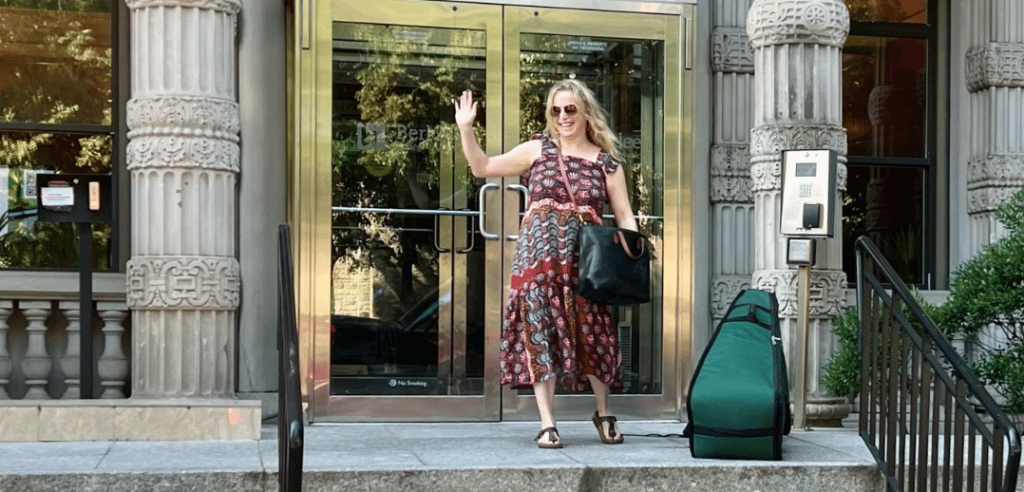

In 2021 we began following nine harpists for our Practice Makes Harpist series to see how their practice affects their musical experience. In the second year of the series, we are checking in with the nine harpists we met in year one to see how their practicing has progressed over the last 12 months. In this installment, we’re circling back to Jenny Ogan in Boston, Massachusetts. Ogan has completed her training at the Longy School of Music of Bard College and is a Certified Music Practitioner with the Music for HealingandTransition Program.
Jenny Ogan
Age: 42
Area of work: Therapeutic music
Short-term goal: Deepening knowledge of different types of therapeutic music.
Long-term goal: Growing a therapeutic music practice while cultivating joy in harp playing.
Ogan typically spends 10 hours a week working as a therapeutic harpist and another 10 hours practicing the harp, scheduling her time around her daughter’s schooling. Last year she provided music in a memory care unit; currently she works at a hospice. Additionally, she’s also starting to play therapeutic harp for vigils and transitions.
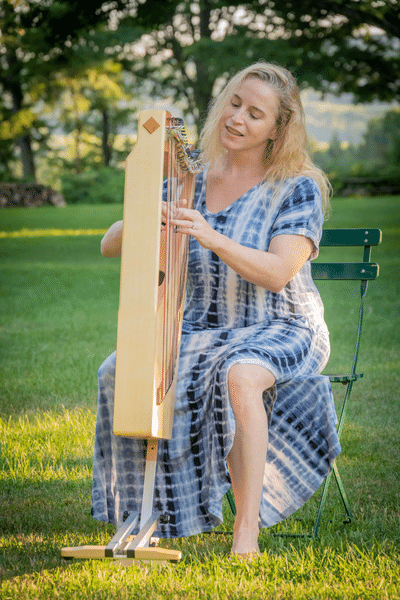
Ogan says that each location she plays in calls for observing and adjusting to the situation. For example, memory care rooms can be chaotic, and the patient’s communication may be unfiltered, agitated, and loud. In those times, she leans on her training to find the right music to bring peace.
Typical day at the hospice
When Ogan arrives at the hospice she receives a list of patients to visit. Because she works at several facilities, each day yields a different mix of patients. She sometimes finds the patients in a common area, where Ogan says, “It’s often giving a concert for 15 to 20 people.” In the patient rooms, it’s more personal. She’s playing for one person, there’s no planned repertoire, and Ogan chooses the music in the moment. “It’s really important to be observant. Somebody may be non-verbal, so I have to know what’s appropriate for people in different conditions. It’s important to watch, stay centered, and adjust for the patient.”
A normal visit with patients lasts approximately 20 minutes, longer if someone “really feels the music.” Other times it’s a shorter visit, especially if the patient’s roommate isn’t receptive. At times patients simply want to talk and the harp provides an entry point or background to a conversation. When patients don’t feel like talking or are unable to converse due to the nature of their illness, the harp music serves as companionship, so they know they are not alone.
Practice as a professional
Ogan has adjusted her practice routine for professional work. She learns new music for specific patients. She said, “This weekend I’m visiting a few Haitian patients, so I’m working on Haitian music using lead sheets.” Sometimes when practicing therapeutic music, there’s a temptation to try fancier chords and more exotic, faster, and syncopated rhythms. However, in the therapeutic music world, simpler is often better.
In practice there is always something new to learn, perfect, or revise. Ogan finds that, with professional playing, she sometimes loses sight of what brings her the most joy. “Every day I carve out practice time to play music for myself and remember what drew me to the harp in the first place,” she says. “Originally I simply wanted to play the harp, and I include that in my practice.”
Continuing education
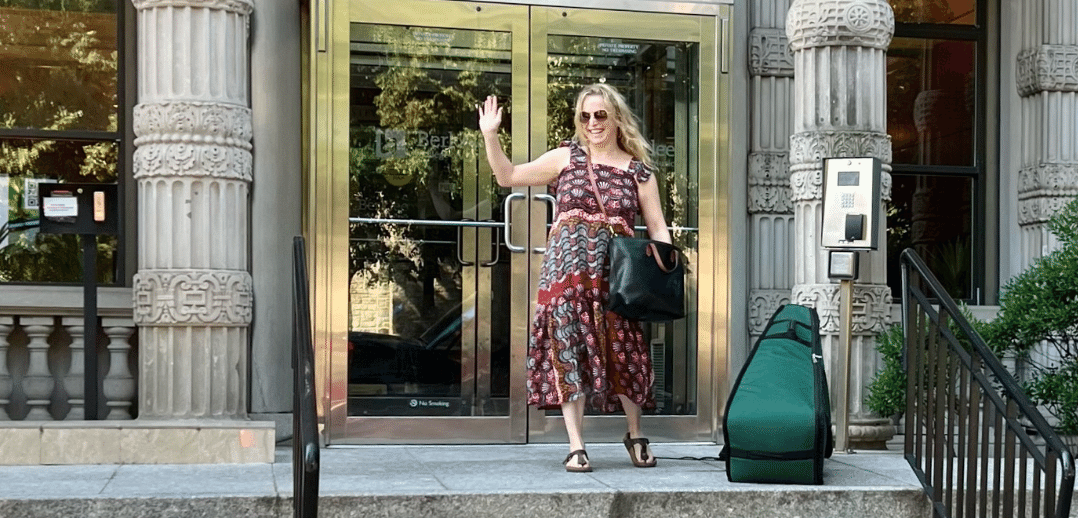
Last summer Ogan decided to take a summer course at the Berklee School of Music in Boston. “It was all high school students and me,” she laughs. “But it was fun to be with the kids and experience their youthful energy, and I was one of only two harpists in the program.” During the intensive five weeks, she took courses in theory and musicianship and played in two ensembles: rock ‘n’ roll and bluegrass. While Ogan doesn’t plan on playing rock, she did enjoy dipping her feet into a new area and hearing her Thormahlen harp amplified within a rock band.
Even after the final performance at Berklee Performance Center, Ogan continues attending local bluegrass sessions. “Everyone in bluegrass is so welcoming and I enjoyed playing with others.”
In the next year Ogan and her family may move out of state, and Ogan is looking forward to providing therapeutic music to healthcare facilities there. •