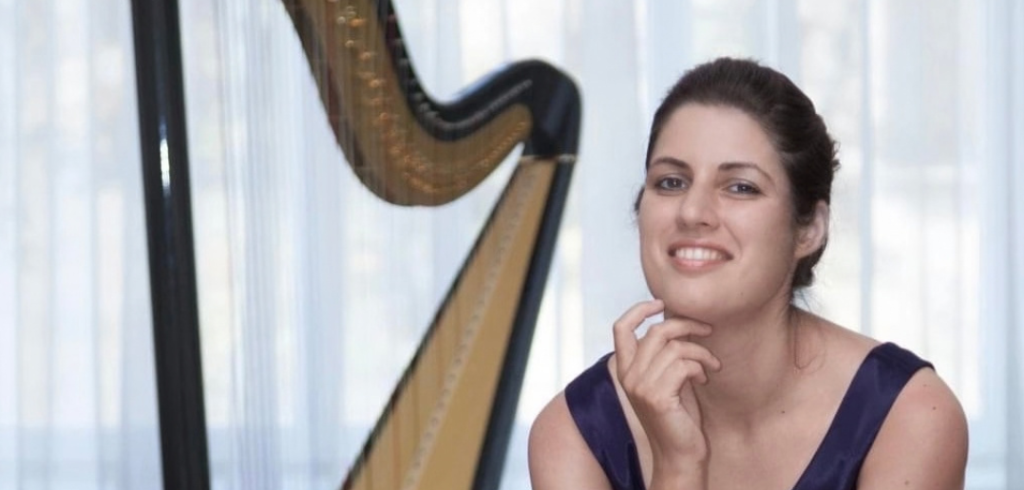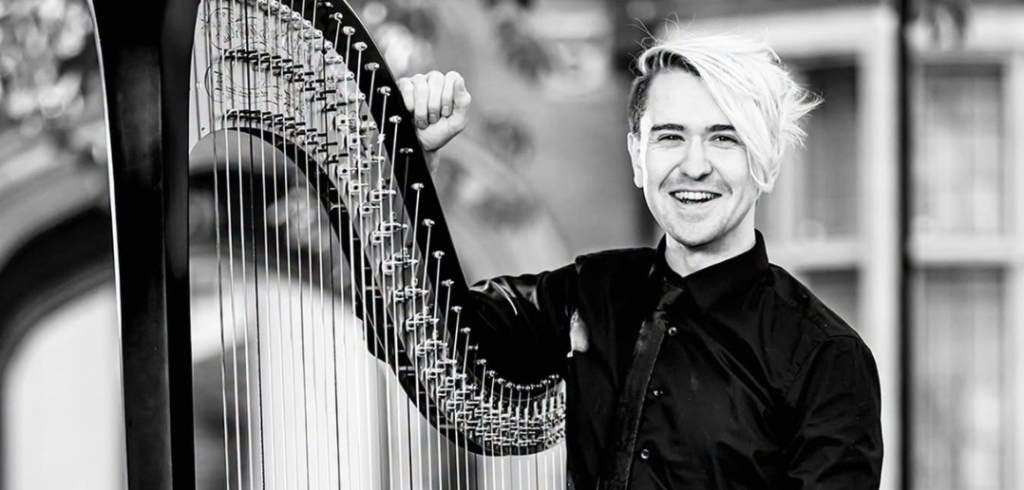

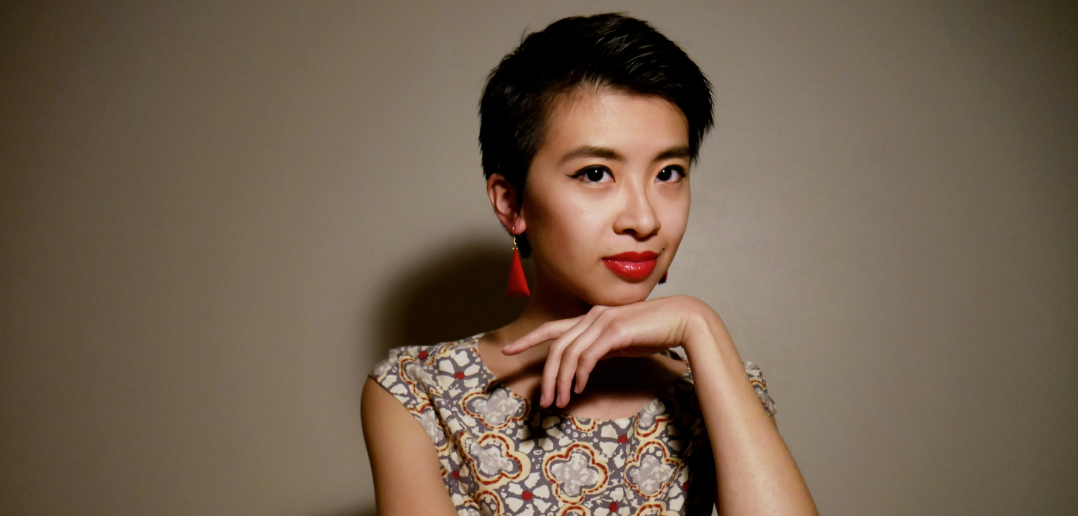
The Curtis Institute of Music has appointed Noël Wan to its harp faculty, starting this fall. Wan will join Philadelphia Orchestra principal harp Elizabeth Hainen, who is Curtis’ Maryjane Mayhew Barton Chair in Harp Studies. According to a press release from Curtis, Wan is one of four new faculty members who will begin teaching this fall so that all of the school’s instrumental departments now have a team of at least two faculty members to offer students multiple perspectives.
“It is an honor to be part of this historic harp program, founded by the great Carlos Salzedo—one of the most innovative harpists in our history—and followed by other giants of our field, Marilyn Costello and Judy Loman,” Wan says in a social media post. “I don’t take this appointment lightly and look forward to building on their legacies in this new era for harp at Curtis.” Wan is currently the assistant professor of harp and entrepreneurship at Florida State University. “I’m not planning to leave Tallahassee anytime soon, but I will now be in the Philadelphia area more often and can’t wait to get to know its many musical communities,” she says. Speaking to Harp Column, Wan said, “I will be flying to Philadelphia about five to six times each semester, so Elizabeth will remain the primary instructor. However, the students will take lessons with both of us, and we will work together on the curriculum and with Helen Gerhold, who leads the Curtis Harp Ensemble.”
“I have been closely following Noël Wan’s career, most recently when she gave her gold medalist concert at the USA International Harp Competition in May of 2025. Her unique and flawless performance of traditional and newly commissioned compositions transcended her instrument,” Hainen says. “[Noël and I] have had some great conversations discussing our musical ideas and passions, and I am thrilled to discover a like-minded colleague. Along with Noël Wan, I look forward to continue teaching with a nurturing, flexible, and invigorating approach, understanding that there isn’t always one interpretation.”
Describing Wan’s interests as complementary to her own, Hainen says, “My teaching strengths are probably more traditionally invested in solo and orchestral playing with a wide breadth of repertoire knowledge. Along with her own impressive grip of the harp repertoire, Dr. Wan will offer her passion for new music and advanced performance techniques that are reinventing harp performing as we know it.”
When we asked Wan what she hopes to bring to the studio, Wan highlighted her pedagogical approach, “which uses the Socratic method to activate students’ existing musical knowledge while challenging them to always think beyond the questions I ask.” She also pointed to her strengths as a soloist: “technical rigor that prioritizes longevity; thoughtful inquiry that cultivates an assured individual voice; and a creative playfulness that reminds harpists that despite the stigmas and stereotypes that plague our instrument, the world can still be your musical oyster.”
“There has always been a philosophy of offering an unparalleled music education to young artists of the highest caliber without a dogmatic approach,” Hainen says. “When Judy Loman invited me to teach alongside her in 2005, she embraced my young musical ideas to dovetail with hers. Without this lineage I would not be the same musician I am today nor would our students.”
Hainen says the tradition of offering multiple perspectives in the harp studio (first with her and Loman, now with her and Wan) is part of the mission of Curtis. “Mary Louise Curtis Bok (of the famous Curtis Publishing Company family) founded the Curtis Institute of Music in 1924 so that the most talented young musicians could learn their craft with no financial barriers. She created a diverse faculty of internationally renowned musicians, integrating European traditions with new American methods of teaching,” she says. “In addition, Curtis has always had strong ties to The Philadelphia Orchestra which is represented throughout the history of its faculty. The institute also had great visionaries like Leopold Stokowski, Rudolph Serkin, and Carlos Salzedo, who were exceptional innovators of their craft.”
Wan is an international prize-winning Taiwanese-Canadian-American harpist and an interdisciplinary scholar. She has been a top prize winner of international competitions, including the Astral Artists National Competition, USA International Harp Competition, Debut Atlantic Touring Artist Competition, Prix Orford Musique, and World Harp Competition. Wan’s stylistic interests as a solo performer range from classical to jazz to pop to avant-garde and beyond. Currently, she is working on several projects for the electroacoustic harp: commissioned works by Paolo Griffin, Caroline Lizotte, and Liliya Ugay and original sound design under her new moniker the Mother’s Teeth. Her present research and creation explores queer embodiment and digital sound creation through the concepts of the monstrous feminine and cyborg aesthetics. Wan holds Bachelor of Music and Doctor of Musical Arts degrees from the University of Illinois and a Master of Music degree from the Yale School of Music.