
We’re talking with featured performers leading up to this summer’s One Harp World (OHW), a joint conference organized by the American Harp Society (AHS) and World Harp Congress (WHC). It takes place July 28–Aug 3, 2026, in Toronto.
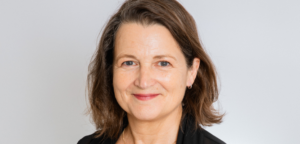
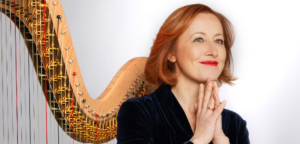
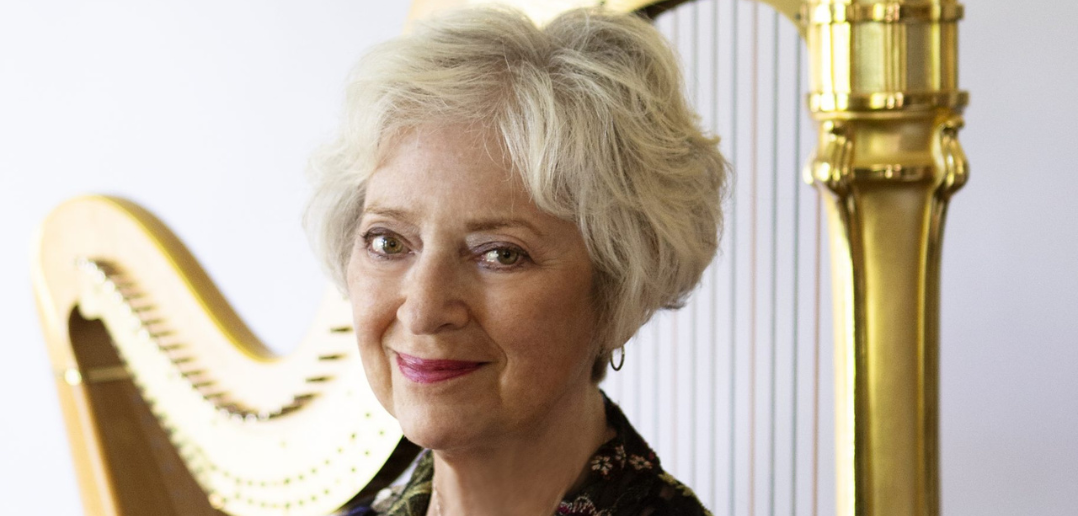
This month, we’re featuring Erica Goodman, who is performing in the opening gala concert on July 28 featuring Canadian music and musicians. Goodman is a native of Toronto. A JUNO Award-winning harpist, she received her training at the Royal Conservatory of Music in Toronto, at Interlochen in Michigan, and at the Curtis Institute of Music in Philadelphia. She has appeared worldwide as a recitalist and chamber musician and is also a charter member of Toronto’s New Music Concerts Ensemble and the Esprit Orchestra. We caught up with Goodman to learn more about her upcoming performance at OHW.
Tell us about your performance in the opening concert. What can we listen for during the performance?
What I will be playing is a concerto for harp complete with cadenza, but it is specially written to be accompanied by a Balinese gamelan ensemble. In [the gala concert, I will be performing with] a group of Toronto percussionists with whom I have worked for many years, the Evergreen Club Contemporary Gamelan. [The group] became interested in gamelan music and Balinese culture, acquired the instruments from overseas, and continues to play several concerts a year, though the personnel has changed somewhat over the years. Their mandate is to commission composers to write new works for this unique ensemble. The scale [which gamelan instruments are tuned to] has only five notes, and this poses an enormous challenge to come up with creative ways to use a limited number of notes. I suggested [commissioning] Andrew P. MacDonald, a Canadian composer who has written several works for harp (both solo and chamber music), and I am very impressed with the result.
Tell us about your connection to Canadian music.
I was born in Toronto and it has been my home base throughout my career. I became very active playing contemporary music through my long association with Canadian flutist and composer Robert Aitken. We toured internationally and played many recitals together. I subsequently became the harpist of his New Music Concerts ensemble which was founded in 1971. Later, I became a member of Toronto’s Esprit Orchestra and have worked over the years with Lawrence Cherney and Soundstreams, all originating in Toronto [and promoting new music].
What do you find meaningful about commissioning and performing music by Canadian composers?
Of course composers all over the world are writing innovative pieces for harp, especially since the great Carlos Salzedo showed them the way with his compositions and workbooks on extended techniques and sounds, including instructions on how to notate them. But I think it is the mandate of Canadian musicians to support our own composers and give them international exposure if possible through recordings and performances. All composers’ music is just silent musical notation unless musicians commit themselves to bringing it to life.
Many conference-goers are looking forward to hearing you perform. Which performances are YOU looking forward to hearing at OHW?
All of the performances and surrounding events are of great interest and I hope OHW will bring tremendous awareness and appreciation of the harp’s versatility to the general public, as well as inspiration to harp students and amateur harpists alike. I look forward to hearing my teacher, Judy Loman, [perform] at the concerto concert. Frankly, hearing her play anything sets for me the highest standard of harp technique and musicianship.
OHW brings together a diverse range of harpists from around the world. What do you think makes your voice unique in the harp community?
It’s what I call the three T’s: tone, playing in time, and playing in tune. It takes many years to find one’s own individual interpretation of these values—especially tone, which for me is playing with a big dynamic range that is penetrating and varied but never tense or forced. Phrasing and musicality can only happen with a cast-iron sense of rhythm. We must listen to others around us in chamber music and often make adjustments to give the “impression” of sounding in tune. (I must do this with the gamelan because some of the instruments have unusual overtones!) Hopefully, a lifetime of participating in and listening to many genres of music and just loving the “watercolor” natural sound of the harp has given my playing a unique voice.
Tell us about your previous experience at AHS or WHC events.
I was invited to play the opening recital at the 1982 AHS conference in Winston-Salem, North Carolina, in 1982. My flute, harp, and viola group, Trio Lyra, played at the World Harp Congress conference in Seattle-Tacoma, Washington, in 1996. I also played a work by Canadian composer Milton Barnes called Divertimento for harp and strings at the 1980 AHS conference in Fredonia, New York.
To learn more about One Harp World, visit the event website.