

We’re talking with featured performers leading up to this summer’s One Harp World (OHW), a joint conference organized by the American Harp Society (AHS) and World Harp Congress (WHC). It takes place July 28–Aug 3, 2026, in Toronto.
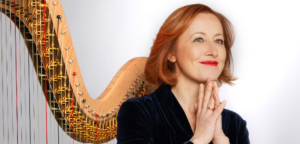
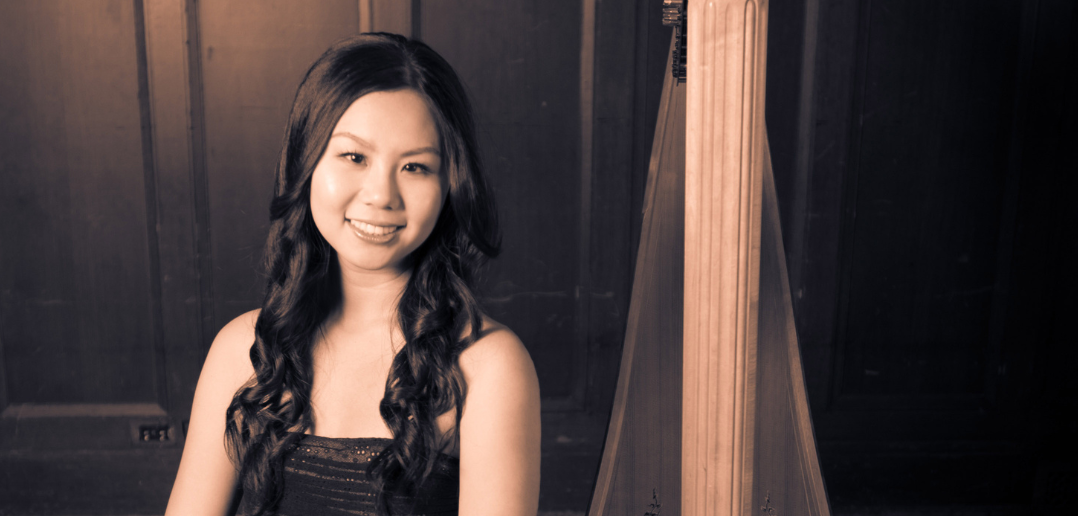
This month, we’re featuring Joy Yeh, who is performing in the opening gala concert on July 28 featuring Canadian music and musicians. Yeh is professor and chair of the harp division at the Vancouver Academy of Music (VAM). Under her leadership, the VAM harp department has grown to become the largest harp department among Canadian conservatories and one of the largest in North America, serving over 100 students of all ages. Yeh is also an adjudicator at international music competitions and festivals, including this year’s Focus on Youth program at the World Harp Congress. As a soloist, she has performed with major orchestras and appeared at prestigious venues worldwide, while her recordings have been broadcast on major media outlets such as CBC Radio 2.
Tell us about your performance in the opening concert. How did you choose the music you’ll be performing?
I will be performing Songs of Nymphs by Canadian composer Marjan Mozetich. This 15-minute work consists of four movements. I first began learning it while preparing for my doctoral recital in Indiana under the tutelage of Miss Susann McDonald. She found the piece beautifully written and highly idiomatic for the harp, and was very appreciative that I introduced it to the harp studio there. In fact, several American harpists at the time were inspired to learn the piece as well, which was very rewarding for me.
What do you like about this piece? What can we listen for during the performance?
This piece was one of the Canadian works included in my doctoral dissertation, where I approached it from a more theoretical perspective—though I won’t go into that here! What I will say is that I feel this is a piece that speaks very strongly to the present moment. In a time marked by wars, chaos, and separation, as humanity faces growing uncertainty amid rapidly advancing technology, it offers something rare. Marjan Mozetich once shared that he composed it while living in a condo in Toronto without air conditioning, with the constant noise of traffic outside. He was yearning for a sense of escape—and I think you can truly hear that in the music.
When you listen to Songs of Nymphs, it feels like stepping into another world—something surreal, untouched, almost sacred. As I journey through the four movements, I find a deep sense of calm and inner stillness. My hope is to offer that same experience to the audience: an invitation to step away from the unsettled world we’re living in, even if just for 15 minutes. And perhaps that sense of peace will linger, so we can return to it whenever we need.
Many conference-goers are looking forward to hearing you perform. Which performances are YOU looking forward to hearing at OHW?
There are so many performances, lectures, and workshops that I’m having a hard time choosing which ones to attend—there are inevitable time conflicts, and I honestly wish I could duplicate myself! Of course, I’m very much looking forward to the evening concerts and individual recitals by world-renowned harpists.
At the same time, as chair of the harp department at the Vancouver Academy of Music, I find it especially fascinating to witness the talent of young players—some of them incredibly young. Having served as co-chair of Focus on Youth this year, I watched more than 80 videos submitted by remarkably accomplished young artists, which left me feeling both inspired and hopeful for the next generation. I would strongly encourage everyone to attend as many of the Focus on Youth concerts as possible.
Who are some of your musical inspirations?
I have always found great inspiration in and admiration for the renowned cellist Yo-Yo Ma—not only for his artistry, but for the way he uses his music in service of a greater good, contributing to the restoration of our shared humanity. Seeing him collaborate with artists across different disciplines, and his efforts to bring classical music into dialogue with nature, brings me a deep sense of joy. [Ed.—OHW attendees can visit one example of these collaborations at the Toronto Music Garden, a public park designed in collaboration with Yo-Yo Ma and inspired by J. S. Bach’s Cello Suite no. 1.] Through his music, he builds friendships across cultures and transcends language barriers, reminding us of the very essence of why we pursue music in the first place.
To learn more about One Harp World, visit the event website.