

7/10
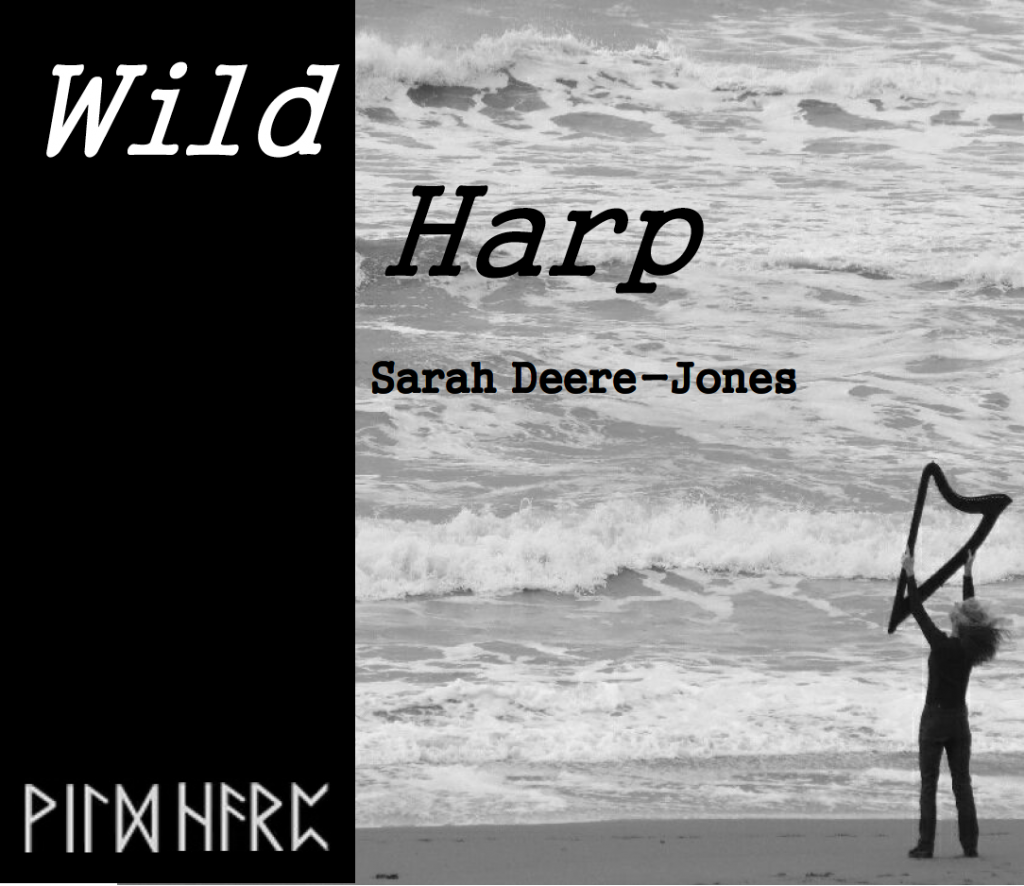
Sarah Deere-Jones, harp. Self-released, 2015
Aeolian harp or wind harp is an instrument that works all on its own—with the wind’s help of course. It chooses its own harmonies and pulse from the wind. While it may sound very New Age, the instrument is one of the oldest. It is named for the Greek god of wind and enjoyed a resurgence in popularity in the 1800s. Today you can see and hear a permanent installation wind harp at San Francisco’s Exploratorium. It is by no means a shy instrument, as even a slight breeze sets its otherworldly sound vibrating.
Sarah Deere-Jones is an English harpist who plays everything from acoustic Celtic, medieval, and classical harps to electric harps and one very long wire. In her newest disc, Wild Harp, she allows the wind harp to guide her compositions, taking the instrument on location, out into England’s natural settings from seashore to the Lake District. She then creates original compositions around her found sounds. The result is a beguiling mix of the familiar with a sound that we can’t quite put our finger on—maybe man-made, maybe wild.
Opening the disc is a full dose of the ethereal presence of the Aeolian harp as recorded on a walk on the Cumbrian way. It has an almost electronic sound, yet vibrates like the human voice. Deere-Jones’ decision to play Chopin next to the harmonies created by an original instrument from the time of Coleridge-Taylor, helps ground us in the classical world. It’s a fascinating contrast.
Likewise the duet with wind turbine. Ah, my English friends talk incessantly about these “eyesores” of the modern era appearing in the neighbor’s cow pastures, but what a lovely, soft-brush-on-snare-drum rhythmic sound they make.
My favorite composition by far is “Byrd on a Briar,” a duet that invites song thrush and cuckoo to influence the joyous folk-like response from Deere-Jones. The found sounds are subtle, as though coming in and out of our consciousness. The tapestry she weaves feels as natural as taking a walk in full summer.
The medieval gemshorn, low whistle, and various keyboards also find their way into the music, along with Deere-Jones’ own voice, actually the weakest of her instrumental talents. She makes up for it by inviting the Exeter University Chapel Choir to sing “Blow Northern Wind” with just wind as accompaniment.
In “Seal Song,” Deere-Jones recalls kayaking and swimming with seals, their forlorn voices inspiring a jaunty tune, and the waves adding a steady beat to the electric harp. Things finish with a bit of electropop, a fitting ending.
Wild Harp is a stunning collection of enchanting textures and colors, and an album that may motivate your own creativity or, at the very least, inspire you to listen in a whole new way. •