

Pop Harp Playlist
Check out our playlist of pop recordings with harp. Plus, listen to it on Spotify!
When you hear a song on the radio with harp in it, do you ever wonder who the harpist was behind the track? I have been enamored with the use of harp in commercial or modern settings ever since becoming a commercial harp major when I was in college. Back then, I began compiling a list of popular recordings that used harp. Over the years as my track list grew, and as I began to organize those tracks for this article, it became clear that harp has become a much more versatile instrument than I initially thought. It’s not unusual to hear a harp in pop music, but when I combed through my data, I could see that harp has been used in rock, R&B, indie folk, experimental, hip hop, disco, and a myriad of other genres. Vastly different artists such as Queen, Stevie Wonder, The Beatles, and Taylor Swift have all used harp at some point in their discography.
When you think of harp in recorded music there are a few tracks that instantly come to mind: “She’s Leaving Home” by The Beatles (Sheila Bromberg on harp), “Telephone” by Lady Gaga/Beyoncé (unknown on harp), “If It’s Magic” by Stevie Wonder (Dorothy Ashby on harp), and “Dog Days Are Over” by Florence + The Machine (Tom Moth on harp). These songs are household names and wouldn’t be the same without their signature, whimsical harp riffs. So how does one get involved in this mystical recording world where you get to work with artists and put your own stamp on someone else’s album? I spoke with four harpists who have recorded on some stellar albums to learn more.
POP music with Gayle Levant
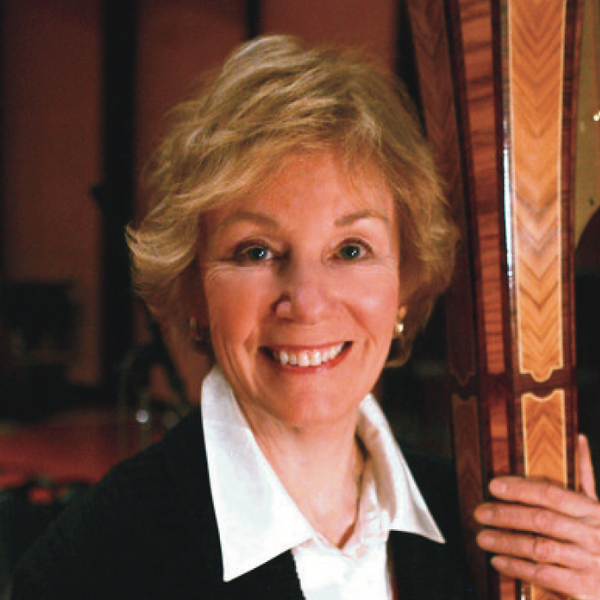
Harpist: Gayle Levant
Track: “Doin’ Time” by Lana Del Rey
Year released: 2019
Genre: Trip hop
My track list data proves one major thing: harp was much more prevalent in recordings from the ’60s and ’70s. Back then, it was much more common to hear a full orchestra recording around the artist’s vocals. Major artists such as The Beatles, The Beach Boys, Simon & Garfunkel, The Temptations, and Elton John all used harp on multiple tracks during this time period. A major harp session player during this time was Gayle Levant. Born and raised in California, Levant was working every day doing session work in the ’60s and ’70s—sometimes working 12-hour days in the studio!
In her decades-long career, Levant has worked with many of the greats. You can hear her on The Carpenters’ 1970 track “(They Long to Be) Close to You,” Arlo Guthrie’s 1976 track “Ocean Crossing,” George Harrison’s 1979 track “Dark Sweet Lady,” and countless others. Her career did not stop there. She has been steadily recording ever since. Remember Lana Del Rey’s cover of Sublime’s “Doin’ Time” from 2019? The album on which this was recorded was certified gold and the track was heavily played on the radio. Here’s what Levant has to say about the recording experience and what it is like to be a full-time session harpist.
How did you get involved with working with Lana Del Rey?
“Andrew Watt, Lana’s producer for the track “Doin’ Time” reached out to me. Someone must have given him my name, because we didn’t know each other. I went over to his home studio, and we began a creative process together. He was so filled with energy. He basically said to me, ‘I don’t have anything written. I don’t know how to write for harp, but I have an idea. If I play you a couple of chords, can you take it from there?’ So, he did. I started setting up the chords and we started laying down tracks. He asked if I had any other ideas. I said ‘absolutely!’ So, I layered…I can’t even tell you how many layers I did. But it was so much fun. He said to me at the end of the session: ‘I’m going to process the sound of it a little bit, so don’t be surprised when you hear it.’ It was such a surprise to me how it actually turned out. When I heard it, I thought it sounded fantastic because he really did change the color of the harp.”
What was it like working with her?
“Lana wasn’t there–she hadn’t come in. We were just laying down a basic harp track and then everything else was added on top. The track basically started with the harp. I was there for about 3–4 hours. And that was it. I never heard anything more.”
How involved were you in the creation of the harp part on the track?
“Very. I just kept creating different parts for it and overdubbing myself. I was doing everything by ear and writing out the chord symbols that I knew he was looking for. If someone gives me a chord chart and lets me bring my own creativity to the track, that just takes me to another place. I love doing that. I had no frame of reference. He just wanted to lay down a basic harp part and then build it from there. I love to improvise when I am given a chord sheet in a session with other musicians, whether it’s just a rhythm section or a full orchestra, and am told to do my own thing. I may not play much on the first pass because I’m listening to what everyone is playing. Then, I’ll bring my own touch to it.”
Did you tour or do live shows with Lana Del Rey?
“No, I have never met Lana. I can tell you that I really enjoyed the creative process with Andrew at his studio. It’s so funny, when I am on a recording session and have been given the liberty to be creative, at some point the copyist will come over to me and ask me to write out what I played so the harp part will be there when the artist goes on the road to perform. Needless to say, with each take, what I have done will have changed a bit, so I have to try to remember what I played.”
Do you have any good stories from over the years?
“In 1971, I met a young record producer, David Foster. He was working on his first album for a group called Skylark in which he played when he was living in Canada. He came to L.A. to have me record a basic harp track for the album. The session began at midnight because I was working around the clock at that time. As there were no other instruments that had been recorded for this song yet, David gave me his thoughts for the direction he wanted me to go. I created a part that made us both happy for the track. About a year later, I was driving home from a session when a song came on the radio, I thought, ‘Gosh, that sounds like something I would play.’ I made a mental note of the radio station and the time it aired and called the station when I got home. I was told that the record was called ‘Wildflower’ and was recorded in England. I didn’t give it any more thought other than it was a wonderful recording. About three months later, I was called for a session with David. Having not seen him since the first time we met, he came over to me to tell me that we had a ‘hit record.’ I asked him, ‘What are you talking about?’ He reminded me of the track I recorded for him the first time we worked together. From that point on, I played on all of his sessions that were recorded in L.A. At the end of 2021, 50 years later, he sent me a platinum record for my work on ‘Wildflower’ commemorating more than one million sales worldwide. This was a very special moment for me!”
What are you currently working on?
“We’re just finishing up the score for a new film called Lightyear. It’s a Pixar film and the prequel story to Buzz Lightyear (from the Toy Story franchise scored by Michael Giacchino). I’m also working on the second season of Star Trek: Strange New Worlds, scored by young female composer Nami Melumad.”
How many sessions do you think you have you played on?
“There’s no way to answer that because it’s thousands and thousands of sessions.”
To name a few artists from those thousands and thousands of sessions, Gayle has worked with Ray Charles, Stevie Wonder, Frank Sinatra, Paul McCartney, George Harrison, Michael Jackson, Natalie Cole, Lionel Richie, Joni Mitchell, Michael Feinstein, The Carpenters, and Barbra Streisand (she has been working with Streisand on all her recording projects since 1969). She has also worked on a myriad of film scores including the latest film in the Spider-Man franchise, Spider-Man: No Way Home, as well as La La Land, King Kong, Hocus Pocus,and Apollo 13. Additionally, she has played harp for the Academy Awards televised Oscars show off and on for more than 25 years.
Rock recording with Timbre
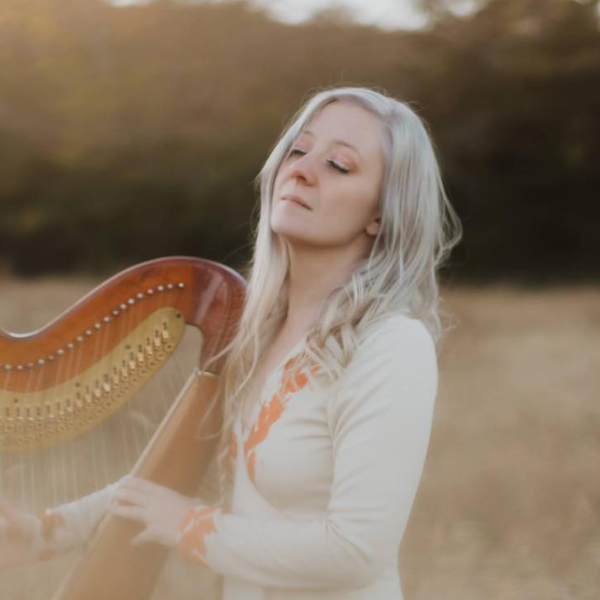
Harpist: Timbre (photo by Sara Miller)
Track: “Alone in My Home” by Jack White
Year released: 2014
Genre: Alternative Rock
Although harp is not as heavily used in rock music, there are still many example tracks out there. Guns ’N’ Roses, Arcade Fire, and Queen are just a few rock bands who have used harp in their recordings. You can hear harp on “This I Love” (Patti Hood on harp), “Wake Up” (Anita Fust on harp), and “Love Of My Life” (Brian May on harp). What is it like to work with the songwriter of a mega rock hit like “Seven Nation Army” or a 12-time Grammy award winning rock star? I talked with Nashville-based harpist Timbre to hear about her experience recording with the great Jack White.
How did you get involved with working with Jack White?
“His head engineer Vance [Powell] owns a studio that he runs on his own. I had recorded harp for another artist there and Vance was super excited that I knew how to improvise and had all of these questions for me. Jack White does these limited edition seven-inch vinyl [recordings] of covers with different artists. When Tom Jones was in town to play The Ryman [Auditorium], Jack wanted to do a cover of “Jezebel.” He wanted it to be a little bit sexy with an alluring sound and thought of harp. He asked his engineer if he knew a harpist and Vance remembered me. I got a call at 10 a.m., ‘Jack White is looking for someone to play harp with him and Tom Jones. Can you be here at 11?’ I was like, ‘What? Yes, yes…’ I canceled everything else I had for that day and had an hour to get myself together, get my harp in the car, and drive out there. That day working on that Tom Jones cover…it started out with just me and Jack. We were improvising together before the rest of the band got there and worked out the arrangement which was really cool. He played me 30 seconds of the song and asked me what I wanted to do and said ‘just play.’ It was one of those moments that came together quickly, and I knew exactly what to do. It just felt right—we resonated together. I think that quick camaraderie led him to want me to come back for his Lazaretto album.”
What was it like working with him?
“It was awesome. He’s very comfortable in the studio. It’s very much his domain. I think he has a good, innate respect for musicians. I felt he was treating me as a peer, which you really need in a studio session—to feel the respect of the person you’re working with. It was very collaborative; he was there the whole time giving me his ideas so that we could hone in on what we both really wanted to have happen.”
How involved were you in the creation of the harp part on the track?
“Very. I was improvising the whole time and writing my own parts. He was really good at both giving suggestions or specific things he wanted, but he also letting me create. That felt very collaborative, respectful, and free to add my own voice to what he was doing. He essentially knew where he wanted harp, but it was up to me to create the part. That’s how we worked on the Tom Jones track. I think he really loves bringing in musicians who are creative and want to create their own parts so they can create this musical tapestry together instead of him having it all written out ahead of time. I didn’t hear any of the tracks ahead of time because he is very careful about things getting leaked. I pulled up to the studio never having heard any of the songs. I’d listen to it once and then I’d play. There was no chord chart, no real frame of reference. I just needed to try to absorb it completely the first time around, get the feel, get the chord structure, and then play. It’s weird, but I felt this sense of ‘I belong here musically,’ and that was really freeing. When I would start to get nervous about trying to play these tracks that I knew would be up for Grammy nominations, I would just try to settle back into knowing my skill as a harpist, writer, and improviser, telling myself there’s a reason I’m here. I need to trust that and just go for it.”
Did you tour or do live shows with Jack White?
“Unfortunately not. The Lazaretto tour was more piano-based, but from that experience, I ended up touring with his ex-wife [Karen Elson] for almost a year.”
Any behind-the-scenes scoop you can give us?
“I was there tracking for eight hours. Jack White was recording to tape. I can’t remember the exact stats of it, but his tape machine is like one of three in the world from the ’70s, and he has two of them. They were being finicky so our first hour of the session we just hung out and talked. He stayed with me in the studio instead of leaving. He was talking about his kids, and I was talking about my music family. While recording, he was in the control room the whole session. There was no click [track]; the track was recorded live to tape. The band recorded live, so there was a lot of push and pull, and it was a lot of work to get it synced up, especially since it was to tape. We spent a lot of time on getting it tight and getting the sound to be exactly what he wanted.”
What are you currently working on?
“I’m working on a passion project with my band—a Radiohead cover album that I have wanted to do forever. Radiohead has always been my favorite band. That will be my fifth album, which I’m excited about!”
Do you have a favorite popular recording that has harp on it?
“Björk’s Vespertine album, hands down, featuring Zeena Parkins on harp. It is so magical; one of my favorite albums of all time.”
To hear more from Timbre, check out her more than 50 credits including “Sweater Poorly Knit” by MeWithoutYou (one of her favorite bands), “Didn’t I” by OneRepublic, and two other tracks on Jack White’s Lazaretto album. She has also worked with Ricky Skaggs, Rachel Grimes, Coin, Brooke Waggoner, Cool Hand Luke, and many others.
Rapping with Marcia Dickstein
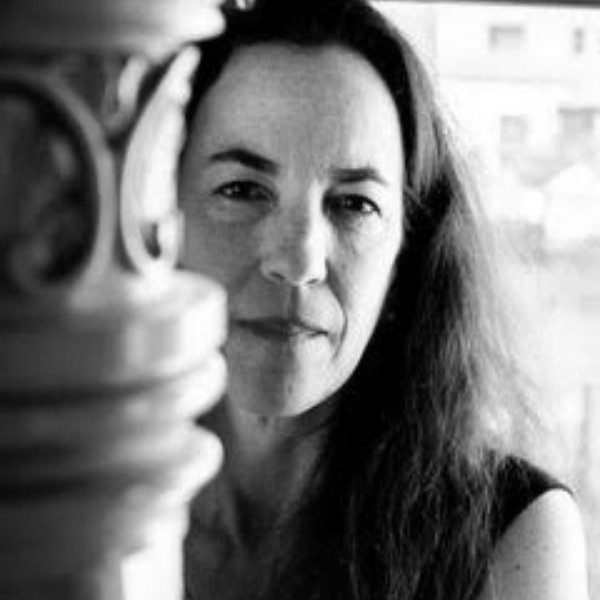
Harpist: Marcia Dickstein
Track: Unreleased by Snoop Dogg—be on the lookout!
Year recorded: 2018
Genre: Rap
You thought harp in rock music was different? What about harp in rap and hip hop music? “Still” by Dr. Dre and Snoop Dogg is an iconic rap song featuring harp. Although I believe it to be synth harp, it still is possible to believe that this ’90s track inspired other artists to use harp. From Ne-Yo to T-Pain, Young Thug, and Kanye West, harp (or synth harp) has added an extra colorful touch to these artists’ tracks. Session harpist Marcia Dickstein recalls her experience working with 17-time Grammy-nominated rapper and entertainment personality Snoop Dogg.
How did you get involved with working with Snoop Dogg?
“He was involved with this group called A Tribe Club Quest, which is a rap group. I was working with those guys on a TV show (Luke Cage) with a very small orchestra. They were friends with Snoop and somehow convinced him to put strings and harp on his next record.”
What was it like working with him?
“He was awesome. It was really fun. He didn’t sing, but was around…and getting stoned. I really respected that he came out and sat in the room with us. It was a little tiny recording studio. He even sat down and played my harp! He was really into it. He was incredibly generous with the musicians and had no ego at all, just really chill.”
How involved were you in the creation of the harp part on the track?
“They were written out, but I did a lot of contributing behind the scenes. The parts had to be fixed a little bit.”
What other tracks can we hear you on?
“Our union negotiated that starting in 2021, it would be required for musicians to be credited on films. I’ve been in the business 30 years and before then, I had only been credited maybe four or five times. Now, people are starting to call me saying that they’ve seen my name! For 30 years, you didn’t know what I was doing. I tell you that because I did a movie called First Man (2018) with Ryan Gosling. It was such a big harp feature that I got a screen credit for it. In that time period, because they weren’t crediting musicians, they [the director/composer] wanted to thank me for my contribution, so they credited me. That was a big deal for me.”
Any behind-the-scenes scoop you can give us?
“We work on projects under codenames. So, I’ll be working on a show and have no clue what we are working on. I worked on Spider-Man and had no idea until afterwards!”
Do you have a favorite popular recording that has harp on it?
“I am a huge Dorothy Ashby fan. I think she is one of the greats. I love really good jazz, and she’s really good. She is my knight in shining armor. She was such a classy player and studied harpist. I’m also a big fan of the work of Sheila Bromberg and Stella Castellucci.”
Do you have a favorite career moment?
“I did a promotional thing for AT&T for their customers called Stormy Weather. It was a fundraiser for the Walden Woods Project, and you can find it on YouTube. Both times Joni Mitchell was the headliner. Gwen Stefani, Stevie Nicks, Natalie Cole, Sandra Berhard, Björk, Shawn Colvin, and more were involved. Each one of these women sang two songs. There’s a CD of the live concert. That was in 1998, and it’s still one of the highlights of my career. It was incredible to watch all these women get up and stretch beyond themselves. They weren’t singing in their normal style, they were singing church songs. It was an incredible night of music. The arranger that did all the orchestration was a guy named Vince Mendoza. He’s primarily jazz, but has arranged for Mary Chapin Carpenter and Björk. Joni Mitchell had said she was going to retire. When she heard [Mendoza’s] arrangements from this night, she delayed her retirement and ended up recording three more albums, all because of that first night that we did. Vince did all the orchestration for [Mitchell’s] Both Sides, Now (released in 2000) after this night. I played it with her three times live. It was an amazing experience. She is an amazing woman.”
There’s a good chance you’ve already heard more of Dickstein’s music if you’re a movie buff. She’s recorded on over 500 film and TV scores, including Rogue One, the last Star Wars: Episode IX—The Rise of Skywalker, all of the Toy Story movies, The Mandalorian, Turning Red, Encanto, Moana, Godzilla, Green Lantern, The Polar Express, and A Bug’s Life. You can also hear her on Taylor Swift and Gary Lightbody’s 2012 track “The Last Time.”
Indie sounds with Tom Moth

Harpist: Tom Moth
Track: “Dog Days Are Over” by Florence + The Machine
Year recorded: 2008
Genre: Indie Pop
In the last two decades, we have seen an emergence of artists and harpists who are songwriter-artists who use harp more regularly in their music. From Joanna Newsom, Mikaela Davis, Active Child, Timbre, Deborah Henson-Conant, Erin Hill, Lucinda Belle Orchestra and Loreena McKennitt to Björk, The Chieftains, and The Polyphonic Spree, the harp is becoming more active in popular music. Perhaps one of the most famous modern artists to use harp in their music is Florence + The Machine. With massive indie pop hits like “Dog Days Are Over,” “Shake It Out,” and “Cosmic Love,” Florence’s music is definitely putting harp on the map and many independent artists are following suit in their use of harp. UK-based harpist Tom Moth has been playing with Florence + The Machine for the last 14 years and has traveled on every single tour since! Check out what he has to say about working on “Dog Days Are Over.”
How did you get involved with working with Florence + The Machine?
“I used to know these people who ran a multimedia complex in South London with rehearsal studios, recording studios, artist studios, an art gallery, sculptors, all sorts of things going on. They asked me to play some music in the art gallery one day. When I arrived, I was getting the harp out of the car and was approached by a woman who inquired what it was. We got chatting; her name was Isabella. She basically said she was working with this girl singer, and that they had a lot of songs together, and it might be nice to have some harp on them. She used to send me demos, and I would record harp parts in my flat and send them back. Fast forward and then suddenly, she’s Isabella Summers of Florence + The Machine, and I’m seeing her name around. I was recording these demos for about a year before I met [lead singer Florence Welch] in person. I got involved once she started doing live shows. If I’m being honest, I thought it would only be for one gig.”
What is it like working with Florence?
“She’s great! She’s a great person to work with and a fantastic songwriter. The songs that we’ve done, you always sort of ask yourself, would I buy this if I wasn’t in the band? And I think yes, yes I would. I think the songs are great, and that obviously makes things much more pleasant for me. It would be a bit of a bind if I was schlepping around the world playing songs I didn’t like. But, really, there are so many songs there that I love. She is really open to trying out different ideas.”
How involved were you in the creation of the harp part on the track?
“For that particular one [Dog Days Are Over], that was one of the demos I received from Isabella. Isabella co-wrote that with Florence. That was one of the first things that I recorded. They sent me the demo which had a keyboard harp sound on the opening bit. I wrote a bit for that song and reinterpreted what they already had.”
Moth used a delay pedal to make the part more playable on the harp and wrote the riff that comes in at 1:05 on “Dog Days.” He went on to become a regular part of the band. “Each album has had a different preparation. The first two albums were partly me, partly the producer. On ‘Cosmic Love,’ I worked the part out over the course of a two-week tour, and by the end of it, I had a definitive part by the time we got to the studio. On the fourth album, that’s the only time where most of the songs were specifically arranged for me because there was a lot of orchestra on the album. I recorded my parts along with the orchestra. The orchestra arranger, Sally Herbert, who is amazing, wrote most of the harp parts. With the new albums, it’s been a lot like going into the studio, hearing the song for the first time, and writing something.” Often, Moth says he will come up with the concept for harp and then bring it to Welch. “Florence is producing mostly by herself at the moment so she gives a lot of input.”
Do you play by ear or with a chord chart?
I tend to steer away from any written format music because, ultimately, I’m going to have to do it without the aid of a safety net.
“I usually play by ear. My teacher always used to say I was quite good at sightreading, which was a help and a hindrance because it meant I didn’t learn anything. If I could sight read, I would stare at that rather than learning the notes and getting rid of the music. So, I tend to steer away from any written format music because, ultimately, I’m going to have to do it without the aid of a safety net.”
Any behind-the-scenes scoop you can give us?
“‘Dog Days Are Over’ was released a good seven or eight months ahead of the album. It was exciting for me, because it was quite a big deal. This was a band that was getting played on the radio, and we were doing some exciting gigs, so I was really excited to be a part of this record. When the record came out, all the reviews said the harp part was a ukulele or mandolin. I was furious. There are still people even to this day who say it’s a ukulele. There was this article on the BBC website that was very well written, very funny, but kept talking about ukuleles. It was a great article, but completely wrong. What was doubly ironic about that was if you went elsewhere on the BBC website, there was a film of us playing that song in a BBC recording studio with me quite evidently not playing a ukulele. A couple of people left comments, and I think the guy saw the error of his ways because he made a massive deal about the next single release and mentioned harp.”
What is your favorite Florence + The Machine song that you recorded?
“That’s a tricky one. There’s a song called ‘What The Water Gave Me’ which is on the second album. I think it’s a fantastic song and always fun to do live, as well.”
Do you have a favorite popular recording with harp?
“There’s a track by Manic Street Preachers [Julie Aliss on harp] called ‘Small Black Flowers That Grow in the Sky,’ and I think that is probably one of the best uses of harp in popular music. In fact, it’s not necessarily doing something that’s stereotypically harp. Usually things with harp on them have glissandi and various swoopy things, but here the harp is a more integral part of the unit. It’s playing along with the instruments. It’s not there as a textural effect, it’s actually there as an integral part of the arrangement. That’s one song that I often think about when I’m thinking of an arrangement for the band.”
What are you currently working on?
“I’m working on a piece of music for a dinosaur museum called The Etches Collection. I offered to write some music for one of their informative films. Florence + The Machine is also rehearsing. We have some shows in the UK this spring. It will be our first show since 2019, so it’s quite a big deal. It will be amazing to be doing it again, so I’m looking forward to that. And the new album is coming out May 13!”
To hear more from Moth, check out Lou Rhodes’ album Theyesandeye, Paul Mosley’s albums A Chattering of Birds and Then I woke up and it was all a dream, Justin Sullivan’s album Surrounded, The Pattern Forms album The Scenic Route, and experimental album Dialogues—a collaboration between Moth, Anthony Child, and Luke Slater. Moth is also featured on Lady Gaga’s “Hey Girl” featuring Florence Welch (2016) and New Model Army’s “I Need More Time” (2013).
As harpists and recording artists use the harp in more music genres, the instrument continues to become more mainstream. Harp is still heavily used in film and Broadway scores, and you can also hear it on many video game scores such as The Legend of Zelda. We are also seeing a few modern uses of the harp in popular recordings. In 2021, Kirsten Agresta Copely recorded on Kacey Musgraves’ “Star-Crossed,” Timbre recorded on OneRepublic’s “Didn’t I,” and Brandee Younger recorded on Kanye West’s Donda album. What does the future have in store? Hopefully more popular recordings brought to life by the sound of the harp. •