
9/10
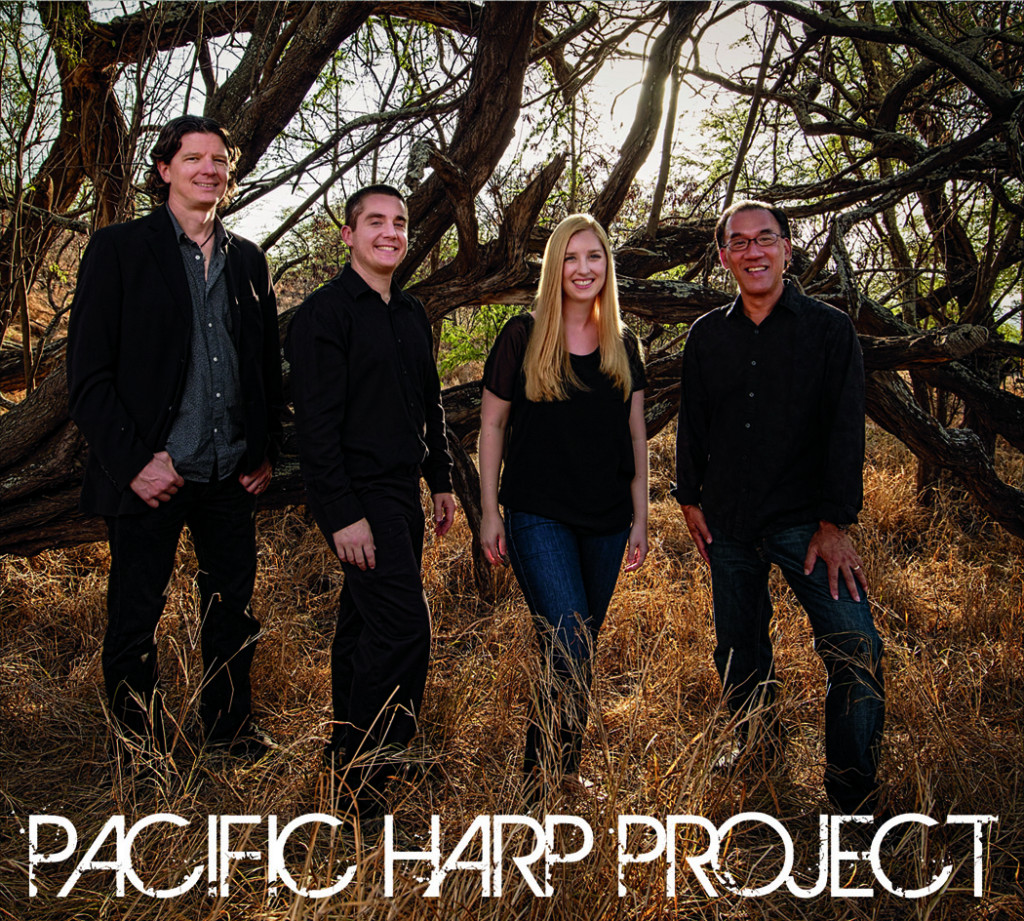
Megan Bledsoe Ward, harp; Noel Okimoto, vibraphone; Jon Hawes, bass; Alan Ward, drums. Self-released, 2015.
Isn’t that just the way it goes? You have an idea that morphs into a school project and the next thing you know you’ve created an act!
Well, something like that.
Harpist Megan Bledsoe Ward studied classical harp at Eastman—she’s got the Mozart Flute and Harp Concerto down pat. She’s a composer and honored with one of her pieces getting a performance at an international harp convention, but all the while she was fascinated with the less traditional. It was this hankering for something different that led her to propose an atypical subject for her doctoral thesis while at the University of Washington, The Harp in Jazz and American Pop Music. And it’s good stuff because even my colleague Christian McBride, host of National Public Radio’s “Jazz Night In America” considers it the authority when it comes to the subject.
So the logical next step? Make some of that jazz. And what holds my interest most in the Pacific Harp Project’s self-titled debut album is Ms. Ward’s loyalty to her roots as a legit classical performer, while at the same time jamming with Hawaii’s finest jazzers. The project features the talents of some of vibraphonist, Noel Okimoto, bassist Jon Hawes, and Ms. Ward’s husband, drummer Alan Ward.
Each piece is based on some of the most important works from the harp canon—with a few tasty originals by Ms. Ward. One highlight is the funky duet of walking electric bass to an evanescent and mostly untouched Debussy Danse Sacre. Ms. Ward floats over the hyperactive bass and finally coaxes him to her wavelength. The reimagining of the second dance, Profane, is silky in its insouciance. A jazzy waltz has harp and vibe cleverly interchanging solos like two mezzos in close timbre. The harp is not a visitor, but a card-carrying member of the jazz ethos.
They say the entire enterprise got its start with First Take, a kind of game played during their Rochester days of “Exquisite Corpse” where each artist adds a bit onto what’s just been created. There is a strong groove to the piece, and the harp sets the tone for the quartet. This is the piece that changes our perceptions of what the harp can do.
The opening work, Revenge of the Harpies, is the loveliest of them all. Using the cadenza in Ravel’s Tzigane as a starting point, Ms. Ward tricks the ear and leaves us wondering if we’ve tuned into the middle of a performance, just in time for some magic. Again, the use of vibes in such a similar color range allows for super subtle shifts in resonance. The music feels like a living, breathing organism in spite of the fact that no instruments are played using air. That is indeed magic.
This is a beautiful and unusual recording and will give you many hours of enjoyment listening again and again. I highly recommend it.