

10/10
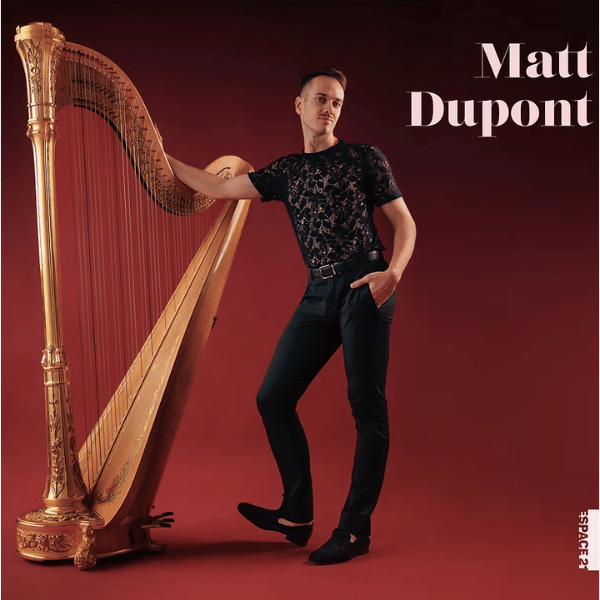
Matt Dupont, harp.
Espace 21, 2024.
Canadian harpist Matt Dupont offers words of wisdom on his website, ones to live by from Fyodor Dostoyevsky: “Beauty will save the world.”
His debut album, simply titled Matt Dupont,isa recital of some of the most delightful, beautiful, and challenging works in the harp repertoire, played with masterful skill and polish.
There does not seem to be anything this musician isn’t capable of performing, beginning with the “Rondo” by Robert Nicolas Charles Bochsa based on “Zitti, Zitti”from The Barber of Seville. Dupont dazzles with electrifying technique and spitfire clarity. But don’t get me wrong, it’s not just brilliance for brilliance’s sake. Dupont holds Rossini’s sensibility in mind throughout.
In the Fantasie in C Minor by Louis Spohr, he conjures more introspection and reflection, even as thousands of notes seem to spill from his hands. Dupont’s tone is controlled, yet expansive, rich, and colorful. And he makes special use of those qualities in a thrilling Pièce symphonique en trois épisodes by Henriette Renié. Dupont does not shy away from the darkly expressive, verging on abrasiveness. To that, I say Bravo! The harp does not need to be lovely at every turn. Us listeners can handle the intense qualities from the fringes.
And when every color is allowed, that makes the gossamer enchantment of Déodat de Séverac’s Valse romantique so much sweeter, like a spoonful of dulce de leche. As well as the set of variations on Carnival of Venice by Wilhelm Posse, which are one charming delicacy after another. Dupont is able to perform with an entirely new voice in each variation, again offering a buffet of timbres. Every musician should have such range.
Dupont is muscular in the Impromptu by Gabriel Fauré, not leaving one inch of the harp strings unused. It’s masterful. While Alphonse Hasselman’s La Source is quite the opposite, with Dupont straying to foreign areas on the strings to create a fragile and glassy tone. I have never heard this well-known piece played in such a way. And why not?
A favorite of mine on the album is Hanuš Trneček’s transcription of The Moldau. Here Dupont showcases his orchestral chops, as if we’re hearing an ensemble of harps rather than one astonishingly talented soloist. •