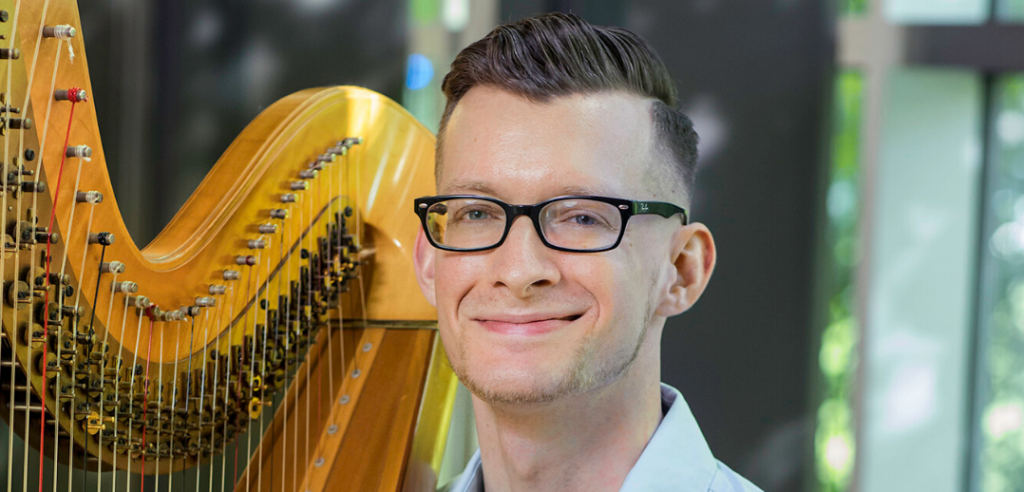



Since finishing her master’s degree in 2013, Elizabeth Steiner has been busy building on opportunities and bolstering relationships she formed while a grad student at Temple University in Philadelphia. The Seattle native now calls the East Coast her home. She is a freelance orchestral and chamber musician, plays for tea and private events at the Rittenhouse Hotel, and is the executive director of the nonprofit Lyra Society, which provides high quality instruments and weekly private harp lessons to 30 Philadelphia public school students.
Give us a little background on your harp upbringing and what you’ve been up to since graduating.
I went to the Cleveland Institute of Music to study with Yolanda Kondonassis for my undergrad and Temple University to study with Elizabeth Hainen for my master’s. I remained in Philadelphia after graduating because I started getting work during school and realized Philly is a great place to freelance. I did not have a specific plan for my post-graduate life, but opportunities started coming my way that encouraged me to put down roots here, like my hotel gig at the Rittenhouse Hotel. I also started working for the Lyra Society during my master’s and I loved the organization and its mission. We had about four students getting weekly free private lessons in one school, and I enjoyed helping to build something I believed strongly in. Fast forward several years, and now I divide my time between freelancing, teaching, and running a nonprofit. I am now the executive director of the Lyra Society and we have 30 Philly school students getting lessons in five schools. I teach a group harp class and private lessons at the Philadelphia High School for Girls, the alma mater of principal orchestral harpists Susan Diederich, Paula Page, and Ann Hobson Pilot. I sub in orchestras like the Baltimore and Delaware Symphonies, play chamber music, recitals, record, and gig in a variety of settings.
What’s the best thing about being a professional musician?
Making your own schedule and getting to do what you love for a living. I think we live in an interesting time where the music world is rapidly changing. The more you decide to go with the change rather than against it, the more success and relevancy you find. Also, there is a shared bond you have with any other professional musician who loves what they do and has had to work hard to get where they are.
What’s the hardest thing about being a professional musician?
The opposite side of the coin—making your own schedule. You can always be practicing or updating your website or transcribing a piece, etc. This makes it tricky to balance work life—something I am constantly striving for.
What did you want to do for a living when you were younger?
I loved to paint and draw and wanted to be a costume designer or interior designer. But the moment I first sat down at a harp I knew I wanted to be a harpist. However, I had no idea what that actually looked like. Thankfully I didn’t know how much harp moving would be in my future, or I may have reconsidered.
What is one thing you have learned since graduating that you wish you had known while you were in school?
The people you go to school with become your network. The music world is small, and I am grateful to run into friends I played with in high school or college across the country.
What does a typical day look like for you?
A typical day is some form of exercise followed by admin work or practicing, if I’m lucky. Then I typically go teach, come home, and either practice or go to a rehearsal or play a concert. Some days are heavier with admin and teaching, depending on what’s going on with the Lyra Society, and some days are focused just on playing and performing.
What skills are most valuable to have as a freelancer?
Kindness—that goes without saying. Professionalism—striving to arrive an hour early. You never know what kind of stairs they might have forgotten to tell you about. It’s also just about peace of mind, having time to warm up and get your harp set in place before others arrive. Preparedness—knowing your part so it’s ready for the concert at the first rehearsal. Reliability—also goes without saying. We are never really allowed to call out sick unless there is an extreme circumstance. If you can’t do a gig, immediately find a replacement who will do a great job. Learning from more experienced professionals—everything I learned about freelancing came from asking questions and observing those that were more experienced than I when I was starting out. They are also the people that will recommend you if you display all of the above qualities. Flexibility, self-awareness, and willingness to learn from your own mistakes are also important traits to have.
How do you improve your playing when so much time is required for the rest of your work life?
It’s a great question because practice time becomes something you have to guard fiercely once you’re out of school. On a great day I can roll out of bed and practice. But lately I’m getting a lot done between 8–11 p.m., much to the chagrin of my neighbors, I’m sure.
How do you use social media to help your business without it mucking up your life?
Social media has been a wonderful tool. I’ve met so many great people and musicians through it and had conversations about music through it that I wouldn’t have otherwise had. I’ve gained actual work, such as recordings and different shows, through it. When I was playing a lot of weddings a few years ago, I booked a wedding through Instagram. I had posted a video I took at a specific venue and the bride found me through that video and hired me. We still follow each other and that was one of my favorite weddings I’ve played.
What is the last new piece you learned?
La Source by Zabel, an Ellington transcription I’m working on, and a few cover songs.
What music are you listening to right now?
Lots of jazz, ’70s soul, Brazilian music, and Bach, of course. I’m also listening to more Irish and Scottish harp music, which was my first experience and love with the harp.
What’s the best thing you’ve done to get more gigs?
I took a “computers in music class” in undergrad. Ironically, the one thing they didn’t teach us how to do was make a website. I did well in the class and begged the instructor to help me learn how to make my own website. A few years ago, I optimized that same website through SEO, which has been tremendously helpful. Then I used a free form builder website called Jotform to install a form on my site where a client can enter their event details and request a free quote. Now I get constant requests through my website, which has been tremendously helpful. Also, investing in professional level video and/or audio that showcases your playing is important for people to see once they land on your site.
What is your elevator pitch to young harpists who think they want to do music for a living?
You have to love the harp and music intensely. You have to love practicing and taking care of behind the scenes details that people will never see. •
Editor’s Note: This is the first article in our new Career Building series with young professional harpists. In this column we’ll look at how harpists navigate difficulties and discover successes in their early years on the job