No Results Found.
The page you requested could not be found. Try refining your search, or use the navigation above to locate the post.





Classical technique • French repertoire
I would like students to learn from me that work ethic is the most important [thing] … hand position and technique are only tools [for] becoming the best musician possible.
I would like students to learn from me that work ethic is the most important [thing] … hand position and technique are only tools [for] becoming the best musician possible.
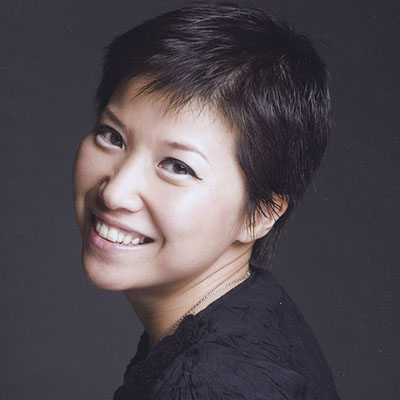
Born in Seoul, Korea, June Han’s influences span the globe. She worked closely with famed French pedagogue Marie-Claire Jamet at the Conservatoire National Superieur de Musique de Paris, where she won first prize in harp. Han also counts Nancy Allen, who she studied with at Juilliard, as a prime motivational influence. Now a member of the faculty at Juilliard’s pre-college program, Han also teaches at Yale University, Columbia University, and the Bowdoin International Music Festival.
June Han is a member of Sequitur Ensemble, Ensemble 21, and Manhattan Sinfonietta. She has performed with the Chamber Music Society of Lincoln Center, Speculum Musicae, Music from Japan, the Group for Contemporary Music, Jupiter Chamber Players, and Bronx Art Ensemble. An active orchestral player, she has collaborated with Orchestre de Paris, Kirov Opera Orchestra, Mariinsky Orchestra, and New York City Opera, to name a few, and frequently appears with the New York Philharmonic. Her summer music festivals as a student include Aspen and Tanglewood in the U.S. and Villecroze, Nice, and Gargilesse in France. She has performed at festivals such as the Santa Fe Chamber Music Festival, Norfolk Chamber Music Festival, and OK Mozart Festival. Han has been a featured soloist with the Young Artists Orchestra in Aspen, Colonial Symphony Orchestra in Morristown, N.J., Durham-Oshawa Symphony Orchestra in Canada, and OK Mozart Festival.
Han has recorded for various labels and, as an avid proponent of the music of living and modern composers, has premiered works by numerous composers including Charles Wuorinen, Samuel Adler, Lei Liang, and her mother, Young-Ja Lee. In 2009, Han and Bridget Kibbey gave the U.S. premiere performance of Stockhausen’s Freude, the second hour of Klang, for two harps at the Guggenheim Museum. The performance was reviewed as “mesmerizing” and “brilliantly executed.”
Learn June's rhythm exercises for practicing the arpeggios at the end of "Chanson de Mai," by Alphonse Hasselmans.
Listen to June's performance of "Chanson de Mai," by Alphonse Hasselmans, plus her tutorial on the opening section and middle "agitato" section.
June Han teaches how to interpret the "meno mosso" and ending of Alphonse Hasselmans' "Petite Valse."
Listen to June's performance, and advice for playing the opening melody of Alphonse Hasselmans' "Petite Valse."
June Han teaches how to play the meno mosso section from "Serenade Melancolique," from Feuilles d'Automne by Alphonse Hasselmans.
Listen to June perform "Serenade Melancolique," from Feuilles d'Automne by Alphonse Hasselmans, and learn the opening melody.
June Han teaches how to play the final section of "Esquisse," from "Feuillets d'Album," by Henriette Renié.
Listen to June's performance and learn how to play the first half of "Esquisse," from "Feuillet d'Album," by Henriette Renié.
June Han teaches how to play the second section of "Au Bord du Ruisseau," by Henriette Renié.
Listen to June Han's performance and learn how to play the first section of "Au Bord du Ruisseau," by Henriette Renié.
June Han teaches how to play the quintuplet section from Maurice Ravel's "Introduction and Allegro," beginning six bars before Reh. 5.
June Han teaches how to play the cadenza from Maurice Ravel's "Introduction and Allegro." (Part 2 focuses on the second page.)
June Han teaches how to play the cadenza from Maurice Ravel's "Introduction and Allegro." (Part 1 focuses on the first page.)
June Han teaches how to play the "Allegro" section (beginning at rehearsal 2) from Maurice Ravel's "Introduction and Allegro."
In this lesson, June Han teaches two exercises for strengthening scales. (To enjoy this video, you'll need to know how to play an eight-note scale with cross-under.)
In this lesson June Han teaches three exercises for position and strengthening. The concepts in this video are best approached with a stable hand position and ability to play fingers independently.
Learn June Hans' technique for playing descending slides with the thumb.
In this lesson June Han teaches about the importance of directional placing.
Learn two of June's exercises for practicing one-hand arpeggios.
June Han teaches how to warm up using musical context from pieces like Mozart's Concerto for flute and harp, Ravel's Introduction and Allegro, and Debussy's Danses.
June Han teaches how to place 8-note arpeggios using Etude #20 from "Studi di Media Difficultá," by Ettore Pozzoli.
June Han teaches how to avoid buzzing when playing repeated chords.
June Han teaches how to play chords, using the opening of Claude Debussy's Danse "Sacrée."